

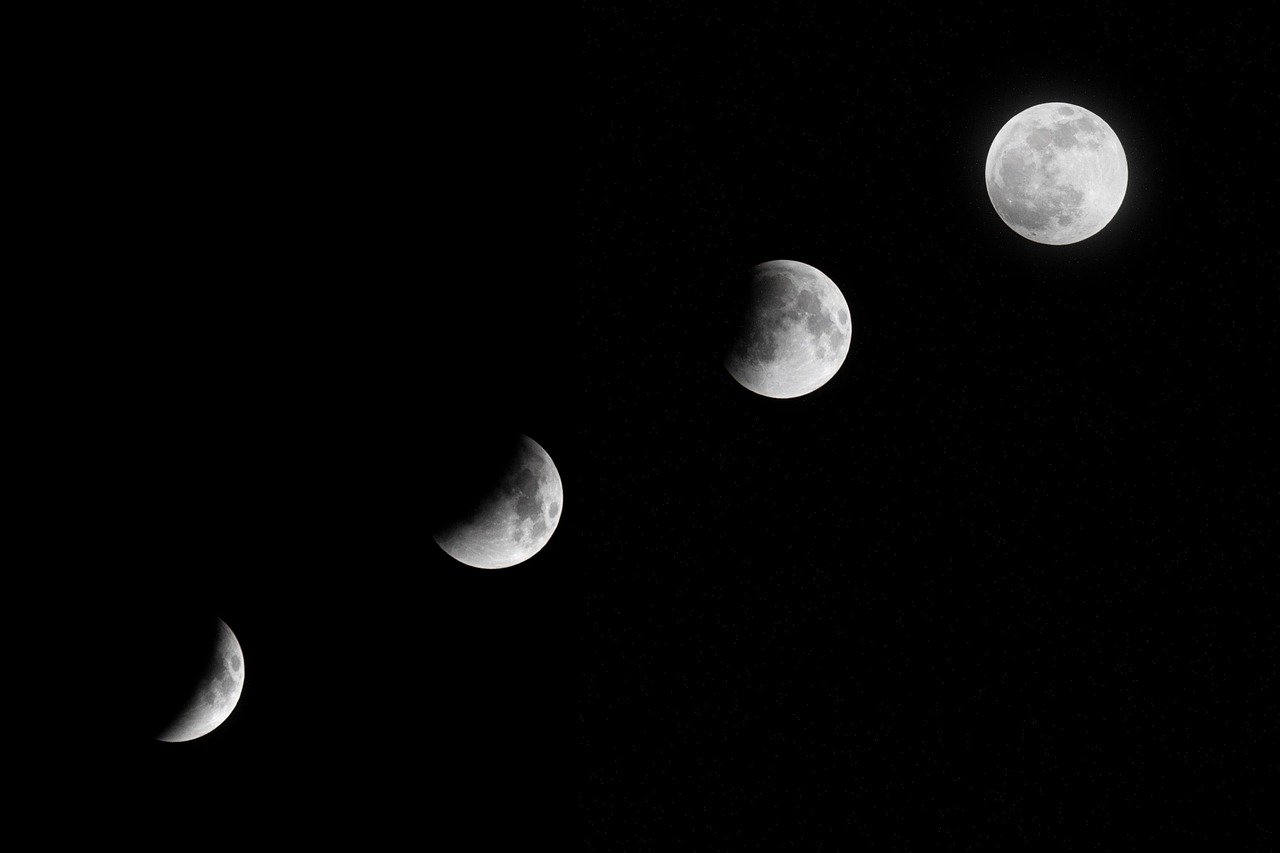
A Timeless Celestial Dance (Image Credits: Pixabay)
Full moons have inspired awe across cultures for centuries, marking time, seasons, and stories in the night sky. In 2026, skywatchers can anticipate 13 full moons, each with traditional names rooted in nature and Native American heritage.[1][2] Several stand out with supermoons, a blue moon, and lunar eclipses, offering prime opportunities for observation throughout the year. Times listed here follow Eastern Daylight Time (EDT); adjust for your local timezone to catch the peak illumination.
A Timeless Celestial Dance
Earth positions itself directly between the Sun and Moon during a full moon, bathing the lunar near side in direct sunlight. This alignment produces the Moon’s brightest phase, visible for roughly three days around the exact moment.[1] The synodic month, averaging 29.5 days, drives the lunar cycle through new, first quarter, full, and last quarter phases.
Traditional names evoke seasonal changes, from winter’s harshness to summer’s bounty. These monikers, often from Algonquian tribes, reflect environmental cues like animal behavior or plant growth. Full moons also amplify tides into spring tides, where gravitational pulls from Sun and Moon align for extreme highs and lows.
Every Full Moon in 2026: Dates and Names
The year features full moons clustering early, with five in the first four months. May delivers two, creating a rare blue moon scenario. Here is the complete schedule:
| Date | Time (EDT) | Name |
|---|---|---|
| Saturday, January 3 | 5:03 a.m. | Wolf Moon |
| Sunday, February 1 | 5:09 p.m. | Snow Moon |
| Tuesday, March 3 | 6:38 a.m. | Worm Moon |
| Wednesday, April 1 | 10:12 p.m. | Pink Moon |
| Friday, May 1 | 1:23 p.m. | Flower Moon |
| Sunday, May 31 | 4:45 a.m. | Blue Moon |
| Monday, June 29 | 7:57 p.m. | Strawberry Moon |
| Wednesday, July 29 | 10:36 a.m. | Buck Moon |
| Friday, August 28 | 12:19 a.m. | Sturgeon Moon |
| Saturday, September 26 | 12:49 p.m. | Corn Moon |
| Monday, October 26 | 12:12 a.m. | Hunter’s Moon |
| Tuesday, November 24 | 9:54 a.m. | Beaver Moon |
| Wednesday, December 23 | 8:28 p.m. | Cold Moon |
Supermoons occur when the full moon coincides with perigee, the Moon’s closest approach to Earth, making it appear larger and brighter.[1] January’s Wolf Moon, November’s Beaver Moon, and December’s Cold Moon qualify as such.
Standout Events: Eclipses and Rarities
Lunar eclipses add drama to two full moons this year. On March 3, the Worm Moon undergoes a total lunar eclipse as Earth’s shadow engulfs the Moon, potentially tinting it red. August 28 brings a partial eclipse during the Sturgeon Moon, with only part of the lunar disk darkened.
May’s Blue Moon on the 31st marks the second full moon that month, a seasonal rarity happening about every 2.7 years. Though not blue in color, the term highlights its uncommon timing. No volcanic activity appears scheduled to alter its hue dramatically.
These events draw global audiences, especially since total eclipses like March’s remain visible across wide swaths depending on location.
Tips for Capturing the Magic
Observe full moons near the horizon for an optical illusion that enlarges their size against earthly backdrops. Clear skies enhance visibility, so check weather forecasts ahead.
- Plan around peak times, but the moon looks full for days before and after.
- Use binoculars or a telescope for craters and maria details.
- Attend local astronomy club events for guided views.
- Photograph with a tripod to counter Earth’s rotation blur.
- Note cultural traditions, like howling at the Wolf Moon or harvesting under the Strawberry Moon.
Safety matters: Never use optical aids during eclipses to avoid eye damage; naked-eye viewing suffices.
2026 promises a rich tapestry of lunar spectacles, blending routine beauty with extraordinary alignments. As the year unfolds, these full moons remind us of our place in the cosmos. Which event excites you most? Share your plans in the comments.
Key Takeaways
- Thirteen full moons light up 2026, with traditional names tied to seasons.
- Three supermoons and two lunar eclipses highlight the calendar.
- Observe safely and locally adjust times for the best views.