
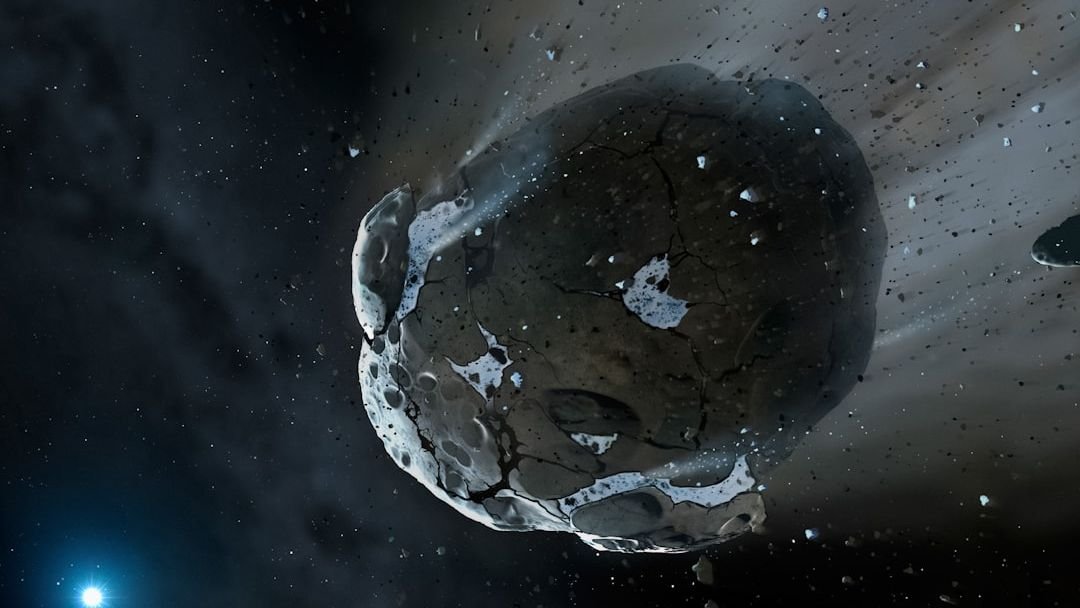

Imagine waking up on December 27, 2024, to headlines about a newly discovered space rock quietly drifting past us – only to later find out it had already made its closest pass to Earth two days before anyone even spotted it. That’s not a movie plot. That is the real story of asteroid 2024 YR4, one of the most startling space scares in recent memory, and honestly, a story that reveals a lot about where humanity stands in protecting its only home. Let’s dive in.
The Rock That Arrived Unannounced on Christmas
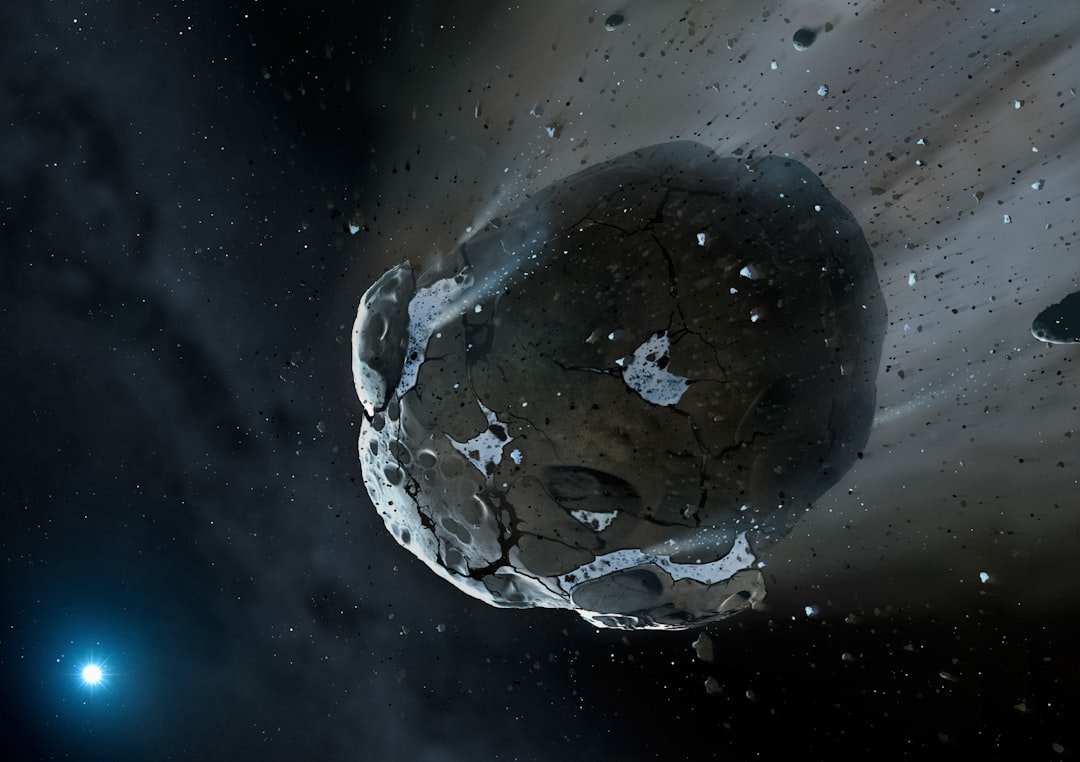
The asteroid made a close approach to Earth at a distance of 828,800 kilometres – roughly twice the distance between Earth and the Moon – on December 25, 2024, two days before its discovery. Think about that for a second. A city-leveling space rock slipped past us on Christmas Day, and we didn’t even know it existed yet. 2024 YR4 was first discovered two days after it had already passed its closest point to Earth. It was not detected sooner because it approached from the day side of the planet, from a region of the sky hidden by the bright light of the Sun – a blind spot for asteroid warning systems.
2024 YR4 was first reported to the Minor Planet Center by the NASA-funded Asteroid Terrestrial-impact Last Alert System (ATLAS) in Chile on December 27, 2024. ATLAS comprises several telescopes around the world and is managed by the University of Hawaii’s Institute for Astronomy. It’s a sobering reminder that our detection network, as advanced as it is, still has gaps that a rock the size of a downtown skyscraper can silently exploit.
Just How Big Was This Thing?
New infrared observations from NASA’s James Webb Space Telescope have decreased the uncertainty of the asteroid’s size, and 2024 YR4 is now estimated to be 174 to 220 feet – about the size of a 15-story building. That might not sound catastrophic on a planetary scale, but here’s the thing: size is deceiving in space. A 60-meter rock does not need to be the size of Everest to flatten a city.
Asteroid 2024 YR4’s impact would be equivalent to detonating 7.8 megatons of TNT – about 500 times more powerful than the atomic bomb dropped on Hiroshima in August 1945. Analysis of spectral and photometric time series suggests that 2024 YR4 is a stony S-type asteroid, with a rotation period of approximately 19.5 minutes. It was spinning fast, tumbling through space, and it was absolutely capable of doing serious damage.
Probability Climbs to Historic Levels
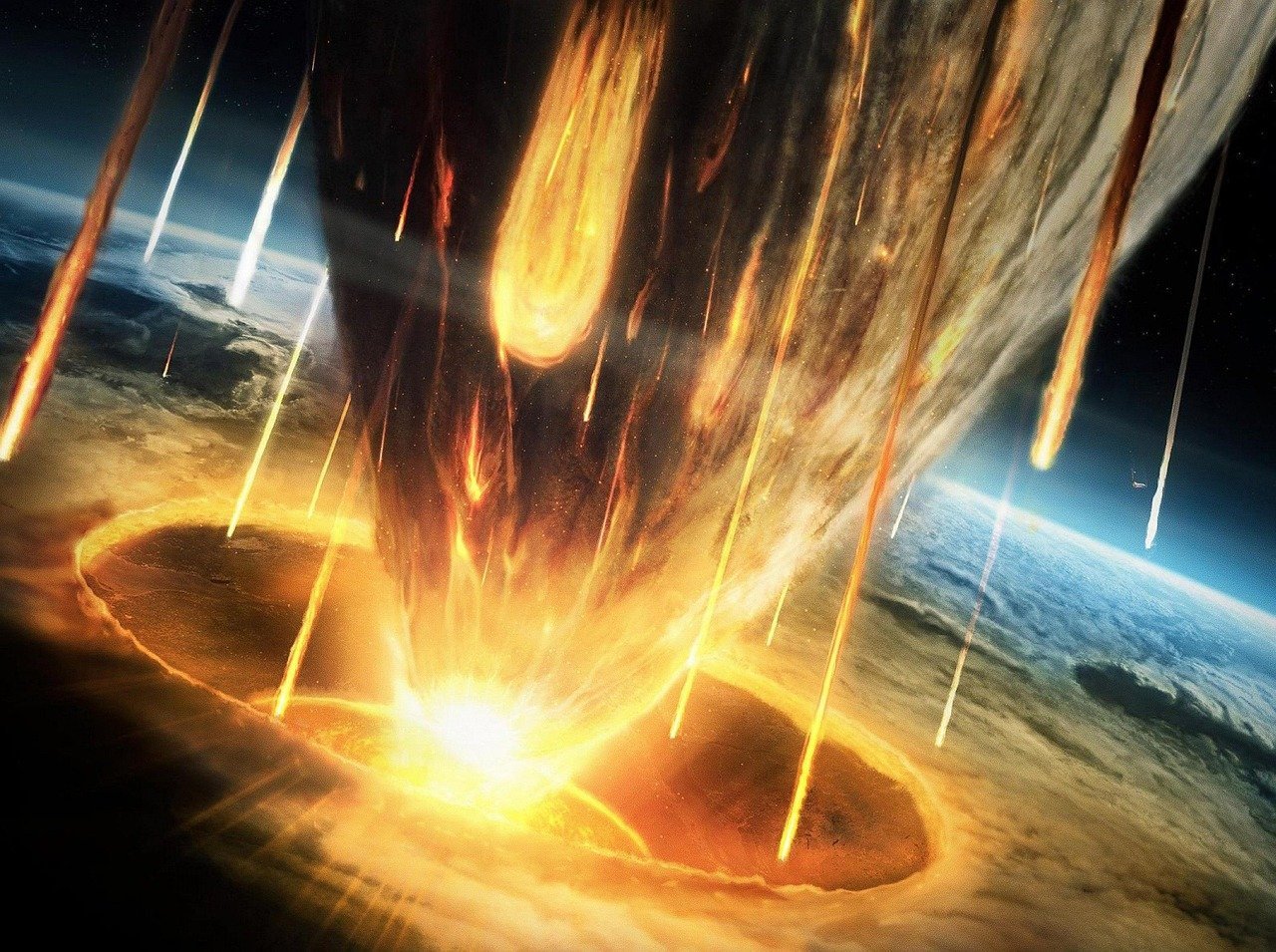
The asteroid 2024 YR4 made headlines in February 2025, as determined by an analysis from NASA’s Center for Near Earth Object Studies (CNEOS). The probability of collision peaked at over 3 percent on February 18 – the highest ever recorded for an object of its size. Let that sink in. This wasn’t a rounding error or a glitchy sensor. It was the most alarming asteroid probability reading scientists had ever logged for a rock of this scale.
Of all the asteroids that have imperiled the planet, 2024 YR4 is unparalleled. Soon after it was spotted in December 2024, worldwide telescopic observations quickly positioned it as the most dangerous space rock ever discovered – one that stood a 3.1 percent chance of crashing into Earth on December 22, 2032. This is a higher impact risk to our planet than that of any asteroid since Apophis, which, for a brief while in December 2004, was estimated to have a 2.7 percent chance of hitting Earth in 2029.
The Torino Scale Goes Orange
Asteroid 2024 YR4 was rated at Level 3 on the Torino Impact Hazard Scale – a close encounter that warrants attention from astronomers and the public. To put that in perspective, the scale goes from 0 to 10. Most newly discovered asteroids sit at zero and stay there. Scale 3, marked orange on the chart, applies to objects with a greater than 1 percent chance of hitting Earth and causing localized destruction – the Tunguska event of 1908 would be a good analog.
No asteroid has ever been categorized at Scale 5 or higher. The fact that 2024 YR4 climbed to Level 3 was genuinely unprecedented in the modern era of planetary tracking. As IAWN Manager Tim Spahr put it, “Hitting the 1% impact probability is a rare event indeed.” Rare, yes. But as 2024 proved, not impossible.
The Impact Corridor: Cities in the Crosshairs
IAWN’s notification stated that in the event the asteroid did hit Earth, the “impact risk corridor” extended “across the eastern Pacific Ocean, northern South America, the Atlantic Ocean, Africa, the Arabian Sea, and South Asia.” That is not a narrow ribbon of empty ocean. That swath cuts through some of the most densely populated regions on Earth.
In its warning, IAWN said that if 2024 YR4 were at the upper end of its size range, “blast damage could occur as far as 50 km from the impact site.” Several large cities, such as Bogotá, Colombia, Lagos, Nigeria, Mumbai, India, and Dhaka, Bangladesh, were in the possible impact zone. Millions of lives, in other words, were sitting inside that calculated corridor. If the asteroid entered the atmosphere over a populated region, an airburst could shatter windows or cause minor structural damage across a city.
Global Agencies Mobilize at Record Speed
Asteroid 2024 YR4 met all of the criteria necessary to activate the two UN-endorsed asteroid reaction groups: the International Asteroid Warning Network (IAWN) and the Space Mission Planning Advisory Group (SMPAG). These are not bureaucratic formalities – they are the closest thing humanity has to a real-time planetary emergency response. IAWN, chaired by NASA, is responsible for coordinating the international group of organisations involved in asteroid tracking and characterisation, and, if appropriate, would develop a strategy to assist world governments in the analysis of asteroid impact consequences and in planning mitigation responses.
If the asteroid’s impact probability remained above the 1% threshold, SMPAG would provide recommendations to the UN and may begin to evaluate the different options for a spacecraft-based response to the potential hazard. Honestly, this is the kind of coordinated global machinery that makes you feel slightly better about the situation. Slightly. ESA is a member of IAWN and was coordinating additional observations and regularly updating its risk assessment.
James Webb Telescope to the Rescue
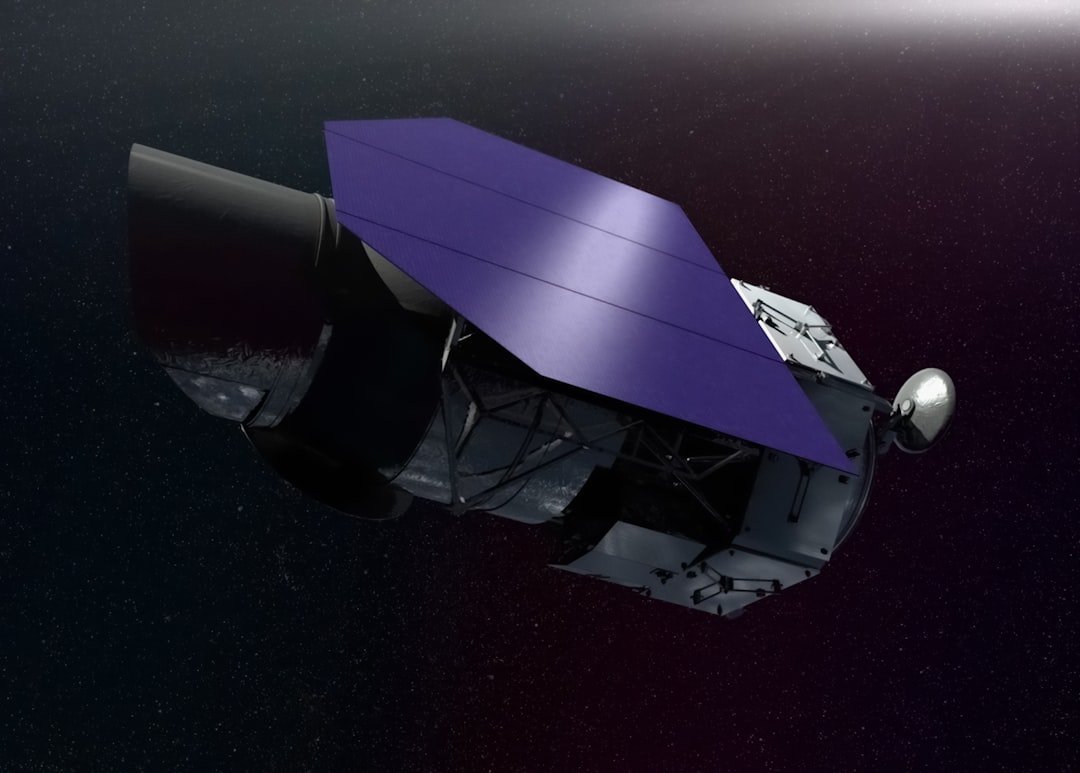
Remarkably, the resolution came from the James Webb Space Telescope, an observatory designed to look at ancient black holes, distant galaxies, and far-flung planets – not help defend the planet from rogue asteroids. Its incredibly perceptive infrared vision was able to track the asteroid in February 2026 when it was 450 million kilometers from Earth – a feat no other telescope could manage. Webb wasn’t built for planetary defense. It stepped up anyway.
Using data from NASA’s James Webb Space Telescope observations collected on February 18 and 26, experts from NASA’s Center for Near-Earth Object Studies at the Jet Propulsion Laboratory refined near-Earth asteroid 2024 YR4’s orbit and ruled out any chance of lunar impact on December 22, 2032. 2024 YR4 will safely pass 21,200 kilometers from the surface of the Moon. A near-miss within near-miss territory – Webb delivered the final, relieving verdict.
The Chelyabinsk Warning We Keep Ignoring
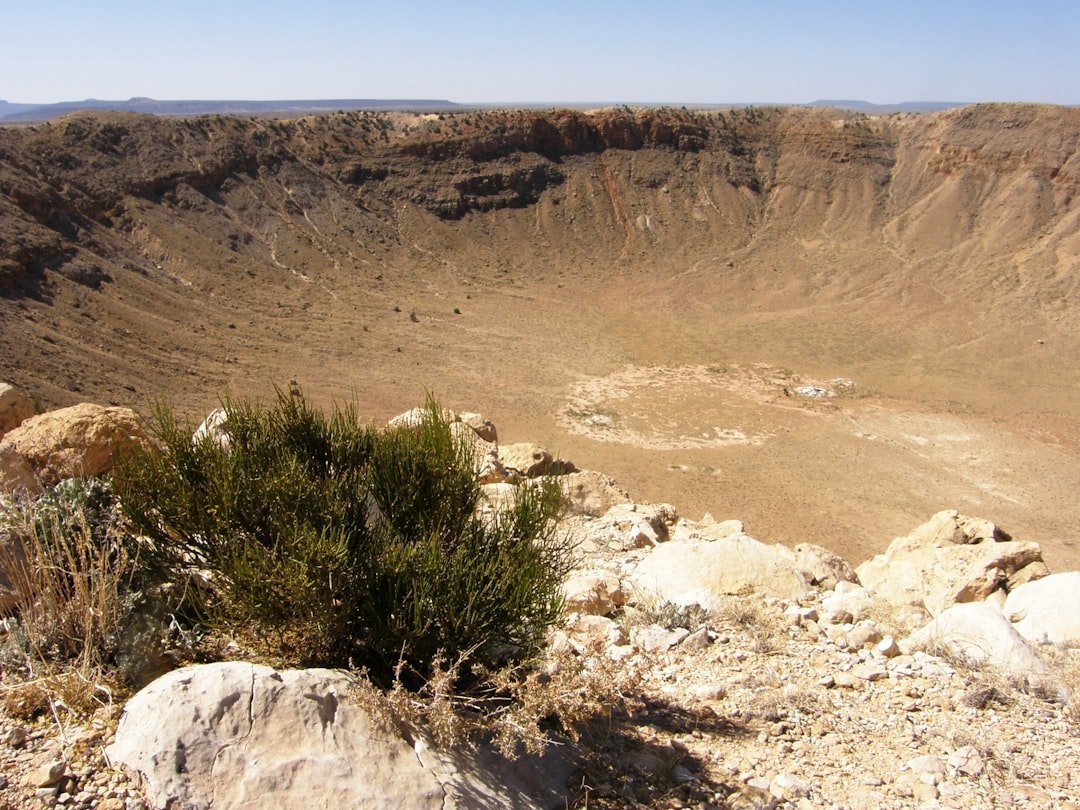
The significance of the solar blind spot was made clear on February 15, 2013, when the Chelyabinsk meteor – a 20-metre, 13,000-tonne asteroid – struck the atmosphere over the Ural Mountains in Russia during the middle of the day. The resulting blast damaged thousands of buildings, and roughly 1,500 people were injured by shards of glass. That asteroid also came from the direction of the Sun. We didn’t see it either.
The energy released over Chelyabinsk was estimated to be equivalent to about 500 kilotons of TNT – about 30 times more than the Hiroshima atomic bomb. If 2024 YR4 had hit, it could have been more like 8 to 10 megatons, according to Carson Fuls, director of the Catalina Sky Survey at the University of Arizona. The comparison between these two events is chilling. Chelyabinsk was the warning shot. 2024 YR4 was the reminder that we are still not fully covered.
DART Proved We Can Fight Back – But Barely
NASA confirmed that DART’s hypervelocity impact with Dimorphos successfully altered Dimorphos’ orbit around Didymos – marking humanity’s first time purposely changing the motion of a celestial object. Prior to DART’s impact, Dimorphos orbited Didymos once every 11 hours and 55 minutes, and DART’s impact shortened this to 11 hours and 23 minutes – a difference of 32 minutes. That is an extraordinary achievement. A spacecraft the size of a large fridge nudged a space rock off course.
The collision shortened Dimorphos’s orbit by 32 minutes, greatly in excess of the pre-defined success threshold of 73 seconds. A kinetic impactor spacecraft like NASA’s DART mission is one asteroid deflection technique that could be used to address a potentially hazardous asteroid in the future. The key word, though, is time. Each asteroid is unique, and deflection would depend on the asteroid’s size, physical properties, orbit, and discovery warning time. Without decades of lead time, even our best tools may not be enough.
What This Changes Going Forward
By keeping watch for asteroids approaching Earth from the direction of the Sun, ESA’s planned NEOMIR space telescope will fill an important blind spot in our current asteroid detection systems and significantly improve our preparedness for future hazards similar to 2024 YR4. This is the direct lesson the scientific community drew from the whole episode. The blind spot that let 2024 YR4 sneak past us on Christmas Day cannot remain a blind spot forever.
There are an estimated 5 million near-Earth objects out there larger than 20 metres – the threshold above which an impact could cause damage on the ground. Tens of thousands of objects larger than 140 meters, capable of causing regional destruction, orbit the Sun in near-Earth orbits, but less than half have been found. The universe, it turns out, is not running out of rocks aimed vaguely in our direction. The story of 2024 YR4 ended well. The next one might need a different ending – and whether we’re ready for it depends entirely on what we do between now and then.
What do you think – are we doing enough to protect Earth, or is the clock ticking faster than our defenses can keep up? Drop your thoughts in the comments.