

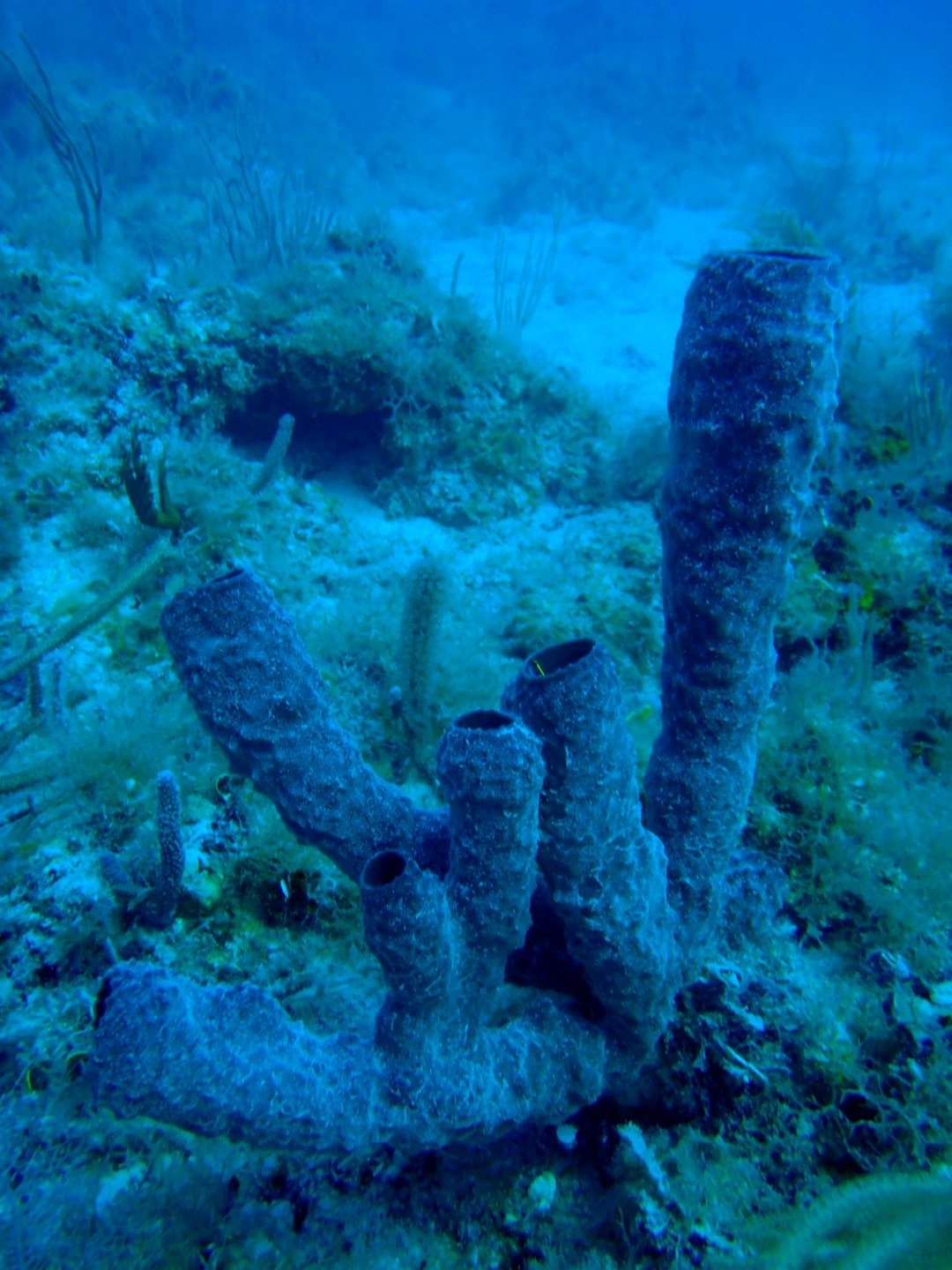
Sun Corals: A Persistent Marine Invader (Image Credits: Unsplash)
Brazil – Researchers have unveiled a promising technique to combat the spread of invasive sun corals along the country’s coastlines. These non-native species, known scientifically as Tubastraea spp., have proliferated since their arrival in the 1980s, likely introduced via oil platforms.[1][2] The method employs underwater blasts of compressed air to strip away the corals’ soft tissue, offering a chemical-free alternative to traditional removal efforts. This innovation could safeguard native reef ecosystems from further disruption.
Sun Corals: A Persistent Marine Invader
Sun corals first appeared off Brazil’s southeast coast decades ago. They quickly expanded over 3,000 kilometers of shoreline, outcompeting native species for space on rocky reefs.[3] Unlike many corals, Tubastraea species lack symbiotic algae and thrive in shaded areas, growing rapidly from even small fragments.
Manual removal has long served as the primary control strategy. Divers chip away at colonies, but this often scatters fragments that regenerate into new growths. Pneumatic hammers exacerbate the issue by creating more debris. These approaches demand significant time and labor while risking further spread.[1]
Innovation from the Lab to the Reef
Scientists drew inspiration from a common laboratory practice: using compressed air to separate coral tissue from skeletons. They adapted this into an underwater tool by attaching an air gun to a standard scuba diving regulator.[1] Divers carry an extra air tank to power the device, delivering blasts at around 10 bars of pressure.
The procedure targets individual colonies at close range for about 30 seconds. The force dislodges the soft polyps and tissue, leaving the bare carbonate skeleton behind. This non-extractive process minimizes handling and potential contamination.[2]
Field Trials in Alcatrazes Archipelago
Testing occurred at the Alcatrazes Archipelago Wildlife Refuge off São Paulo state. This protected marine area features heavily invaded reefs at the popular “Wolverine” dive site, situated 5 to 6 meters deep.[2] Researchers selected 48 mature colonies for treatment and monitored 14 as controls.
Teams assessed outcomes immediately after blasting, then at 30 and 180 days. They used photo-quadrats – 75 cm by 75 cm frames – for precise measurements of polyp counts, total colony area, and live tissue coverage via specialized software.[2] Blasted sites showed dramatic declines, confirming the method’s immediate impact.
Impressive Results and Safety Confirmation
Blasted colonies lost nearly all living tissue. Polyp numbers dropped from an average of 8 to 1, while total area shrank from 2.94 square centimeters to 0.4 square centimeters after 180 days. Live tissue averaged just 0.32 square centimeters, compared to growing coverage in controls.[2]
Laboratory tests further validated safety. Dispersed tissue from blasts failed to regenerate in aquariums, unlike samples from intact colonies. Only one replicate showed fleeting activity, with no propagules forming. Skeletons in the field soon became covered in native turf algae, signaling ecosystem recovery.[1][2]
- Complete tissue removal in most cases, preventing recolonization.
- No viable regeneration from blasted fragments, reducing spread risk.
- Lower reproductive potential in any partial recoveries.
- Simpler and less labor-intensive than hammering.
- Suitable for sensitive protected areas and industrial sites like oil platforms.
| Method | Fragment Risk | Chemical Use | Labor Intensity |
|---|---|---|---|
| Manual Removal/Hammering | High | None | High |
| Compressed Air Blasting | Low | None | Moderate |
Path Forward for Reef Management
Guilherme Pereira-Filho, a biologist at the Federal University of São Paulo, highlighted the technique’s potential. “It’s quite a simple method that can bring a lot of benefits for the management of this invasive species,” he stated.[1] Marine ecologist Joel Creed added perspective: “Let’s remember that the status quo would be to leave the coral happily producing hundreds of larvae per year. This method is a step forward.”[1]
The protocol, detailed in a 2026 study in Ecological Solutions and Evidence, paves the way for broader application. It holds promise not only for Brazilian reefs but also for global efforts against similar invaders, including on decommissioned structures.[2]
- Compressed air blasting removes over 90% of sun coral tissue effectively.
- Blasted fragments show no regeneration, minimizing invasion risks.
- The method supports native algae regrowth on cleared skeletons.
This advancement underscores the value of adaptive, low-impact tools in conservation. As sun corals continue to challenge marine biodiversity, such innovations provide real hope for restoration. What do you think about this approach? Tell us in the comments.