

The idea of outliving your own body used to belong to mythology. Today, it sits in pitch decks, venture capital portfolios, and neuroscience laboratories. A growing cluster of startups and research institutions is moving seriously, if incrementally, toward a future where human consciousness might be preserved, simulated, or uploaded to a digital platform. The science is still largely theoretical, the timelines are contested, and the philosophical problems are enormous. Yet the investment is real, the technology is accelerating, and the questions it raises are not going away.
What “Digital Consciousness” Actually Means

Digital immortality is not a single technology but a spectrum. At the simplest level, it might mean creating avatars that mimic your behavior based on past conversations, texts, and photos. A step further is data emulation, where algorithms replicate your thought patterns for digital interaction. The most ambitious and debated vision is mind uploading, the theoretical process of transferring the brain’s entire neural structure into a computer, enabling consciousness to continue in a digital realm.
Consciousness transfer refers to the theoretical process of moving a person’s mind, including memories, personality, and subjective experience, from their biological brain to another medium, typically a digital platform. Mind uploading, often used interchangeably with the term “whole brain emulation,” involves scanning and mapping the structural and functional properties of a human brain and recreating those properties on a computational substrate. The gap between those two sentences is, in practice, immeasurable right now. Knowing what a mind is made of and knowing how to move it are very different problems.
The Staggering Complexity of the Human Brain
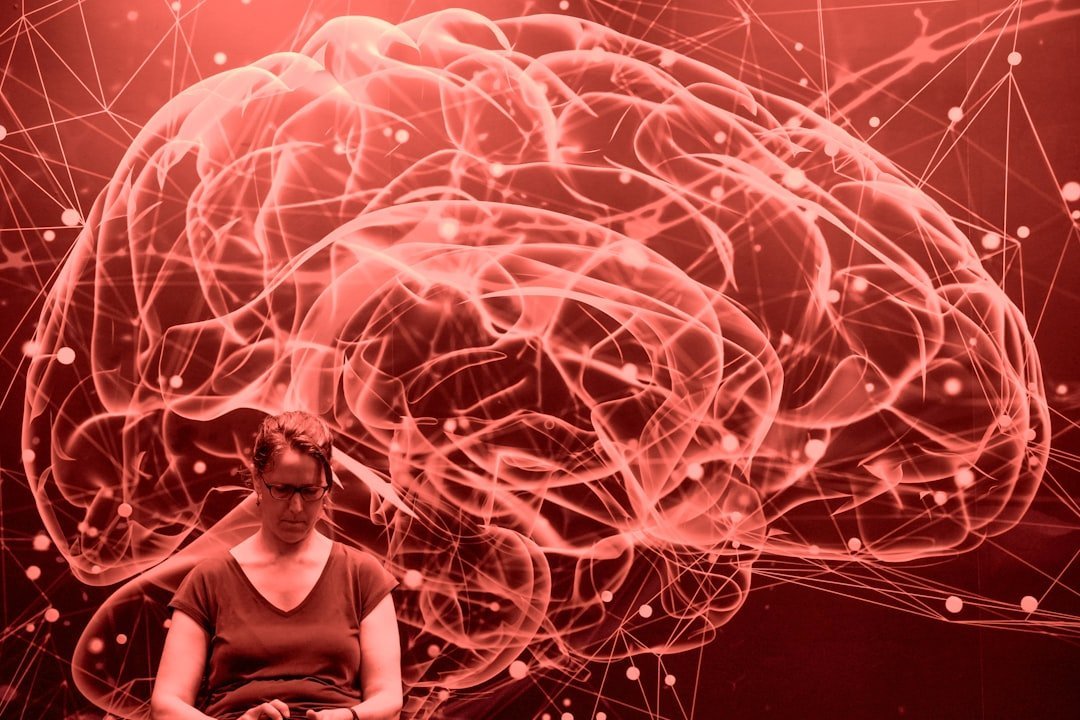
In the human brain, roughly 86 billion neurons form more than 100 trillion connections with other neurons at junctions called synapses. This intricate network of neural pathways forms the biological foundation of human consciousness, memory, and identity. The challenge of preserving this complexity digitally represents perhaps the most profound technological undertaking in human history.
Our sensory systems can process information at gigabit levels, yet our behavior and conscious output run at only about 10 bits per second. Despite massive neural capacity, the mind communicates through an extremely narrow channel. Researchers suggest the bottleneck lies within what they call the “inner brain,” where decisions, attention, and actions are processed in sequence. For brain-computer interfaces, this poses a major challenge because even the most advanced systems cannot bypass the brain’s natural limits on throughput. That bottleneck matters enormously. It suggests that mapping the physical structure of a brain may not be enough to understand, let alone replicate, how it actually thinks.
The Technology Pipeline: From Recording to Emulation
The State of Brain Emulation Report 2025 provides a comprehensive reassessment of the field’s progress since the foundational whole brain emulation roadmap published in 2008. The report is organized around three core capabilities required for brain emulation: recording brain function, mapping brain structure through connectomics, and emulation using computational neuroscience. It also identifies ongoing challenges and outlines strategic priorities to help the field move forward.
In terms of practical milestones, all three of those capabilities have advanced substantially over the past two decades, to the point where neuroscientists are collecting enough data to emulate the brains of sub-million neuron organisms, such as zebrafish larvae and fruit flies. Despite impressive progress in neuron recording capabilities, neuroscience has not yet achieved whole-brain recording at single-neuron resolution in any organism. The closest achievements include larval zebrafish with approximately 80 percent brain coverage and C. elegans with roughly half of nervous system neurons recorded at single-cell resolution. Scaling that to a human brain of 86 billion neurons is a challenge of an entirely different order of magnitude.
Startups Leading the Space Right Now
Behind the headlines, multiple organizations are actively exploring pathways toward digital immortality. These efforts range from brain preservation to neuromorphic computing. Nectome, a U.S.-based startup, is focused on brain preservation. Their controversial cryonics-inspired method aims to chemically preserve the connectome for potential future uploading. While not practical today, it highlights the belief that preserving brain structure is the first step toward digital immortality.
The market for AI technologies designed to help people process loss, known as “grief tech,” has grown exponentially in recent years. It has been ignited by U.S. startups such as StoryFile, an AI-powered video tool that lets people record themselves for posthumous playback, and HereAfter AI, a voice-based app that creates interactive avatars of deceased loved ones. Robert LoCascio founded Eternos, a Palo Alto-based startup that helps people create an AI digital twin, in 2024 after losing his father. Subscriptions start from $25 for a legacy account that allows a person’s story to remain accessible to loved ones after their death. These are not mind uploads. They are digital portraits, but they represent the commercial leading edge of a much larger ambition.
Brain-Computer Interfaces as a Bridge Technology
Brain-computer interfaces are sometimes discussed as indirectly relevant to mind uploading insofar as they aim to record and in some cases stimulate neural activity, but they do not by themselves provide the high-resolution structural and biochemical data typically assumed in whole-brain emulation proposals. Neuralink is a company developing an implantable interface that uses flexible electrode threads inserted by a neurosurgical robot. In 2024, Neuralink reported its first human implant, though scientists noted the work is primarily aimed at assisting people with paralysis and that major challenges remain for long-term safety and performance.
In 2024, Neuralink successfully conducted its first human trial, in which a patient was able to control a computer cursor using only their thoughts. These technologies were initially designed to assist people with disabilities, but in the future they could be used to store memories, enhance cognitive abilities, and even connect human minds to digital systems. If that technology were expanded beyond basic communication, the idea of mind uploading would come closer to reality. Neuralink, in partnership with various universities and hospitals including University College London Hospitals and Newcastle Hospitals, is working on brain-computer interfaces that could support mind uploading and memory digitization, enabling immersive and personalized neural data access. The distance between controlling a cursor and mapping a full consciousness, though, is vast.
The Ethical Minefield Nobody Has Fully Mapped
Even taking for granted that there is a safe way to transfer human consciousness to a digital format, there are serious ethical issues about consent. Who gets to decide whether, and at what point, someone’s consciousness gets uploaded? If someone is incapacitated, who can make that decision on their behalf? And even after death, does the person whose consciousness was recorded get any say in what their digital avatar is used for? Corporations, family members, or governments could potentially exploit these digital avatars for various purposes.
In 2024, AI ethicists at Cambridge University published a study calling for safety protocols to address the social and psychological risks posed by the “digital afterlife industry.” Researcher Katarzyna Nowaczyk-Basinska, co-author of the study, noted that commercial incentives often drive the development of these technologies, making transparency around data privacy essential. If digital immortality becomes a reality, who gets access to it? It may become a luxury for the ultra-wealthy, creating a new class divide between the mortal masses and the digital elite. These are not hypothetical worries. They are already visible in early-stage products available today.
The Identity Problem: Is a Copy Really You?
Philosopher and transhumanist Susan Schneider claims that at best, uploading would create a copy of the original mind. She agrees that consciousness has a computational basis, but does not agree that this means a person survives uploading. According to her, uploading would probably result in the death of one’s brain, and only others could maintain the illusion that the original person survived.
Even if full scanning were possible, enormous philosophical questions would remain: would the digital copy be truly “you,” or just a convincing replica? Some have asserted that consciousness is a part of an extra-biological system yet to be discovered and therefore cannot yet be fully understood. Without transference of consciousness, true uploading or perpetual immortality cannot be practically achieved. Another potential consequence of mind uploading is that the decision to upload may create a mindless symbol manipulator instead of a conscious mind, what philosophers call a philosophical zombie. The copy might pass every test you can throw at it. Whether that makes it “you” is a question science cannot currently answer.
Is the 2030 Goal Realistic?
A simulation of the human whole brain has not yet been achieved as of 2024 due to insufficient computational performance and brain measurement data. Researchers examining trends in supercomputers, cell type classification, and connectomics have attempted to predict a feasible timeframe for mammalian whole-brain simulation. Their estimates suggest that mouse whole-brain simulation at the cellular level could be realized around 2034, marmoset around 2044, and human brain emulation likely later than 2044.
As of 2025, it is estimated that fewer than 500 people globally are actively dedicated to the direct objectives of brain emulation. Research suggests that even though whole brain emulation is still 30 or 40 years away, partial forms like AI-based avatars are already examples that show digital continuity. The 2030 deadline, then, is not a target for full consciousness uploading. It is, at best, a horizon for deeper brain mapping, more sophisticated digital personas, and neural interface technology that may one day feed into something larger. Full digital immortality, by most credible estimates, remains a mid-to-late century problem at the earliest. The honest version of the 2030 story is this: the tools are getting sharper, the funding is real, and the science is moving. What remains unclear is whether the destination everyone is aiming for is even reachable, or whether what we eventually build will be something genuinely new, neither immortality nor mere simulation, but a third thing we don’t yet have a name for.