

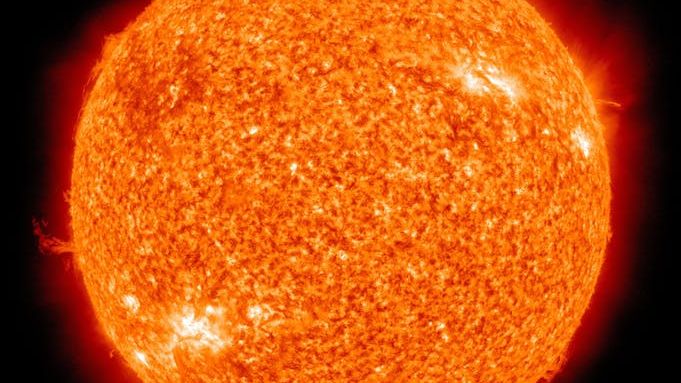
Details of the Morning’s Solar Outbursts (Image Credits: Pexels)
On April 23, 2026, the sun delivered a sharp escalation in activity. Three M-class solar flares erupted in quick succession early in the day, marking a departure from recent quieter periods. Active regions AR4419 and AR4420 drove the outbursts, prompting space weather experts to analyze potential effects on Earth.
Details of the Morning’s Solar Outbursts
The sequence began at 4:35 UTC when AR4419 unleashed an M1.7 flare. Minutes later, at 4:59 UTC, AR4420 followed with an M1.2 event. The strongest came from AR4419 again, peaking at M4.3 around 8:48 UTC. Each flare released bursts of solar material into space, known as coronal mass ejections, or CMEs.
Over the prior 24 hours, from 11 UTC on April 22 to 11 UTC on April 23, the sun produced 14 flares in total. These included the three M-class events, alongside 10 C-class and one B-class flare. All M flares triggered minor radio blackouts, classified as R1 levels. AR4420 led with nine flares, while AR4419 contributed five, including the two most powerful.
Evolution of Sunspots and Recent Trends
The Earth-facing side of the sun currently hosts four active regions. AR4420 maintains beta-gamma magnetic complexity, fueling its prolific flare output. AR4419, despite dropping to a beta classification after losing its gamma structure, proved potent with the day’s top flares. Newer regions AR4421 and AR4422 both exhibit beta setups, adding to the disk’s potential.
Activity had built gradually in preceding days. On April 22, flare counts rose to 19, mostly C-class from AR4420. April 21 saw 11 flares, with incoming regions showing early promise. Earlier, from April 19-20, output stayed low amid sparse sunspots, estimated at around 40 – below Solar Cycle 25 averages. A beta-gamma setup in AR4419 had hinted at escalation, now realized.
Current Space Weather and Geomagnetic Conditions
Solar wind speeds declined to moderate levels as a coronal hole’s fast stream waned. The Bz component of the interplanetary magnetic field fluctuated, with northward peaks late on April 22 limiting energy transfer to Earth’s magnetosphere. Still, southward shifts earlier fueled auroras. Earth’s magnetic field registered quiet to unsettled conditions, with Kp indices from 1 to 3.
No confirmed Earth-directed CMEs appeared beyond today’s events, though forecasters model the new ones. A partial halo CME from April 22 prominences may glance Earth on April 24. Recent days featured geomagnetic unrest: G1 storms on April 21, active levels through April 20-22, driven by persistent coronal hole effects. Auroras lit northern skies, from Minnesota to Scotland.
Key Recent Highlights:
- April 23: Three M flares, moderate activity jump.
- April 22: 19 C/B flares, partial halo CME possible.
- April 21: G1 storms, auroras persist.
- April 20-19: G2 peaks, solar wind over 600 km/s.
Forecast: Lingering Effects and Aurora Prospects
Forecasters anticipate low-to-moderate flare activity persisting, with high odds for C-class and elevated chances for more M-class events. X-class flares stay unlikely but possible. On April 23, quiet geomagnetic conditions prevail at Kp 1-2 as solar wind normalizes.
April 24 brings uncertainty. The April 22 CME could arrive as a glancing blow, potentially stirring unsettled or active levels alongside any new CMEs or residual coronal hole influence. Higher-latitude viewers might spot auroras. No major blasts targeted Earth in recent coronagraph views, keeping risks contained.
Today’s flares underscore the sun’s dynamic phase in Solar Cycle 25. Monitoring continues as regions rotate and evolve, ready for the next pulse of activity.