

Galaxies as Cosmic Time Capsules (Image Credits: Flickr)
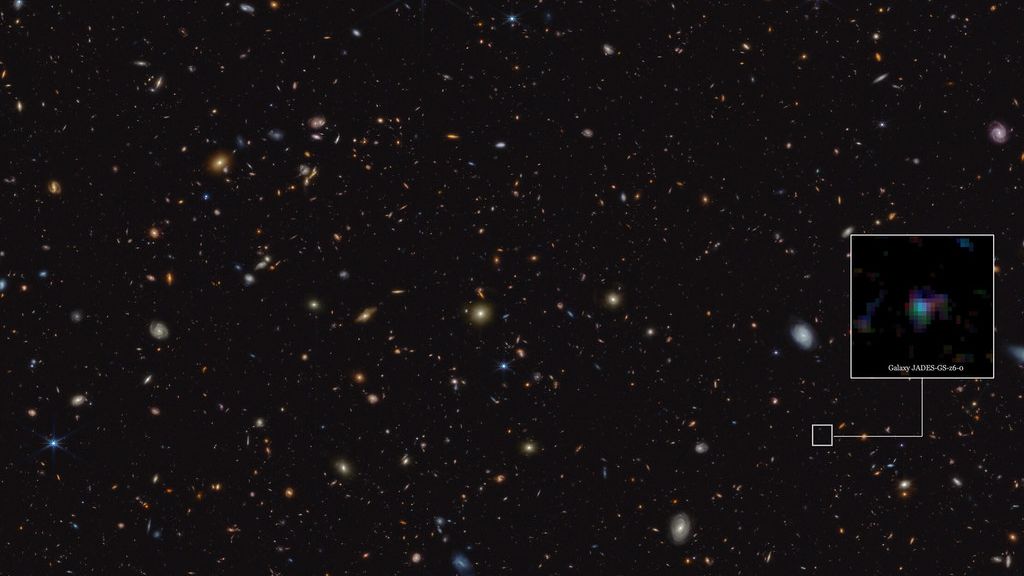
Astronomers have long puzzled over the timeline of galaxy formation, and a recent analysis of data from the James Webb Space Telescope’s COSMOS-Web survey offers some of the clearest answers yet. Led by Lilan Yang at the Rochester Institute of Technology, the study examined over 30,000 distant galaxies in a moon-sized patch of sky, measuring their sizes and brightness to trace evolutionary patterns. These findings, published in 2025, bridge observations from earlier telescopes and reveal how galaxies bulked up over cosmic history, providing a vital benchmark as JWST continues its observations.
Galaxies as Cosmic Time Capsules
Immediately after the Big Bang, the universe lacked the structured galaxies that now fill the night sky. Matter existed in a hot, dense state, preventing the collapse into the spirals and ellipses observed today. Dark matter gradually formed halos, gas cooled and fell inward, and mergers shaped nascent structures into mature galaxies. Yet, the precise durations of these processes – gas cooling rates, merger frequencies, and stellar birth cycles – remained elusive.
Astronomers address this by observing galaxies at varying distances. Light from remote objects takes billions of years to reach Earth, offering snapshots of the past. A sequence of such images effectively creates a timeline of typical galaxy development, much like frames in a motion picture rewound to the universe’s youth.
Overcoming the Redshift Barrier
Distant galaxies pose a technical hurdle: their light stretches toward longer, redder wavelengths due to cosmic expansion. Visible-light telescopes fail to detect these faint signals, necessitating instruments tuned to near-infrared radiation. The James Webb Space Telescope addressed this need directly, with its NIRCam instrument capturing stretched light from the universe’s earliest epochs.
Launched with this capability in mind, JWST has now delivered years of data, enabling detailed studies of high-redshift galaxies. COSMOS-Web, one of its inaugural large-scale surveys, targeted a region yielding previously unseen objects. Researchers grouped galaxies by redshift – a distance indicator – and distinguished star-forming ones from quiescent counterparts.
Dissecting the COSMOS-Web Dataset
The survey covered an area roughly the full Moon’s width, unearthing more than 30,000 galaxies beyond prior detection limits. Yang’s team quantified each object’s brightness, a proxy for mass, alongside physical sizes. They binned results by redshift ranges, from z=2 to z=10, corresponding to look-back times spanning billions of years.
This approach allowed comparisons across cosmic eras. Star-forming galaxies dominated the sample at higher redshifts, reflecting the universe’s active youth. The dataset’s scale provided statistical robustness, surpassing smaller precursor studies.
Consistent Growth Laws Emerge
Galaxies clearly increased in size and mass over time, confirming basic evolutionary expectations. For star-forming examples between redshifts z=2 and z=8, the mass-size relationship held remarkably steady. This scaling aligned seamlessly with Hubble Space Telescope measurements at lower redshifts, suggesting a stable growth mechanism persisted for billions of years.
At the farthest reaches, z=8 to z=10, hints of deviation appeared, though the researchers cautioned about limited sample sizes in these bins. Smaller numbers reduced confidence, leaving open whether the earliest galaxies followed distinct rules. Overall, the survey established a foundational relation ripe for refinement.
| Redshift Range | Key Observation | Sample Notes |
|---|---|---|
| z=2–8 | Stable mass-size scaling; matches HST data | Large sample; high confidence |
| z=8–10 | Possible scaling shift | Smaller sample; needs confirmation |
Toward a Fuller Picture of Evolution
These results mark an early milestone in JWST’s campaign, with COSMOS-Web delivering the largest high-redshift catalog to date. The steady scaling at moderate redshifts implies efficient, consistent accretion processes dominated galaxy buildup. Deviations at the highest redshifts, if real, could signal rapid early growth phases influenced by intense star formation or mergers.
More observations will clarify these frontiers. As JWST accumulates data, astronomers anticipate refined models incorporating gas dynamics and dark matter roles. The study, detailed in Yang et al. (2025, Astrophysical Journal Supplement Series, 281, 68), underscores the telescope’s transformative potential.
In piecing together galaxy histories, such surveys quiet some questions while igniting others, steadily illuminating the universe’s formative years.