

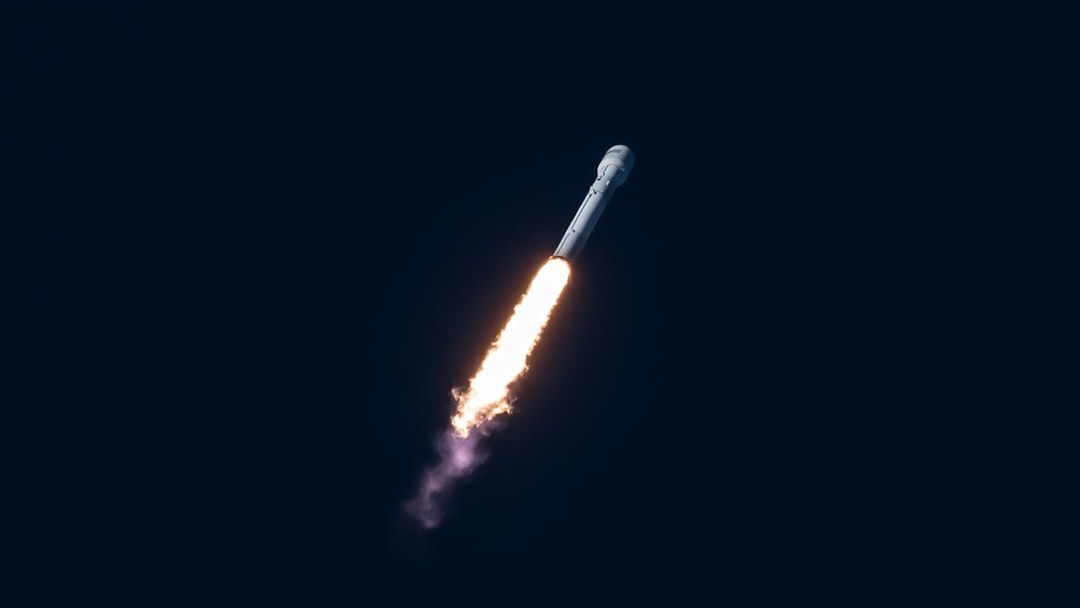
The Long Haul from Michoud to the Space Coast (Image Credits: Unsplash)
Kennedy Space Center, Florida — A massive segment of NASA’s most powerful rocket glided into port on Monday afternoon, marking a pivotal step toward the next crewed mission to the Moon. The top four-fifths of the Space Launch System core stage for Artemis III arrived via the agency’s Pegasus barge after traversing 900 miles from New Orleans.[1][2] Engineers prepared for its offloading the following day, setting the stage for final assembly ahead of a targeted 2027 launch.
The Long Haul from Michoud to the Space Coast
Teams at NASA’s Michoud Assembly Facility rolled out the core stage section on April 20 using specialized transporters.[3] This portion, which includes the liquid hydrogen tank, liquid oxygen tank, intertank, and forward skirt, loaded onto the Pegasus barge in New Orleans for the journey across the Gulf and up the coast.
The barge docked at the Kennedy Space Center’s Complex 39 turn basin wharf around 2 p.m. ET on April 27, completing the 900-mile trip without reported issues.[2] Boeing, which built the stage at Michoud, coordinated the effort as part of its contract with NASA. The arrival came shortly after the successful Artemis II flyby mission, signaling accelerated progress in the program.[2]
Engineering the Rocket’s Powerhouse
The core stage forms the backbone of the SLS rocket, standing 212 feet tall once fully assembled with its boat-tail and engine section.[1] Its two massive propellant tanks hold more than 733,000 gallons of super-chilled liquid hydrogen and oxygen to feed four RS-25 engines.[3][2]
During ascent, the stage generates over 2 million pounds of thrust and operates for more than eight minutes, propelling the Orion spacecraft toward low-Earth orbit before separating into the Pacific Ocean.[3] The boat-tail, already on site at Kennedy, houses the engines and avionics, completing the structure during integration. Flight computers within the stage manage critical operations from liftoff through separation.[4]
“Seeing this SLS rocket hardware roll out is a powerful reminder of our progress toward returning humans to the lunar surface,” said Lori Glaze, acting associate administrator for NASA’s Exploration Systems Development Mission Directorate.[3] She noted that the stage paves the way for testing capabilities essential to future lunar landings and Mars missions.
Assembly Process Kicks Into High Gear
Offloading began early Tuesday, April 28, with a livestream starting around 8 a.m. ET.[1] Crews transported the segment over a distance equivalent to about 2.5 football fields in a nearly three-hour operation to the Vehicle Assembly Building’s High Bay 2.
There, technicians will mate it to the waiting boat-tail, conduct outfitting, and perform vertical integration.[1] NASA’s Exploration Ground Systems Program then oversees stacking with the solid rocket boosters and Orion spacecraft. The mobile launcher, recently returned to the VAB after Artemis II, supports the full rocket configuration.[4]
This methodical buildup ensures reliability for the 322-foot-tall SLS, which delivers 8.8 million pounds of thrust at liftoff—15% more than the Saturn V.[4]
Core Stage Components:
- Liquid hydrogen tank
- Liquid oxygen tank
- Intertank
- Forward skirt
- (Boat-tail already at KSC: engines and avionics)
Artemis III: Gateway to Sustainable Lunar Exploration
The mission launches a crew of four in Orion atop SLS from Kennedy Space Center in 2027.[5] Once in low-Earth orbit, astronauts will test rendezvous and docking with at least one commercial human landing system, such as SpaceX’s Starship or Blue Origin’s Blue Moon.[2][4]
These demonstrations validate operations for actual surface missions, with Artemis IV slated for a crewed lunar landing in 2028.[1] NASA plans to announce the Artemis III crew closer to launch. The program builds toward sustained presence on the Moon and eventual Mars voyages.
Recent refinements, including added missions, strengthen the architecture.[5] As hardware like this core stage aligns on schedule, the path from Florida’s turn basin to the lunar surface grows ever clearer.