

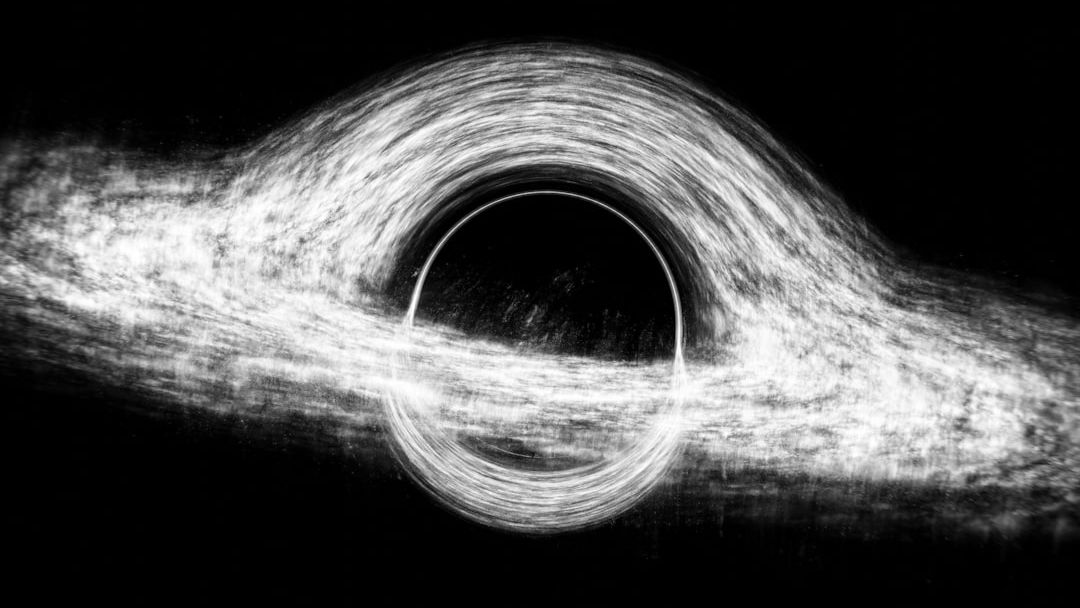
Giants Among the Cosmic Dawn (Image Credits: Unsplash)
Astronomers have long pondered how the universe’s most massive structures formed in its infancy, a question that strikes at the heart of our origins. Recent observations from the James Webb Space Telescope have intensified this debate by revealing supermassive black holes that grew to extraordinary sizes far earlier than theories predicted. These findings force scientists to reconsider the building blocks of galaxies and the violent processes that shaped the cosmos shortly after the Big Bang. The discoveries carry profound implications for understanding how the universe evolved from a hot, dense state into the vast expanse we see today.
Giants Among the Cosmic Dawn
Supermassive black holes, with masses equivalent to billions of suns, anchor the centers of most galaxies today. In the early universe, however, their presence poses a profound challenge. Telescopes have detected these behemoths lurking in quasars from an epoch just hundreds of millions of years after the Big Bang. Such objects demand explanations that align with the limited time available for their growth.
Quasars powered by these black holes shine brightly across vast distances, serving as beacons from the universe’s formative years. Observations continue to uncover a growing number of them, each more massive than expected. This accumulation of evidence underscores a discrepancy between observation and prediction, prompting researchers to scrutinize fundamental assumptions about black hole evolution.
The Growth Dilemma Explained
Standard models of black hole formation begin with the collapse of massive stars into stellar-mass black holes. These seeds then accrete surrounding gas and merge with others to build supermassive scales over billions of years. In the early universe, however, the timeline compressed dramatically – perhaps only a few hundred million years from the Big Bang.
Growing a black hole to a billion solar masses in such a short span exceeds the efficiency limits of known accretion processes. Even under ideal conditions, the math does not add up, leaving astronomers to grapple with how these monsters bulked up so rapidly. The puzzle persists because no single mechanism fully accounts for the observed population without invoking extreme or untested scenarios.
James Webb’s Game-Changing Views
The James Webb Space Telescope has transformed this field by peering deeper into the infrared spectrum, where light from the earliest epochs stretches. It has identified a large population of these early supermassive black holes, confirming patterns seen in ground-based quasar surveys. JWST’s resolution reveals details previously obscured, such as the environments surrounding these objects.
These observations build on prior detections but multiply the examples, making the anomaly harder to dismiss as outliers. Researchers now face a dataset that demands revisions to formation theories. While JWST provides clearer pictures, it also amplifies the urgency to resolve the underlying tensions in cosmology.
Paths Forward Amid Uncertainty
Astronomers explore alternatives like direct collapse of massive gas clouds into black hole seeds weighing tens of thousands of solar masses from the start. Such events could bypass slow stellar evolution, allowing faster growth. Other ideas involve super-efficient accretion or frequent mergers in dense early environments.
Yet challenges remain. Direct collapse requires pristine conditions rare in the turbulent post-Big Bang era. Mergers demand clustered seeds, which models struggle to produce in sufficient numbers. To clarify these options, scientists anticipate more JWST data alongside simulations refining growth rates.
- Refine seed formation models through high-resolution simulations.
- Survey wider fields for fainter quasars to gauge population sizes.
- Analyze host galaxies for clues on feeding mechanisms.
- Cross-correlate with upcoming telescopes like the Roman Space Telescope.
The persistence of these early supermassive black holes reminds us that the universe’s youth held surprises beyond current grasp. As observations accumulate, they reshape narratives of cosmic assembly, hinting at processes that propelled galaxy formation on accelerated paths. For humanity, unraveling this enigma deepens appreciation for the intricate forces that sculpted our cosmic home, even as key pieces elude full explanation.