
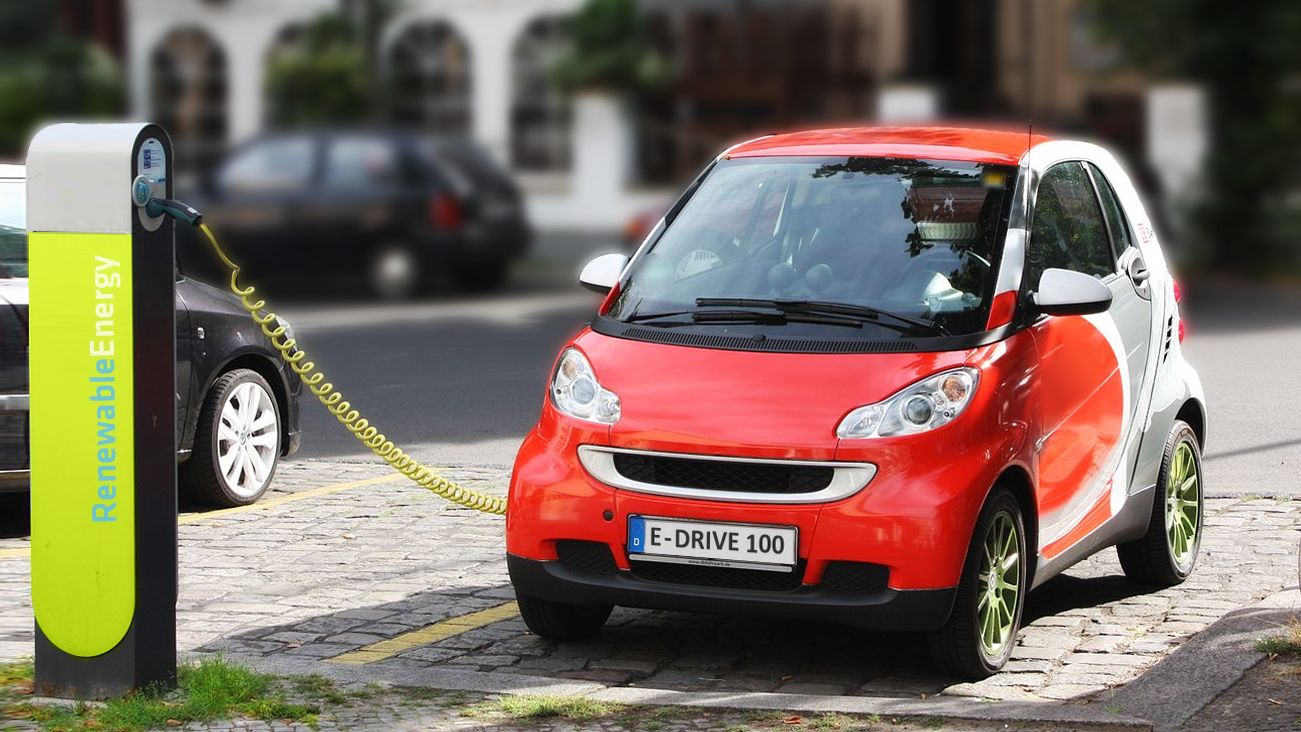

1. Lucid Group (LCID): The Dream Machine Running on Fumes

Lucid Motors has the cars. It also has a backer with deep pockets in Saudi Arabia’s sovereign wealth fund. What it doesn’t have, at least not yet, is any realistic path to profitability within a timeframe that justifies its current valuation. Lucid reported a net loss of $2.7 billion in fiscal 2025 and generated negative free cash flow of around $3.8 billion that same year, highlighting the heavy cash burn required to ramp up production capacity.
Lucid produced just 18,000 or so vehicles in 2025, which in any other industry would be considered a startup-scale operation. The company faces brutal pressure from multiple directions simultaneously. Lucid Motors’ losses are still uncomfortably high, even as rival Rivian has posted positive gross margins for two consecutive quarters, and thanks to the EV price war and rising competition, startup EV companies face a tough task in churning out a profit. Meanwhile, analysts have flagged significant dilution risk for shareholders, estimating the company will need to raise approximately $2 billion in equity by the second half of 2026 relative to its $4.6 billion market cap.
Analysts do not forecast Lucid reaching gross profitability until 2028, and while EBIT losses per vehicle should improve, losses are projected to persist until 2031. That is a long time to ask investors to hold on. The Q3 2026 call will likely force another reckoning between management’s optimism and the balance sheet’s reality.
2. Plug Power (PLUG): Hydrogen’s Biggest Gamble Still Hasn’t Paid Off

Plug Power has been promising a hydrogen-powered future for over two decades. The technology is genuinely interesting. The business model, though, keeps colliding with economic reality. The company posted a net loss of $1.7 billion in its most recent fiscal year – more than half its current market cap. That number alone should give investors pause, regardless of how compelling the hydrogen narrative sounds on paper.
The deeper problem is competitive positioning. Most experts believe that hydrogen fuel’s economic viability is still years or perhaps even decades away. In the meantime, rival technologies are moving faster. Hydrogen fuel systems like what Plug Power provides need regular refueling, adding significant transportation complexity and costs, plus unforeseen opportunities for blackouts – none of which is attractive to the hyperscalers powering AI data centers.
Both hydrogen and modular nuclear technologies face severe adoption, deployment, and economic feasibility challenges. Yet Plug Power lacks the regulatory excitement that nuclear peers currently enjoy. The Q3 earnings call will again spotlight the gap between Plug Power’s story and its financials – and the market increasingly loses patience with gaps that have been repeating for years.
3. Oklo Inc. (OKLO): Nuclear Hype Without a Single Watt Produced
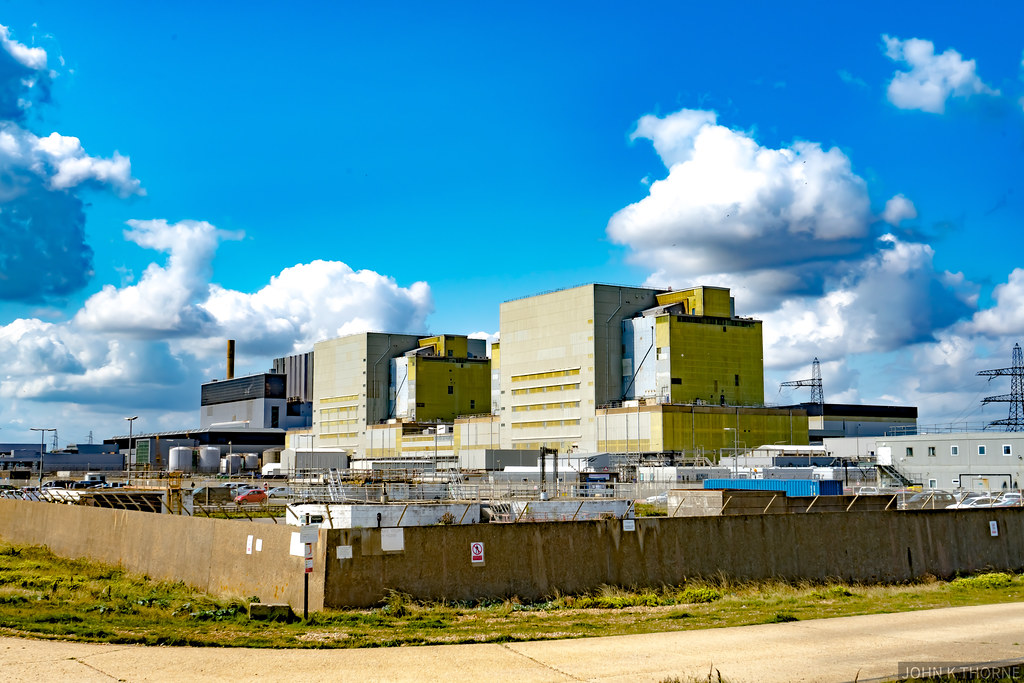
Oklo is, in some ways, the purest expression of speculative green-tech investing in 2026. The company has a fascinating pitch, a deal with Meta Platforms, and a visually striking reactor design. It also has zero revenue. Oklo does not have any working products today, only ideas and designs. Its reactor design has not been approved by the Nuclear Regulatory Commission, and it cannot build a nuclear power plant until it gets full regulatory approval. The company is currently generating zero revenue and will likely generate minimal revenue for the foreseeable future.
When overvaluation models flagged the stock in November 2025, Oklo was trading at $132.77 despite reporting negative EBITDA of $97.12 million. The subsequent price collapse was sharp. Concerns about its unproven business caused the stock to fall about 60% in just the past six months. Still, some analysts argue the valuation remains stretched.
Even if Oklo scales up its operations, the stock may still be overvalued. In an ultra-bullish scenario, Oklo may deploy nuclear power plants across the entire United States, generating $10 billion in revenue from power agreements with AI companies a decade from now, but operating as a utility comes with low margins, which may limit bottom-line earnings power to $1 billion or less. That’s a speculative ceiling with a very long runway. Oklo’s project pipeline has also come under sharp scrutiny, especially following massive stock sales by the company’s CEO and CFO in December, January, and February, totaling well over $100 million. That kind of insider behavior rarely inspires confidence ahead of earnings.
4. Rivian Automotive (RIVN): Promising Enough, But the Math Doesn’t Work Yet

Rivian is the most operationally credible EV startup outside of Tesla. It has genuine product traction, strong customer satisfaction scores, and a partnership with Volkswagen that provides a capital lifeline. None of that changes the core financial picture heading into Q3. While the company achieved its first full year of positive gross profit, it still posted a net loss of $3.6 billion and negative free cash flow of $2.5 billion for fiscal 2025.
The launch of the lower-priced R2 model is the central bull case for Rivian in 2026. Rivian faces outsized risk heading into 2026 as it launches its lower-priced R2 into a challenging EV market, where slowing adoption, loss of the $7,500 tax credit, and persistent consumer concerns around range anxiety, charging infrastructure, and affordability create headwinds that a mass-market vehicle may struggle to overcome in the near-term.
Management expects negative adjusted EBITDA and capital expenditures in the range of roughly $2 billion in fiscal 2026, and while the company’s operational progress is visible, Rivian is still highly loss-making. The stock price has bounced around significantly in 2026. The $7,500 federal EV tax credit ended, fuel rules were revised, and penalties for gas-heavy fleets were removed, weakening demand across the industry even as long-term interest in EVs remained steady. If the R2 rollout disappoints on volume or margin, Q3 could be painful.
5. NuScale Power (SMR): The License Doesn’t Guarantee the Business

NuScale Power occupies an odd position in the clean energy space. Unlike Oklo, it actually holds a commercial license for a small modular reactor from the Nuclear Regulatory Commission – a milestone that took years to achieve. Yet having a license has not translated into signed customers, and that distinction matters enormously in a capital-intensive sector. For any investors watching NuScale Power, which has a commercial license for a small modular reactor but lacks a first sale, clients aren’t exactly lining up for new reactor constructions.
Shares of Oklo and NuScale Power surged by 200% to 300% in 2025 off the backs of new partnership contracts and customer acquisitions. In 2026, shares of both are down nearly 20%. The reason isn’t mystery: uncertainty regarding how quickly contracts will turn into real revenues is the core problem. Once planned for a 2030 deployment, NuScale’s keystone project in Romania is now targeting a 2033 start date.
Both Oklo and NuScale will need to raise significantly more capital to not only survive but deliver on any contractual obligations, which means significantly more share dilution at fairly low valuations. For NuScale specifically, slipping timelines and cost uncertainty surrounding its reactor technology compound this pressure. Research from the Institute for Energy Economics and Financial Analysis warned that small modular reactors still look to be too expensive, too slow to build, and too risky to play a significant role in transitioning from fossil fuels in the coming 10 to 15 years. Heading into Q3, that assessment has not aged out of relevance.
The Bigger Picture: When the Narrative Outruns the Numbers

There’s a pattern behind all five of these stocks, and it’s worth naming plainly. Even unhealthy companies can appear to thrive when the market is soaring, especially if they’re in an industry experiencing a lot of hype. Green technology is a legitimate and necessary industry. The energy transition is real. The demand for clean power is growing. None of that guarantees that every company with “green” in its pitch deck deserves its current stock price.
The value of technology company stocks has been inflated based on hype regardless of market fundamentals or the financial reality behind monetizing AI products. That dynamic applies just as readily to green-tech names riding the AI energy wave as it does to pure software companies. Investors betting on clean energy stocks in 2026 are navigating one of the most complicated policy environments the sector has ever seen. Tax credit phase-outs, tariff pressure on solar supply chains, and the end of key residential subsidies are all live variables this year.
The technology sector has long been a magnet for investors seeking high-growth opportunities, but by late 2025, the market’s focus shifted toward fundamentals. Speculative narratives have given way to a more disciplined evaluation of profitability, recurring revenue models, and sustainable innovation. That shift is the key thing to watch. When investor patience runs out with companies that keep pushing profitability timelines further into the future, Q3 earnings calls become the moment of reckoning – not just a quarterly update.
The five names above each carry genuine long-term promise in their respective niches. The question isn’t whether the underlying technology matters. It’s whether the stock price has already priced in a future that may still be many years away. In a market environment where profitability is being scrutinized more closely than it has been in years, that gap between promise and financial reality is exactly where corrections tend to begin.