

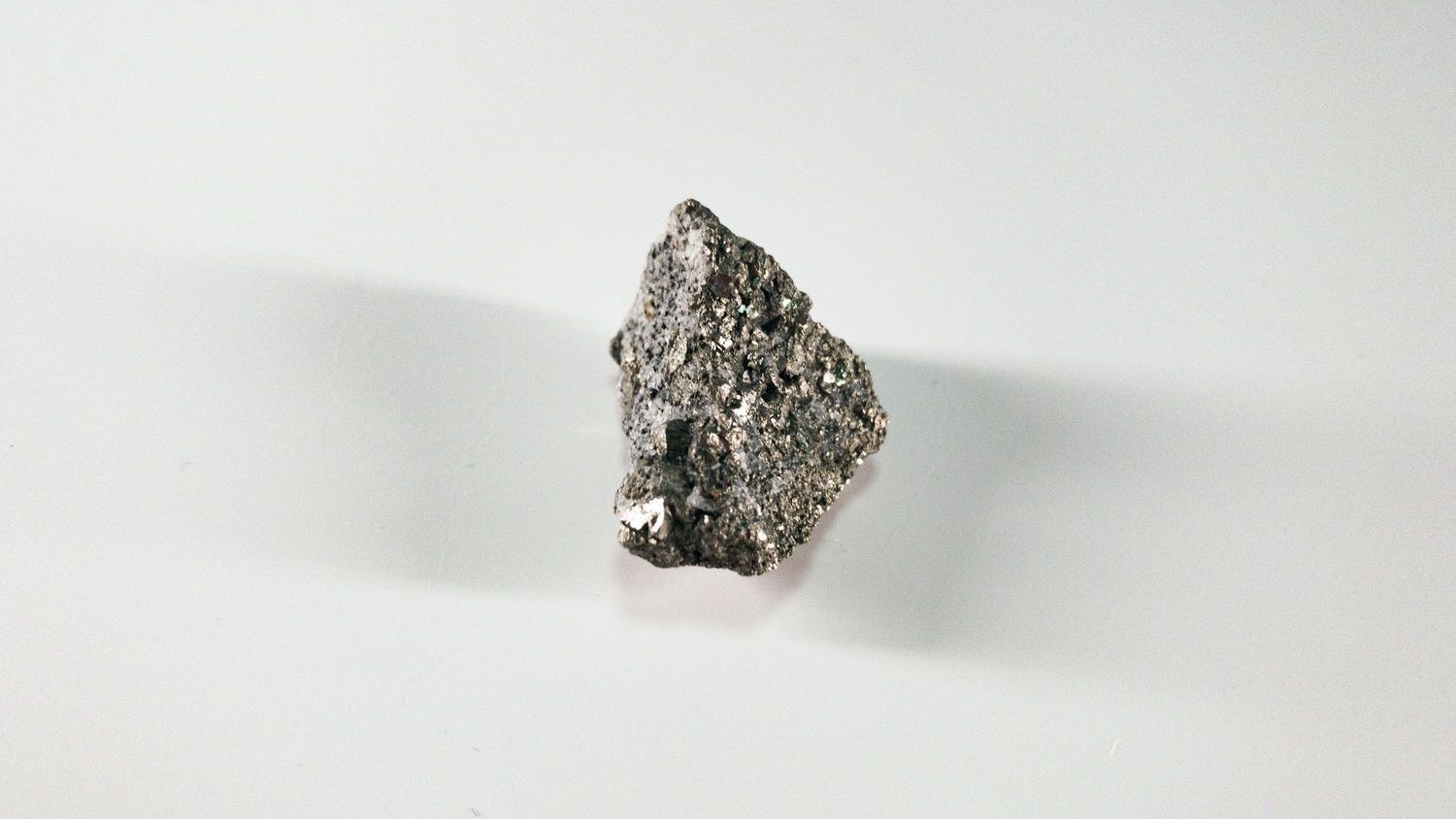
The Enigma of Mercury’s Surface (Image Credits: Unsplash)
Mercury has long puzzled scientists with its unusual surface, marked by low iron and high levels of sulfur and magnesium. Data from spacecraft missions confirmed this iron-poor, sulfur-rich crust sets it apart from its rocky neighbors – Venus, Earth, and Mars. A recent study using a 135-year-old meteorite now offers crucial insights into why the innermost planet earned its title as the solar system’s most reduced world, where sulfides, carbides, and silicides prevail over familiar oxides.[1][2]
The Enigma of Mercury’s Surface
Orbital observations from NASA’s MESSENGER mission revealed Mercury’s crust lacks the iron abundance typical of other terrestrial planets. Instead, elevated sulfur and magnesium dominate, pointing to a highly reduced chemical environment. This state means elements exist in forms that have gained electrons, favoring compounds like sulfides over oxides.
Planetary scientists classify Mercury as the most reduced body in the solar system. Its surface reflects an interior shaped by processes unlike those on Earth. Missions highlighted these traits, but without samples, explanations remained elusive until researchers turned to an unlikely terrestrial find.[1]
Indarch: The Meteorite Link to Mercury
The Indarch meteorite, which fell in Azerbaijan in 1891, provided the breakthrough material. Classified as an EH4 enstatite chondrite, it mirrors Mercury’s chemistry with its high sulfur content, rare sulfides, and reduced state. Formed near the Sun in the early solar nebula, Indarch endured thermal processing that aligned its makeup with the planet’s proto-materials.[1][2]
Postdoctoral researcher Yishen Zhang noted, “Indarch chemically is as reduced as rocks on Mercury. It is believed to be a possible building block of the planet.”[2] This rare meteorite allowed scientists to bypass the absence of direct Mercury samples and simulate its conditions in a lab setting.
High-Pressure Labs Recreate Mercury’s Magma
At Rice University, Zhang and colleagues, led by Rajdeep Dasgupta, crafted a model melt from Indarch’s composition. They subjected it to high-pressure and high-temperature experiments, drawing on spacecraft data and planetary models to mimic Mercury’s interior. The setup involved sealing the mixture in glass vials and applying precise conditions to observe phase changes.[2]
These tests revealed how Mercury’s magmas behave under its unique chemistry. Unlike Earth rocks, where iron binds sulfur tightly, Mercury’s scarcity of iron forced sulfur to pair with magnesium and calcium. This shift weakened the silicate network, fundamentally altering solidification.[3]
Sulfur Takes Center Stage
In iron-rich worlds like Earth and Mars, sulfur prefers iron as a partner, stabilizing structures at higher temperatures. Mercury’s low iron content changed the game. Sulfur stepped into a role akin to oxygen, linking to rock-forming elements and lowering the temperature needed for crystallization.[1]
The experiments demonstrated that sulfur-rich Mercury magmas remain molten at cooler temperatures than their Earth counterparts. Dasgupta explained, “What water or carbon does to magmatic evolution of Earth, sulfur does on Mercury.”[1] This prolonged liquidity likely influenced the planet’s crustal development and volatile retention.
What Matters Now
- Mercury magmas crystallize at lower temperatures due to sulfur’s bonding.
- Explains iron-poor, sulfur-rich crust without Earth-based assumptions.
- Guides interpretation of data from ESA’s BepiColombo mission.
Broader Implications for Rocky Worlds
The findings reshape views on Mercury’s 4.5-billion-year-old history, including its magma ocean phase and core-mantle differentiation. A large iron core, thin mantle, and reduced mantle composition emerge as hallmarks of its evolution. This work underscores that planetary processes vary with chemistry, not just size or distance from the Sun.[2]
Published in Geochimica et Cosmochimica Acta, the study equips researchers to decode other worlds’ histories. As BepiColombo orbits Mercury, these insights will refine surface analyses and interior models. Mercury’s story reminds us that the solar system’s diversity demands tailored scientific approaches.
Ultimately, Indarch’s legacy bridges a cosmic gap, illuminating how sulfur sculpted the solar system’s most reduced planet into its current form.