

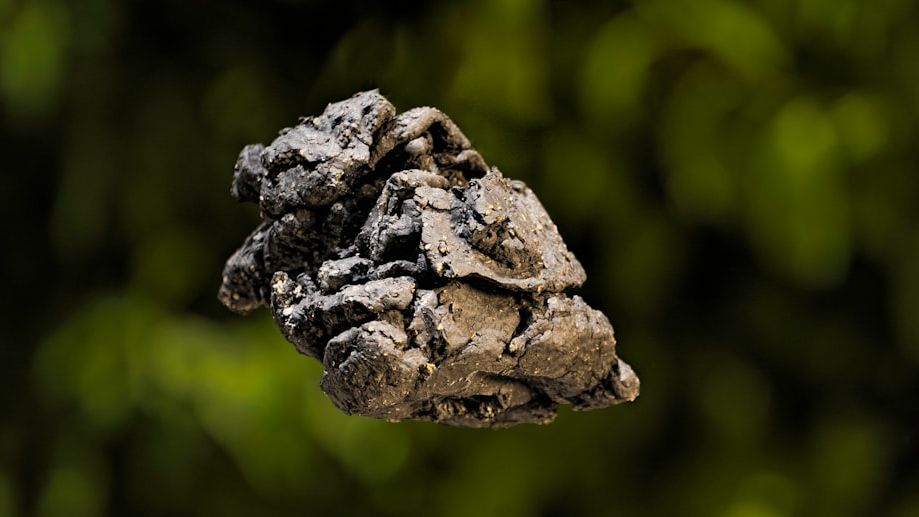
Mercury’s Distinctive Surface Chemistry (Image Credits: Unsplash)
Mercury defies expectations among the solar system’s rocky planets, boasting a crust unusually low in iron yet brimming with sulfur and magnesium. This composition marks it as the most reduced world known, where sulfides, carbides, and silicides prevail over the oxides familiar on Earth.[1][2] Researchers at Rice University drew on a century-old meteorite to simulate the planet’s early magmas, revealing how sulfur reshaped its geological evolution.
Mercury’s Distinctive Surface Chemistry
Missions like NASA’s MESSENGER spacecraft unveiled Mercury’s surface as iron-poor compared to neighbors like Earth, Venus, and Mars. Instead, high levels of sulfur and magnesium dominate the crust, hinting at an interior shaped by unique processes.[1] Planetary scientists classify Mercury as the solar system’s most reduced planet. This state reflects a chemistry favoring reduced compounds over oxidized ones.
The planet likely began with a vast magma ocean about 4.5 billion years ago. Layers formed over time, including a mantle, solid outer core, deeper liquid core, and small solid inner core. Yet without physical samples, interpreting this history proved challenging. Assumptions drawn from Earth’s geology fell short.
A Meteorite from Azerbaijan’s Past as Mercury’s Stand-In
The Indarch meteorite, which fell in Azerbaijan in 1891, emerged as a key analog. Classified as an EH4 enstatite chondrite, it formed near the Sun in the early solar nebula. Its high iron content paired with rare sulfides mirrored Mercury’s reduced profile.[2]
“Indarch chemically is as reduced as rocks on Mercury,” noted Yishen Zhang, a postdoctoral researcher at Rice University and lead author of the study. “It is believed to be a possible building block of the planet.”[1] This similarity allowed scientists to craft model melts from its composition. They treated it as a proxy for Mercury’s proto-planetary material.
High-Pressure Cooking to Recreate Ancient Magmas
Zhang mixed Indarch’s chemical components in a glass vial. The team then subjected the mixture to extreme heat and pressure in specialized facilities. These conditions echoed Mercury’s inferred early environment, guided by spacecraft data and theoretical models.[3]
The experiments produced rocks akin to those on Mercury’s surface. Sulfur emerged as pivotal, lowering the temperature at which these reduced, low-iron magmas crystallized. Unlike iron-rich magmas on planets like Earth or Mars, Mercury’s lacked abundant iron for sulfur to bind with. Instead, sulfur linked to magnesium and calcium.
This binding weakened the silicate network – the framework of silicon, oxygen, and other elements in magmas. Crystals formed earlier and at cooler temperatures than expected. “This process of cooking a rock can show us what happened chemically inside of Mercury,” Zhang explained.[3]
Sulfur’s Stand-In Role Transforms Planetary Evolution
| Aspect | Earth Magmas | Mercury Magmas |
|---|---|---|
| Primary Volatile Influence | Water or carbon | Sulfur[1] |
| Sulfur Binding | To iron | To magnesium/calcium (low iron)[2] |
| Crystallization Temperature | Higher for similar compositions | Lower, prolonged molten state |
| Dominant Compounds | Oxides | Sulfides, carbides, silicides |
Sulfur effectively took oxygen’s place in Mercury’s silicate structures. This substitution created less stable bonds, enabling magmas to remain fluid longer. On Earth, oxygen anchors the network more firmly.
Rajdeep Dasgupta, the study’s senior author and director of Rice’s Space Institute Center for Planetary Origins to Habitability, highlighted the parallel. “What water or carbon does to magmatic evolution of Earth, sulfur does on Mercury.”[1] These dynamics explain Mercury’s sulfur-rich crust and weak magnetic field.
Broader Insights into Rocky World Formation
The findings challenge Earth-centric models of planetary differentiation. Mercury’s reduced state drove a distinct path from magma ocean to layered interior. Sulfur’s influence prolonged melting, influencing crust formation and volatile retention.
This work, detailed in Geochimica et Cosmochimica Acta, offers a framework for other reduced bodies.[2] It underscores how elemental abundance dictates evolution. Future analyses may refine models as new data arrives, but the meteorite bridge brings Mercury’s secrets into sharper focus.
By sidestepping direct samples, scientists glimpsed processes billions of years old. Mercury’s story reminds us that each rocky planet carves its own chemical destiny, far from Earth’s familiar blueprint.