

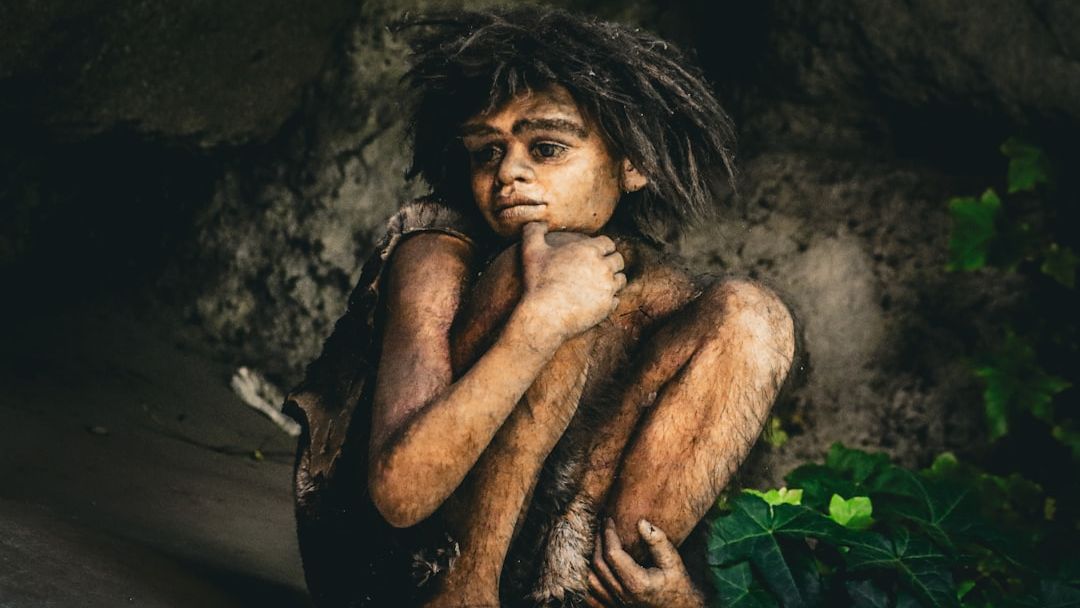
Disease as an Overlooked Architect of Prehistory (Image Credits: Unsplash)
Early humans traversing Africa’s vast landscapes faced more than harsh climates and scarce resources; invisible threats like malaria quietly dictated their paths, splitting groups and limiting interactions for millennia. Researchers now argue this disease profoundly influenced population distributions from 74,000 to 5,000 years ago, reshaping genetic exchanges that echo in modern humanity.[1][2] Such fragmentation challenged the notion of seamless human spread, highlighting disease as a key evolutionary force long before agriculture amplified its reach.
Disease as an Overlooked Architect of Prehistory
Traditional views of human origins emphasized climate and geography as primary shapers of early Homo sapiens’ movements within sub-Saharan Africa. Rivers, mountains, and deserts long stood accused of isolating populations, hindering gene flow and cultural exchange. Yet a recent study shifts focus to pathogens, positioning malaria – spread by Plasmodium falciparum via mosquitoes – as a formidable barrier.[1]
The research demonstrates that high malaria transmission risks confined humans to safer niches, preventing settlement in warm, wet hotspots ideal for mosquito breeding. This avoidance persisted across tens of thousands of years, fostering isolated clusters rather than unified expansion. Professor Eleanor Scerri of the Max Planck Institute of Geoanthropology noted, “Disease has rarely been considered a major factor shaping the earliest prehistory of our species.”[1] Her team’s findings, detailed in Science Advances, reveal how these patterns contributed to the diverse genetic tapestry observed today.
Reconstructing Malaria’s Ancient Reach
To map this invisible force, scientists employed species distribution models for three key mosquito complexes responsible for African malaria transmission. They integrated these with paleoclimate reconstructions and modern epidemiological data, projecting risks backward through time.[1] Lead author Dr. Margherita Colucci explained, “We used species distribution models of three major mosquito complexes together with palaeoclimate models. Combining these with epidemiological data allowed us to estimate malaria transmission risk across sub-Saharan Africa.”[1]
Separate human niche models, built from archaeological and environmental proxies, showed consistent avoidance of projected high-risk zones. Over 74,000 years, humans occupied drier, cooler areas, even when resources might have drawn them elsewhere. This independent modeling ruled out mere correlation, strengthening claims of causation. Dr. Michela Leonardi, a biodiversity modeler involved, observed that humans and mosquitoes rarely overlapped until later shifts.[2]
Fragmentation’s Lasting Human Toll
Malaria’s grip fragmented societies, reducing contact and gene flow across the continent. Genetic studies already hinted at disconnected ancient groups; this work provides an environmental explanation. Populations in low-risk refugia evolved somewhat apart, their interactions sporadic and shaped by seasonal or climatic windows.
- From 74,000 to around 60,000 years ago: Strong avoidance maintained isolation amid fluctuating climates.
- Around 60,000 years ago: Rising overlap aligned with successful out-of-Africa migrations, possibly as humans adapted or risks eased.
- About 12,000 years ago: Further convergence tied to climatic warming and the onset of sedentism.
- Until 5,000 years ago: Persistent influence before agriculture boosted vector habitats.
Professor Andrea Manica of the University of Cambridge emphasized, “By fragmenting human societies across the landscape, malaria contributed to the population structure we see today. Climate and physical barriers were not the only forces shaping where human populations could live.”[1] These dynamics underscore disease’s role in human adaptability.
From Ancient Evasion to Evolutionary Insights
The study’s timeline predates farming, which later intensified malaria by creating standing water and denser settlements. Early humans’ flexibility – expanding into varied environments despite risks – paved the way for global dispersal. Yet uncertainties remain: without ancient DNA from this era, direct pathogen traces are elusive, though modeling bridges the gap effectively.
Looking ahead, researchers plan to probe other diseases for similar signatures, refining our grasp of prehistory’s microbial influencers. For contemporary Africa, where malaria still claims lives, these revelations affirm the parasite’s deep entwinement with human fate. As Leonardi reflected, “Malaria is one of the most problematic diseases worldwide, and it has really shaped our evolution as humans.”[2] Understanding this past may inform strategies against its present persistence, reminding us that humanity’s story is inseparable from its microscopic foes.