

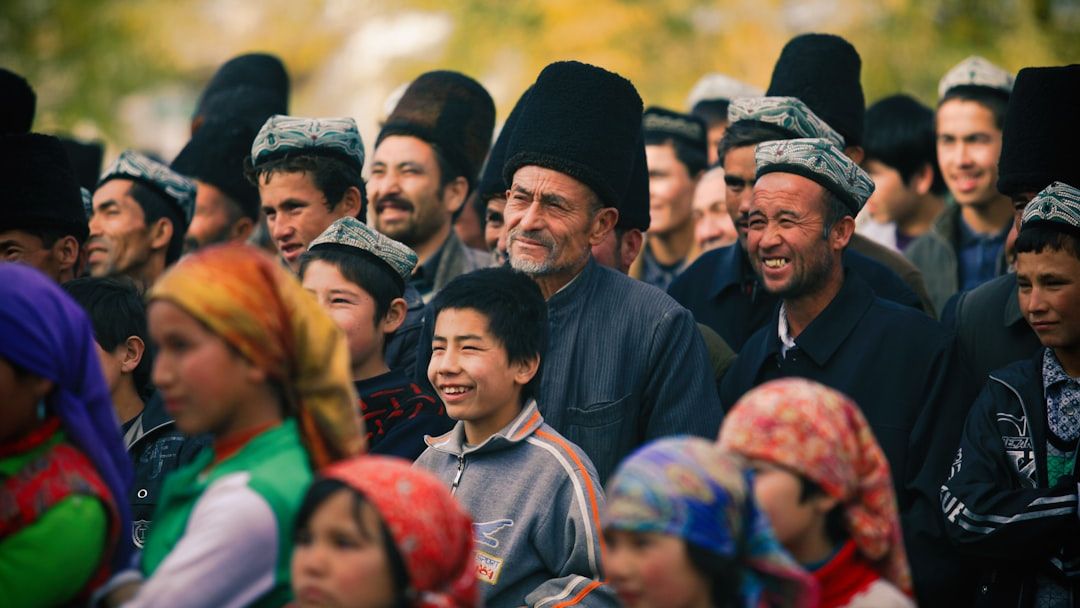
Kurdish militant official says Turkey has stalled peace talks, blaming a lack of reforms – Image for illustrative purposes only (Image credits: Unsplash)
Irbil, Iraq – A senior commander with the Kurdistan Workers’ Party declared that Turkey had effectively halted a budding peace process aimed at resolving a long-running conflict with Kurdish militants. The accusation came amid claims that Ankara failed to deliver promised legal and political changes. PKK officials contrasted their own compliance with what they described as government inaction, casting doubt on recent assurances from Turkish leadership.
Steps Taken by PKK in Peace Effort
Murat Karayilan, a co-founder and top leader of the PKK, outlined in an interview with the group-linked ANF news outlet the measures his organization had implemented. The militants declared a ceasefire and committed to ending their armed campaign as part of the initiative. They also held a symbolic disarmament event in northern Iraq and pulled fighters from strategic spots in Turkey back across the border.
Karayilan emphasized that the PKK had met its obligations at this stage. “The process is currently frozen. That’s what we’ve been able to see and what has been reported to us,” he stated. “We, as a movement, have fulfilled our responsibilities at this stage. It is clear that we have done everything necessary for the government to take action.” These actions followed a directive from the group’s imprisoned leader, Abdullah Ocalan, who urged disarmament and dissolution.
Government Commitments Unfulfilled
Turkish parliamentary sources had earlier proposed reforms to support the process, such as reintegrating PKK members who forswore violence, contingent on security checks confirming weapon surrender. Officials from the government and ruling party reportedly targeted April for introducing related legislation, a timeline that elapsed without any bill reaching lawmakers. Karayilan pointed to the absence of even preliminary steps, like freeing detained opposition figures and activists.
Zagros Hiwa, spokesperson for the PKK-affiliated Kurdistan Communities Union, echoed these concerns in remarks to The Associated Press. He noted persistent Turkish military operations in northern Iraq, the appointment of government trustees to replace elected Kurdish mayors, and the continued imprisonment of thousands of Kurdish and Turkish political detainees. Hiwa described Ocalan’s ongoing solitary confinement on Imrali island since 1999 as a core barrier, arguing that the PKK’s internal decision to disband hinged on the leader overseeing disarmament personally.
Clashing Narratives from Turkish Leadership
The militants’ assertions directly challenged statements from President Recep Tayyip Erdogan. Speaking to his party’s legislators a day prior, Erdogan portrayed the talks as advancing smoothly. “The process is proceeding as it should,” he maintained. “Those who write pessimistic scenarios about the process are acting entirely on their delusions, not on facts.” Turkish officials offered no immediate response to Karayilan’s interview.
Hiwa portrayed the government’s approach as politically motivated, suggesting it served to strengthen the ruling party ahead of elections rather than pursue true resolution. “The Turkish state has taken no legal and political steps towards peace and has been continuing war-time policies under new rhetoric,” he said. Such discrepancies highlighted the fragility of the dialogue.
Key Sticking Points in the Peace Process:
- Failure to introduce promised parliamentary legislation by April.
- Ongoing imprisonment of Abdullah Ocalan and political detainees.
- Turkish military presence in northern Iraq.
- Government appointees replacing elected Kurdish officials.
Historical Backdrop and Potential Fallout
The PKK launched its insurgency in 1984, seeking initially an independent Kurdish state before pivoting to calls for greater autonomy and rights within Turkey. The conflict has resulted in tens of thousands of deaths and extended into Iraq and Syria. Turkey, along with the United States and the European Union, classifies the group as a terrorist organization.
Hiwa warned that the deadlock’s trajectory rested with Turkish authorities. “What happens next totally depends on the attitudes of the Turkish state,” he cautioned, noting possible “precarious implications.” The impasse underscored the challenges in bridging deep-seated divides after years of violence.