

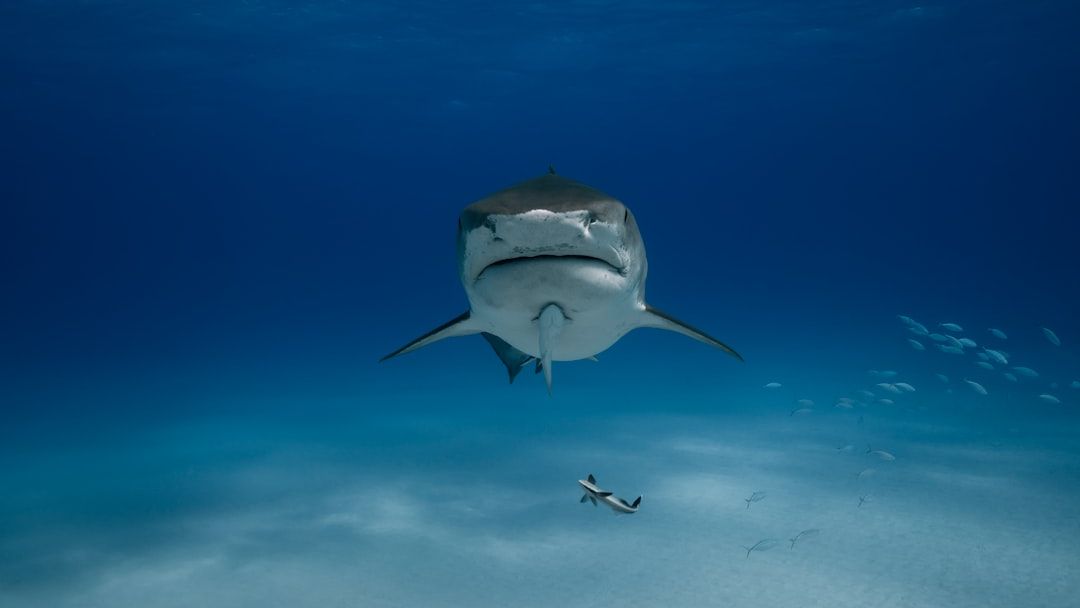
‘A very sharky summer’ is likely in store for California, experts say – Image for illustrative purposes only (Image credits: Unsplash)
Huntington Beach, California — Lifeguards cleared swimmers from the water on April 29 after a 9-to-10-foot great white shark fed aggressively on a sea lion carcass just off Sunset Beach. This incident marked the latest in a series of encounters that have closed popular Orange County beaches this spring and fueled predictions of heightened shark activity ahead. Experts point to an unusual marine heat wave as the culprit, drawing juvenile great whites northward earlier than typical.[1][2]
Wave of Encounters Shuts Down Beaches
The past month brought multiple disruptions to coastal routines. On March 26, an 8-foot great white circled a surfer near 35th Street in Newport Beach around 1:15 p.m., leading to a two-mile water closure until late afternoon. Lifeguards issued the order out of caution, as the shark appeared to transit the area.[3]
Days later, a fisherman freed a hooked juvenile great white close to Hermosa Beach Pier. Huntington Beach saw two aggressive sightings in recent days, including one near the pier that paused the Vans Jack’s Surfboards Pro competition. The April 29 event at Sunset Beach prompted a 48-hour shutdown spanning a mile in each direction from Tower 12, with no injuries reported.[1][2]
Farther north, a shark pursued a hydrofoiler for more than five minutes off Santa Barbara County on April 25. These events reflect a broader uptick in observations along the Southern California coast, where officials now monitor waters closely for unpredictable behavior.[1]
Unseasonal Warmth Fuels the Migration
Water temperatures have climbed into what researchers call the “sweet spot” for great whites, spurring juveniles to arrive from Baja California ahead of schedule. Dr. Chris Lowe, director of California State University Long Beach’s Shark Lab, noted the shift stems from an early marine heat wave gripping the region. “We’re having an unusual early marine heat wave right now in Southern California,” he said. “A lot of sharks are showing up earlier than they normally would, because the water’s warmer.”[1][3]
This pattern echoes conditions during the strong El Niño of 2015-2016, when young sharks lingered offshore through winter. Over the last decade, Lowe’s team documented a marked rise in wintertime presence, previously rare before spring. Climate-driven warming exacerbates the trend, with March 2026 marking the hottest on record and potentially inviting species like hammerheads.[3]
White shark numbers have grown steadily across the past two decades, signaling a healthier ocean ecosystem abundant in prey such as stingrays and fish. Juveniles, often 5 to 10 feet long, hug shallow waters to hunt these staples, occasionally surfacing near beachgoers. Though sightings multiply, the sharks generally steer clear of humans, viewing them as neither threat nor meal.[1]
Lowe emphasized this coexistence: “As we speak, a juvenile white shark is swimming underneath a surfer or swimmer somewhere in Southern California.” His lab’s data reinforces that people rarely register on their radar, even in crowded surf zones.[3]
Low Risks Temper the Warnings
California’s shark incident records underscore the slim odds of harm. From 1950 to 2022, the state logged 202 encounters, nearly 90 percent involving great whites, resulting in 15 fatalities, 59 major injuries, and 49 minor ones. The most recent decade saw 24 injuries and three deaths—a fraction relative to millions of annual ocean users.[3]
Stingrays, by contrast, injure about 10,000 Californians each summer. Lowe attributes rare bites to cases of mistaken identity, where a shark tests a paddler or surfer silhouette resembling a seal before swimming off. Defensive nips occur if humans encroach on feeding zones, as Huntington Beach Marine Safety Chief Trevor McDonald observed during the sea lion incident: feeding sharks grow protective of large meals.[1]
Navigating the Shared Waters
Authorities respond swiftly to sightings, deploying boats and issuing all-clears once threats subside. Newport Beach reopened within hours last month, while Huntington’s protocols extend closures for feeding or erratic actions. Lowe urges vigilance: “People should always assume anytime they’re in the water, a white shark could be nearby.” He trusts instinctive cues, like neck prickles, over gadgets alone.[1]
Still, Lowe foresees a “very sharky summer” but frames it positively. Thriving shark populations hint at robust marine life, and habituation may further reduce incidents as sharks learn to dismiss swimmers. Beach communities adapt by fostering awareness, ensuring the coast remains open for recreation amid nature’s rhythms.