

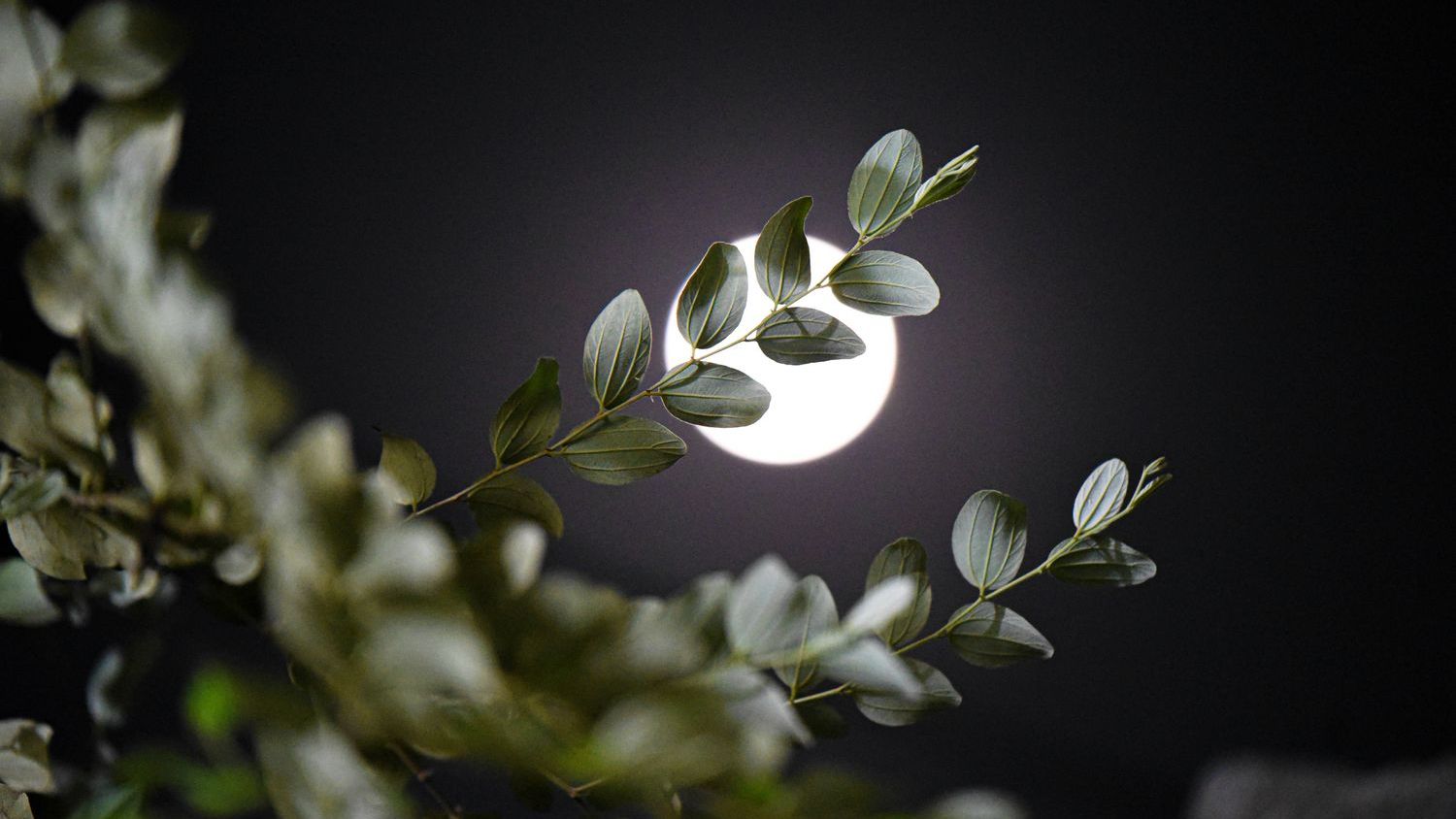
May’s full ‘Flower Moon’ rises tonight: Here’s what to expect from the ‘micromoon’ – Image for illustrative purposes only (Image credits: Unsplash)
As spring unfolds across the northern hemisphere with vibrant blooms, the first full moon of May takes center stage tonight. Known traditionally as the Flower Moon, this celestial event peaks in the afternoon but offers its fullest view after sunset.[1][2] What sets it apart this year marks a counterintuitive twist: it qualifies as a micromoon, appearing slightly smaller and dimmer than a typical full moon due to its position in Earth’s orbit.[3] Skywatchers have a prime opportunity to appreciate this subtle variation amid the month’s rare double full moon lineup.
The Unique Timing of May’s Double Full Moons
This Flower Moon reaches peak illumination at 1:23 p.m. EDT on May 1, placing the exact full phase during daylight hours.[4][1] Observers will still witness a nearly perfect disk rising in the east-southeast after sunset, maintaining its full appearance through the night and into May 2. The event gains added intrigue from May’s second full moon on May 31, creating a blue moon scenario that underscores the lunar calendar’s occasional quirks.[1]
Such double full moons occur roughly every 2.7 years, but this pairing stands out further because both qualify as micromoons.[1] For casual viewers, the practical impact remains minor – tides run slightly lower than during supermoons – but the alignment invites reflection on the moon’s elliptical path around Earth. Astronomers note this configuration highlights how orbital dynamics shape our nightly sky shows without dramatic spectacle.
What Defines a Micromoon
A micromoon happens when a full moon coincides with or nears apogee, the farthest point in the moon’s orbit from Earth, averaging about 252,000 miles away compared to the typical 239,000 miles.[3][5] This positioning reduces the moon’s apparent diameter by roughly 6 percent relative to an average full moon and up to 14 percent versus a supermoon.[5] Though the difference proves subtle to the unaided eye, it renders tonight’s Flower Moon the smallest full moon of 2026.[6]
Unlike the hype surrounding supermoons, micromoons draw attention through quiet contrast. The moon’s orbit elongates over 27 days, pulling it farther during apogee and closer at perigee. This May 1 event aligns closely enough with apogee – around early May – to earn the designation, setting the stage for the even more distant blue micromoon later in the month.[3] Professional observers use precise measurements, but enthusiasts can spot the nuance by comparing mental notes from recent fuller moons.
| Moon Type | Distance from Earth (miles) | Apparent Size Difference |
|---|---|---|
| Average Full Moon | ~239,000 | Baseline |
| Micromoon (e.g., May 1) | ~252,000+ | 5-7% smaller[5] |
| Supermoon | <225,000 | 12-14% larger than micromoon[5] |
Viewing Tips for Optimal Sighting Tonight
The Flower Moon rises shortly after sunset across much of the U.S., glowing with a potential warm orange hue from atmospheric scattering as it hugs the horizon.[2] In New York, expect moonrise around 8:17 p.m. EDT; Los Angeles sees it near 8:00 p.m. PDT, varying by location.[7] Seek open horizons free of trees or buildings for the clearest ascent, where the moon illusion may paradoxically make it seem larger against earthly backdrops.
Clear skies enhance the experience, though urban light pollution poses the main hurdle. Binoculars reveal details like the Sinus Medii crater amid the fully lit maria.[2] Nearby stars such as Spica in Virgo and Arcturus in Bootes frame the scene, while Venus and Jupiter sparkle westward. Smartphone apps pinpoint exact rise times and track the moon through Libra.
- Arrive 30 minutes before sunset for horizon setup.
- Frame shots with spring foliage for context.
- Avoid midday viewing; save energy for evening glow.
- Check local forecasts – minimal clouds ideal.
- Compare size mentally to April’s fuller moon.
Cultural Roots and Enduring Legacy
Native American tribes, including Algonquin peoples, dubbed this the Flower Moon for May’s profusion of wildflowers signaling spring’s peak.[1] Other names reflect seasonal shifts: Planting Moon among Dakota and Lakota for sowing seeds, Budding Moon or Leaf Budding Moon by Cree for emerging flora, and Egg Laying Moon or Frog Moon for wildlife cues.[1] These labels, documented in early colonial accounts like Jonathan Carver’s 1798 travels, tie lunar cycles to survival and renewal.
Folklore adds layers, warning that clothes washed under this moon wear out quickly, while it favors marriage proposals.[1] Anglo-Saxon traditions called it the Milking Moon, and some European groups the Hare Moon. This rich tapestry persists, blending astronomy with cultural memory even as modern viewers chase micromoon facts.
The Flower Moon’s rise tonight closes spring’s chapter on a measured note, its diminished scale inviting closer scrutiny rather than awe. As it traverses the sky, it bridges ancient names with contemporary observation, ensuring the moon remains a steadfast companion in an ever-changing world.