

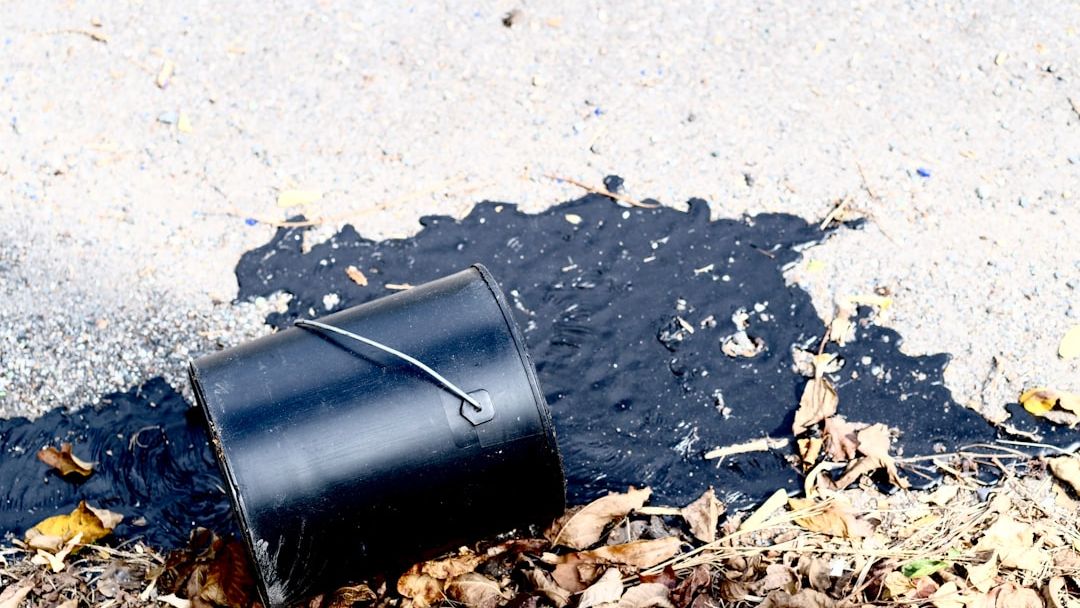
OSHA investigating deadly tar spill at South Houston asphalt facility – Image for illustrative purposes only (Image credits: Unsplash)
South Houston — A catastrophic tank failure at a local asphalt facility unleashed 50,000 gallons of hot liquid tar on Wednesday afternoon, claiming the life of one worker buried under three feet of the scorching material.[1][2] Emergency crews recovered the victim’s body later that evening, while federal regulators launched a probe into the deadly incident at Martin Asphalt.[3] The event underscores persistent hazards in industrial operations handling high-temperature substances.
The Deadly Incident at Martin Asphalt
The spill occurred around 3:30 p.m. on April 29 at the Martin Asphalt facility in the 300 block of Christy Place.[1][2] A large storage tank ruptured, flooding the area with tar initially reported as asphalt but later clarified as tar by fire officials.[1] The worker, who was on duty at the time, became trapped beneath the flow and perished at the scene.
Harris County Fire Marshal’s Office representatives confirmed the victim had been engulfed under approximately three feet of the material.[1] Aerial footage captured the extensive black spread around the damaged tank, with the substance reaching nearby streets.[3] No other injuries were reported among responders or staff.
Swift Response and Body Recovery
Multiple agencies mobilized immediately, including the Harris County Fire Marshal’s Office, Pasadena Fire Marshal’s Office, Houston Fire Department, and hazardous materials teams from the City of South Houston.[3] Recovery efforts stretched into the evening, with the body extracted around 8:30 p.m. by the Harris County Institute of Forensic Sciences.[3] The Pasadena Fire Marshal’s Office took the lead on the initial probe.
Martin Resource Management, the facility’s operator, activated emergency protocols and notified authorities.[4] Sharon Taylor, the company’s executive vice president and chief financial officer, stated, “This is a tragic situation, and we are treating it with the utmost seriousness at every level of our company.”[3] The firm extended sympathies to the victim’s family while withholding further details to respect privacy and support ongoing reviews.
Cleanup Challenges and Safety Checks
By Thursday, crews in hazmat suits and protective gear began excavating contaminated soil for off-site remediation, a process officials estimated could span several days.[2] The tar, once fluid and dangerously hot, had begun to solidify, reducing immediate risks if covered properly.[2]
Harris County Pollution Control Services monitored air quality extensively and detected no airborne contaminants.[4] Officials deemed the material non-threatening to public health once cooled, though fresh fumes could irritate eyes, nose, and respiratory systems.[5] Geology expert Christine Brandford noted that crews typically repurpose such soil into new asphalt products.
- OSHA’s investigation into the fatality may take up to six months.[5]
- Cleanup prioritizes soil removal to prevent runoff, especially with rain forecast.
- No elevated pollution levels detected, but residents advised to report concerns.
Neighboring Worries Persist
Residents near the plant voiced unease over lingering odors and potential runoff. Laylow Martinez, living across the street, reported headaches, nausea, and skin irritation after crews sprayed water on the spill.[4][5] He worried about his young child’s exposure, stating, “I got a little kid, and I don’t want him to get any side effects from breathing in all this.”[5]
Despite assurances of safe air readings, some neighbors planned precautions like masks amid the strong smells as temperatures rose.[2] The City of South Houston reported no prior complaints about the facility.
As OSHA delves into the tank failure’s root causes, the focus remains on supporting affected workers and restoring the site safely. This tragedy highlights the unforgiving nature of handling molten materials in industrial settings, where a single malfunction can prove fatal.