

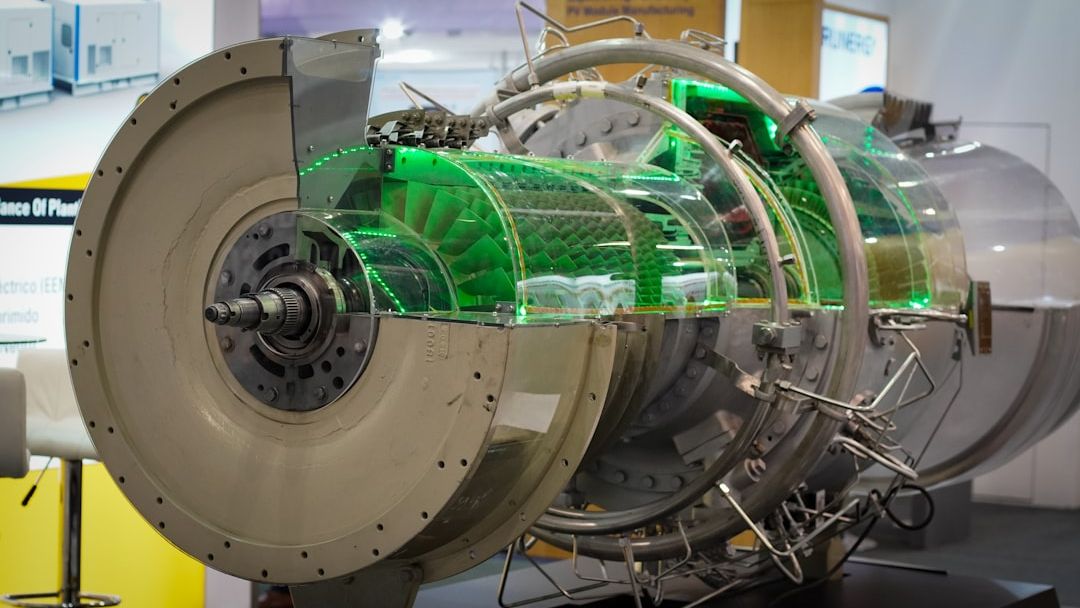
New Lithium-Plasma Engine Passes Key Mars Propulsion Test – Image for illustrative purposes only (Image credits: Unsplash)
Pasadena, California – A prototype lithium-fed thruster achieved a milestone power output of 120 kilowatts during tests at NASA’s Jet Propulsion Laboratory last February, marking the highest level for electric propulsion systems in the United States.[1][2] Engineers fired the device five times in a specialized vacuum chamber, where its tungsten electrode reached over 5,000 degrees Fahrenheit. The successful demonstration provides critical data toward propulsion systems that could support crewed voyages to the Red Planet.
Breakthrough in High-Power Testing
The test took place on February 24 in JPL’s Electric Propulsion Laboratory, inside the condensable metal propellant vacuum facility, a 26-foot-long chamber designed for metal-vapor thrusters.[1] Senior research scientist James Polk observed the ignitions through a portal as the nozzle-shaped electrode glowed incandescent and produced a vibrant red plume. This marked the first such high-power operation of a magnetoplasmadynamic thruster in years.
“Designing and building these thrusters over the last couple of years has been a long lead-up to this first test,” Polk said. “It’s a huge moment for us because we not only showed the thruster works, but we also hit the power levels we were targeting.”[3][1] The effort, developed over 2½ years, involves collaboration with Princeton University and NASA’s Glenn Research Center under the Space Nuclear Propulsion project.
Mechanics of the MPD Thruster
The lithium-fed magnetoplasmadynamic, or MPD, thruster vaporizes lithium metal into plasma, which high electrical currents and magnetic fields then accelerate electromagnetically to generate thrust.[2] Unlike solar-powered ion thrusters on missions like Psyche, which deliver low continuous push, MPD designs aim for greater thrust at elevated power. Electric propulsion overall consumes up to 90% less propellant than chemical rockets by building speed gradually over time.
Psyche’s thrusters, the most powerful currently flying on a NASA spacecraft, operate at about 4.8 kilowatts and propel the probe toward 124,000 miles per hour. The new prototype’s 120 kilowatts exceeds that by a factor of 25, demonstrating potential for heavier payloads and faster acceleration profiles.[1]
| Thruster Comparison | Power Level | Key Feature |
|---|---|---|
| Psyche Mission | ~4.8 kW | Solar-powered, operational |
| Lithium MPD Prototype | 120 kW | U.S. record, lithium plasma |
| Mars Mission Target | 2-4 MW total | Multiple units, nuclear-powered |
Pathway to Crewed Mars Travel
Human missions to Mars demand propulsion capable of 2 to 4 megawatts total power, likely from several thrusters running more than 23,000 hours to align with every-two-year launch windows.[3] Paired with nuclear generators, lithium MPD systems could cut launch mass significantly while handling the supplies needed for round trips lasting up to 2.6 years: six to nine months outbound, 18 months on the surface, and a similar return leg.
NASA Administrator Jared Isaacman highlighted the progress: “This marks the first time in the United States that an electric propulsion system has operated at power levels this high, reaching up to 120 kilowatts.”[2] The technology, researched since the 1960s but unproven in flight, draws from Polk’s prior work on Deep Space 1 and Dawn, the first deep-space electric propulsion demonstrations.JPL’s announcement details the setup.
Key Takeaways
– 120 kW sets new U.S. benchmark for electric thrusters.
– Lithium plasma enables efficient, high-thrust operation.
– Next tests target 500 kW to 1 MW per unit.
– Supports nuclear systems for Mars payload demands.
Overcoming Heat and Endurance Hurdles
Extreme temperatures challenge component durability, as the thruster must endure prolonged operation without failure. Upcoming tests will focus on scaling power while validating longevity in simulated space conditions. Data from this initial run establishes a solid foundation for those efforts.
Funded through NASA’s Space Technology Mission Directorate at Marshall Space Flight Center, the project addresses one of five critical elements for megawatt-class nuclear electric propulsion.[4] Success here positions the MPD thruster as a contender to transform interplanetary travel, enabling reliable transport to Mars and beyond.
This test confirms viable hardware for the demanding realities of deep-space propulsion. Further refinements will determine its role in NASA’s Mars architecture.