

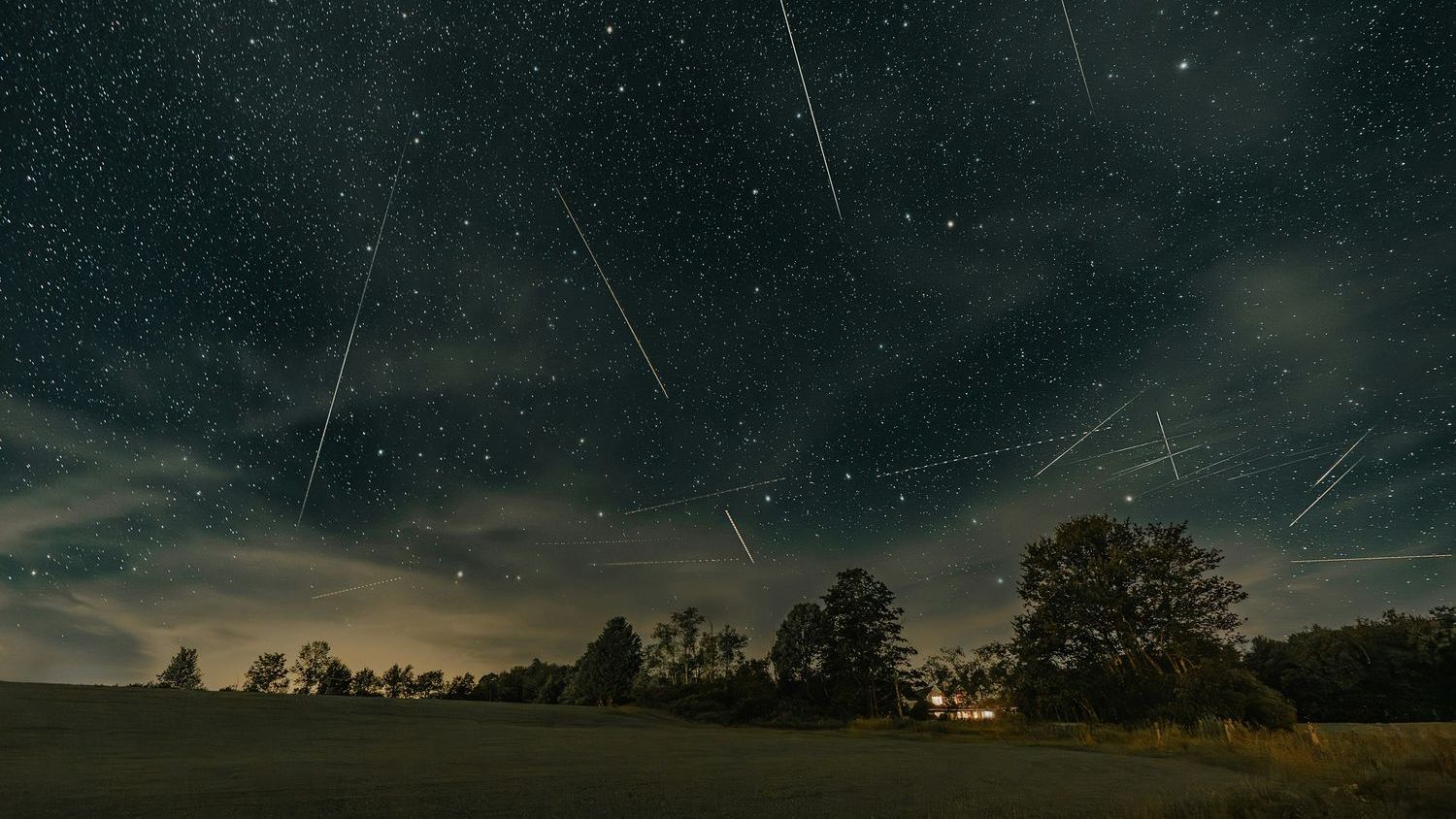
Starwatch: Eta Aquariid meteor shower bursts into the skies – Image for illustrative purposes only (Image credits: Unsplash)
As night gives way to the early hours of May 6, skygazers worldwide prepare for one of spring’s most reliable celestial displays. The Eta Aquariid meteor shower, fueled by fragments from Halley’s Comet, promises swift streaks across the heavens during its annual peak on the night of May 5-6.[1][2] This event draws enthusiasts eager to witness the comet’s ancient trail burn up in Earth’s atmosphere, offering a fleeting connection to cosmic history.
Tracing Roots to a Famous Comet
The Eta Aquariids owe their existence to Halley’s Comet, the periodic visitor that last graced Earth’s skies in 1986 and will return around 2061. Earth plows through the comet’s debris stream twice a year, producing both the Eta Aquariids in May and the Orionids in October.[3] These particles, no larger than sand grains, vaporize upon entry, creating the glowing trails observers cherish.
Meteors from this shower stand out for their velocity, hurtling at about 40.7 miles per second. They often leave persistent trains – glowing ionized paths that linger for seconds or longer – adding drama to the display.[4][5] Active from late April through late May, the shower builds gradually, but activity surges around the peak.
Prime Viewing Hours and Sky Position
The shower reaches maximum on the night of May 5-6, with the best action unfolding before dawn. Viewers should target the hours after midnight, when the radiant – the point in Aquarius from which meteors appear to radiate – rises in the eastern sky.[6][7] By 4 a.m., it climbs higher, improving visibility as more sky becomes available.
Southern Hemisphere locations enjoy the prime seats, potentially seeing up to 50 meteors per hour under ideal conditions. Northern observers, including those in the U.S., might catch 10 to 30, with rates higher toward the equator.[8] Meteors can appear anywhere overhead once the radiant clears the horizon, so a wide gaze works best.
Key Viewing Timeline:
- Active period: April 19 to May 28
- Peak night: May 5-6
- Best window: After midnight to pre-dawn
- Radiant direction: East to southeast
Navigating Moonlight and Maximizing Sights
A waning gibbous moon, about 82% illuminated, poses the main hurdle this year. Rising around 1 a.m., it floods the sky with light, washing out fainter meteors and potentially halving expected counts.[9][7] Still, bolder fireballs should pierce through, rewarding patient watchers.
To optimize chances, seek remote spots far from city glow. No telescope or binoculars needed – eyes alone suffice. Lie back in a recliner, let vision adapt for 20-30 minutes, and scan the dome above the radiant. Dress warmly, bring blankets, and consider a meteor-counting app for fun.
Clouds or poor weather can thwart plans, so check forecasts. Apps like those from the American Meteor Society help track real-time reports.
Why This Shower Captivates Year After Year
The Eta Aquariids deliver consistency rare among meteor events, thanks to Halley’s predictable orbit. Their speed and trains create a sense of motion unmatched by slower showers. Even in suboptimal years like 2026, the thrill of spotting one – let alone a flurry – sparks wonder.
Grab the chance tomorrow night. As debris from a comet that has circled the sun for eons meets our atmosphere, the sky reminds us of the universe’s grand scale. Step outside, look up, and join countless others in this shared spectacle.