

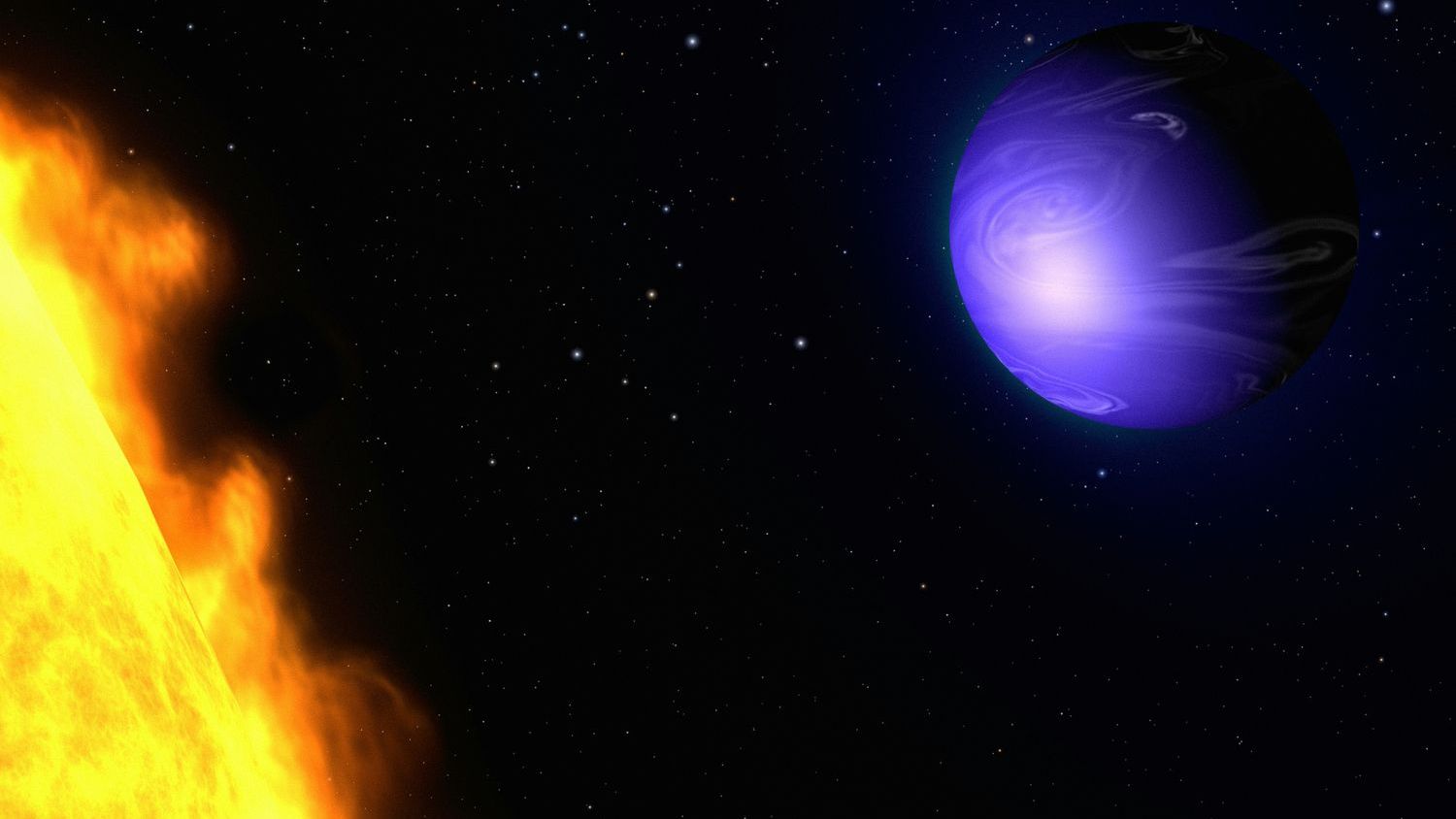
Cosmic Cannibalism: When Stars Eat Their Planets – Image for illustrative purposes only (Image credits: Unsplash)
Astronomers analyzing pairs of stars born from the same cosmic nursery have found that about one in every twelve Sun-like stars shows clear signs of having ingested planetary material. These chemical scars, detected in the stars’ atmospheres, reveal a surprisingly frequent form of cosmic violence. The research, published in Nature in March 2024, doubles the known cases of such events and challenges assumptions about the stability of planetary systems.
Twins Reveal Hidden Diets
Stars born together from the same molecular cloud should share identical chemical makeup, much like human twins start with the same DNA. Yet observations often show slight differences, prompting researchers to hunt for explanations. A team led by Fan Liu from Monash University in Australia turned to co-moving stellar pairs – siblings that drift through the galaxy at the same speed and direction, confirming their shared origin.
Using data from the Gaia satellite, they selected 91 such pairs, each separated by less than five light-years. High-resolution spectra from the Very Large Telescope, Magellan, and Keck observatories then provided precise measurements of 21 elements in these stars. Such accuracy proved essential, as planetary ingestion alters abundances by only about 10 percent.
The Chemical Fingerprint of a Feast
Rocky planets concentrate refractory elements like iron, silicon, and aluminum, which solidify at high temperatures in a cooling protoplanetary disk. When a star engulfs one, these elements enrich its outer layers relative to volatiles such as carbon and oxygen. Researchers plotted abundance differences between twins against each element’s condensation temperature, seeking an upward trend: higher enrichment for rock-forming elements.
This pattern distinguishes true ingestion from random noise or other stellar processes. A flat line would indicate no real change, while uniform shifts across all elements might suggest unrelated pollution. The positive slope specific to refractories became the key signature, but confirmation required more rigorous testing.
Ruling Out Impostors with Statistics
Condensation trends alone could mislead, as birth environment variations or atomic diffusion – where heavier elements gradually sink into a star – might produce similar effects. To separate fact from mimicry, the team employed Bayesian analysis, pitting three models against the data: planetary ingestion, a null model of pure measurement error, and atomic diffusion.
Only pairs where ingestion outperformed both alternatives earned confirmation. This method flagged seven planet-eaters among the 91 pairs, yielding the 1-in-12 rate. The ingested masses averaged around four Earth masses, comparable to super-Earths – rocky worlds bigger than our planet but smaller than Neptune.
| Model Tested | Description | Outcome for Confirmed Pairs |
|---|---|---|
| Planetary Ingestion | Enrichment in refractory elements | Favored strongly |
| Null (Noise) | Random measurement variations | Rejected |
| Atomic Diffusion | Element settling over time | Rejected |
Timing and Triggers of Planetary Doom
Computer simulations of planetary systems predict most collisions and ejections occur early, within the first 100 million years. However, traces from such ancient meals might dilute over billions of years through stellar mixing. The persistence of these signatures points instead to later instabilities.
Possible culprits include gravitational disruptions from outer giant planets shoving inner worlds inward, or close encounters with passing stars. Not all Sun-like stars host super-Earths, so the observed rate implies that many such systems face eventual chaos, culminating in a star consuming its offspring.
Lessons from the Cosmos’ Receipts
This work not only confirms more planet-eating events but also offers data to refine models of planet formation and dynamics. Stable systems today may harbor unseen tensions, much like quiet families with buried conflicts. By reading these stellar memories, astronomers glimpse the turbulent paths planets often take.
The findings underscore a cosmos where destruction shapes survival. Sun-like stars, our closest stellar kin, routinely record such dramas in their atmospheres – reminders that planetary fates can turn abruptly, even after eons of apparent calm.