

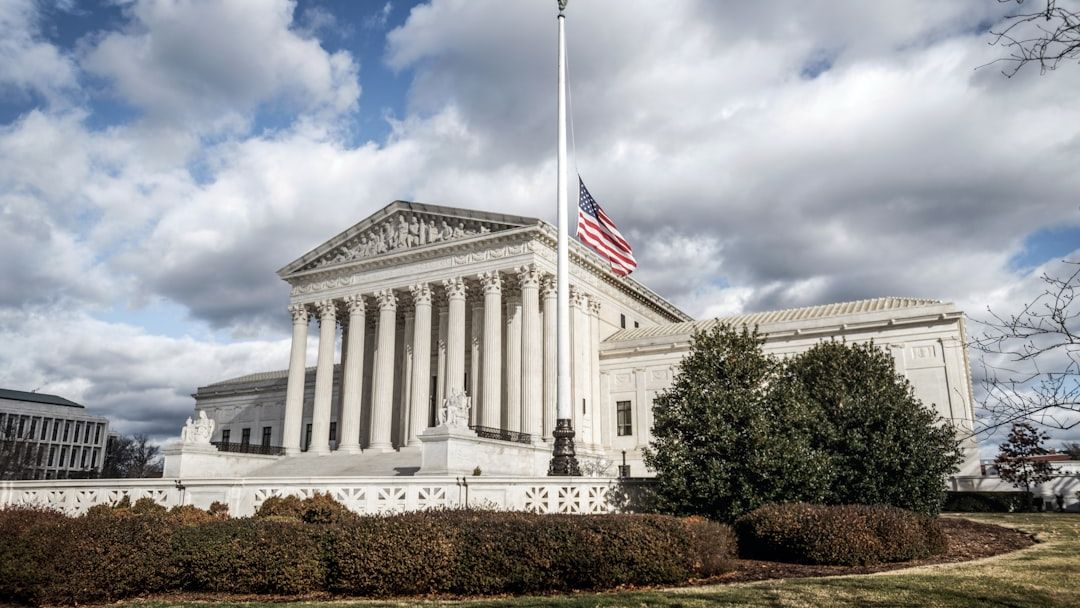
Supreme Court Trusts Americans, I Don’t – Image for illustrative purposes only (Image credits: Unsplash)
The Supreme Court’s decision in Louisiana v. Callais marks a pivotal moment for how states draw congressional districts amid Voting Rights Act claims. Issued on April 29, 2026, the 6-3 ruling struck down the state’s map that included a second majority-Black district, deeming it an unconstitutional racial gerrymander.[1][2] This outcome affects not only Louisiana’s six House seats but also sets stricter standards nationwide for challenges under Section 2 of the 1965 Voting Rights Act. As states eye mid-decade adjustments before 2026 elections, the case underscores tensions between equal protection guarantees and protections against vote dilution.
Roots of the Louisiana Redistricting Battle
After the 2020 census confirmed Louisiana’s six congressional seats, state lawmakers approved House Bill 1 in 2022. That plan retained one majority-Black district while five others favored white majorities, reflecting the population where Black residents comprise about one-third of the total.[3] Black voters filed suit in Robinson v. Ardoin, arguing the map diluted their voting strength in violation of Section 2 of the Voting Rights Act.
A federal district judge agreed the initial map likely breached the law and ordered revisions. To avert a court-drawn alternative, legislators passed Senate Bill 8 in early 2024. This version crafted District 6 as a second majority-Black seat by linking scattered Black communities across 220 miles, prioritizing a voting-age Black population over 50 percent. The map enabled Cleo Fields’ election that year but drew immediate opposition from non-Black voters who called it a racial gerrymander breaching the 14th and 15th Amendments.[2]
The Majority’s Core Reasoning
Justice Samuel Alito wrote for the majority, joined by Chief Justice John Roberts and Justices Clarence Thomas, Neil Gorsuch, Brett Kavanaugh, and Amy Coney Barrett. The opinion affirmed a three-judge district court’s finding that Senate Bill 8 subordinated traditional districting principles to race, triggering strict scrutiny under the Equal Protection Clause.[4] Race-based maps demand a compelling government interest and narrow tailoring, the Court noted, a high bar met only in rare cases like remedying proven constitutional violations.
Crucially, the justices concluded Section 2 did not compel Louisiana to add the second district. The original challengers in Robinson failed to satisfy the updated preconditions from Thornburg v. Gingles, meaning no VRA mandate existed. “Section 2 of the Voting Rights Act of 1965… was designed to enforce the Constitution – not collide with it,” Alito wrote.[1] Without that requirement, the state lacked justification for its racial focus.
Overhauling the Gingles Test
The decision recalibrated the 40-year-old Gingles framework for Section 2 vote-dilution claims, adapting it to modern realities. Plaintiffs now bear heavier burdens: illustrative maps must match state goals like compactness, contiguity, and incumbency protection without relying on race. Evidence of racially polarized voting must isolate racial motives from partisan ones, given strong correlations between race and party affiliation in the South.[1]
The totality-of-circumstances analysis shifts toward proof of current intentional discrimination, downplaying historical patterns. Advanced mapping software, the Court observed, enables precise demonstrations of race-neutral alternatives. These changes address post-Gingles shifts, including Black voter turnout parity with whites and the nonjusticiability of partisan gerrymanders under Rucho v. Common Cause.
What matters now: States must prioritize nonracial criteria; minority plaintiffs face tougher evidentiary hurdles in dilution suits.
Dissenting Views and Broader Pushback
Justice Elena Kagan dissented, joined by Justices Sonia Sotomayor and Ketanji Brown Jackson. She accused the majority of gutting Section 2 by demanding proof of discriminatory intent, reversing Congress’s 1982 amendments that targeted effects-based dilution. “Under the Court’s new view of Section 2, a State can, without legal consequence, systematically dilute minority citizens’ voting power,” Kagan argued.[1]
Justice Thomas concurred separately, joined by Justice Gorsuch, contending Section 2 never authorized proportional representation entitlements in districting. Civil rights groups decried the ruling as enabling minority vote suppression, while others praised it for curbing race-conscious mapmaking. Louisiana suspended primaries post-decision to redraw compliant lines.[3]
Consequences for Elections and Stakeholders
Louisiana voters, particularly Black communities comprising a key Democratic base, now await a revised map potentially reverting to one majority-minority district. Republicans, who control the legislature, stand to gain if the original configuration holds, mirroring trends in other Southern states. Nationwide, the ruling could deter Section 2 suits, easing GOP map advantages in places like Alabama and Georgia.[5]
Timelines press urgently: remedial plans target 2026 midterms, with mid-decade litigation surging. Stakeholders from the NAACP Legal Defense Fund to state attorneys general monitor fallout, as the decision influences up to a dozen House seats. For full text, see the Supreme Court opinion.[1]
This measured recalibration prioritizes constitutional limits on race while preserving Section 2’s anti-discrimination core, though its long-term impact on electoral fairness remains under scrutiny.