

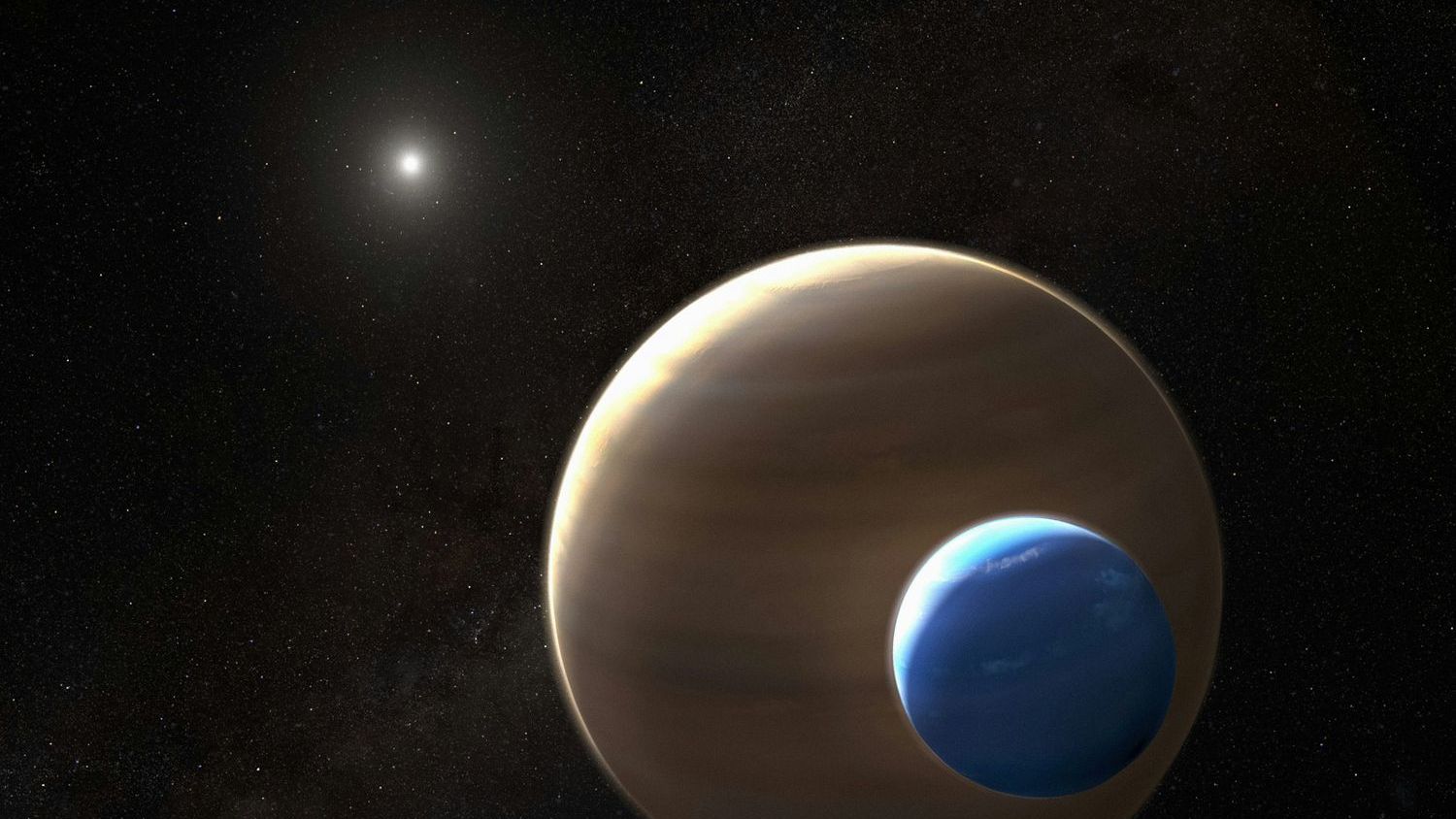
James Webb Space Telescope directly studies an exoplanet’s surface for the 1st time: ‘We see a dark, hot, barren rock’ – Image for illustrative purposes only (Image credits: Unsplash)
Astronomers have marked a pivotal moment in exoplanet research by directly scrutinizing the surface of LHS 3844 b, a rocky super-Earth orbiting a red dwarf star 48.5 light-years from our solar system.[1][2] Observations from the James Webb Space Telescope exposed a dark, airless world with scorching dayside temperatures, offering the first such detailed view of a distant planet’s exterior. This achievement builds on years of indirect studies and underscores JWST’s power to probe worlds beyond our own.[3]
Profiling the Enigmatic LHS 3844 b
LHS 3844 b stands out among known exoplanets due to its proximity and extreme conditions. This super-Earth boasts a radius about 30 percent larger than Earth’s and a mass exceeding twice that of our home planet.[3] It circles its cool red dwarf host star in a mere 11 hours, hugging close at just three stellar diameters from the stellar surface. Tidally locked, the planet keeps one face perpetually toward its star, creating a hot dayside averaging around 1,000 Kelvin – roughly 725 degrees Celsius or 1,340 degrees Fahrenheit.[1]
Such a tight orbit exposes the planet to intense stellar radiation, which previous observations hinted might strip away any atmosphere. Data from NASA’s Spitzer Space Telescope, gathered years earlier, laid groundwork for the JWST analysis by providing initial thermal insights. Discovered in 2019, LHS 3844 b now yields secrets through direct surface scrutiny, a feat unattainable with earlier telescopes.[3]
Unveiling the Surface with Infrared Precision
Researchers turned to JWST’s Mid-Infrared Instrument, or MIRI, to capture light directly from the planet’s scorching dayside. By measuring tiny brightness contrasts – expressed in parts per million – between the star and planet across wavelengths from 5 to 12 micrometers, the team constructed an infrared spectrum. This approach isolated the planet’s thermal emission, free from stellar interference.[2]
“Thanks to the amazing sensitivity of JWST, we can detect light coming directly from the surface of this distant rocky planet,” said Laura Kreidberg, director at the Max Planck Institute for Astronomy and principal investigator for the study. “We see a dark, hot, barren rock, devoid of any atmosphere.”[1] The spectrum matched against Earth, Moon, and Mars rock libraries, revealing no signs of volcanic gases like sulfur dioxide.
A Landscape Shaped by Cosmic Harshness
The resulting profile depicts a surface dominated by dark basaltic rock or iron- and magnesium-rich mantle material, possibly including olivine minerals. Extended solid areas or crushed gravel fit the data best, while fine powders appeared too bright. Space weathering from stellar radiation and meteorite impacts likely darkens the regolith, akin to processes on the Moon or Mercury.[2]
Two scenarios emerged: a fresh, solid rock exterior from recent volcanism, or an aged, powdered layer from prolonged exposure. The absence of outgassing favors the latter, suggesting geological dormancy. “It turns out, these processes not only slowly dissolve hard rocks into regolith, a layer of fine grains or powder as found on the Moon,” noted lead author Sebastian Zieba of the Center for Astrophysics at Harvard & Smithsonian. “They also darken the layer by adding iron and carbon, making the regolith’s properties more consistent with the observations.”[3]
What matters now: This first surface spectrum rules out an Earth-like silicate crust, hinting at limited water and ineffective plate tectonics on such worlds.
Insights into Alien Geology
The findings extend exoplanet studies from atmospheres to geology, drawing parallels to Solar System bodies. Without a protective atmosphere, LHS 3844 b endures relentless bombardment, fostering a Mercury-like barrenness on a super-Earth scale. Zieba added, “Since LHS 3844 b lacks such a silicate crust, one may conclude that Earth-like plate tectonics does not apply to this planet, or it is ineffective. This planet likely only contains little water.”[1]
Published in Nature Astronomy, the research involved experts from the Center for Astrophysics, Max Planck Institute, JPL, Caltech, and others under JWST General Observer program 1846.[3] Kreidberg emphasized, “We are confident the same technique will allow us to clarify the nature of LHS 3844 b’s crust and, in the future, other rocky exoplanets.”
Additional JWST data already targets surface texture differences between slabs and powders, promising sharper details on this and similar worlds. As JWST continues its survey, these observations illuminate how rocky planets evolve under extreme stellar proximity, refining models for habitable zones and beyond.[2]
This direct glimpse at LHS 3844 b not only confirms JWST’s exoplanet prowess but also opens a new era of comparative planetology, where distant rocks inform our understanding of geological diversity across the cosmos.