

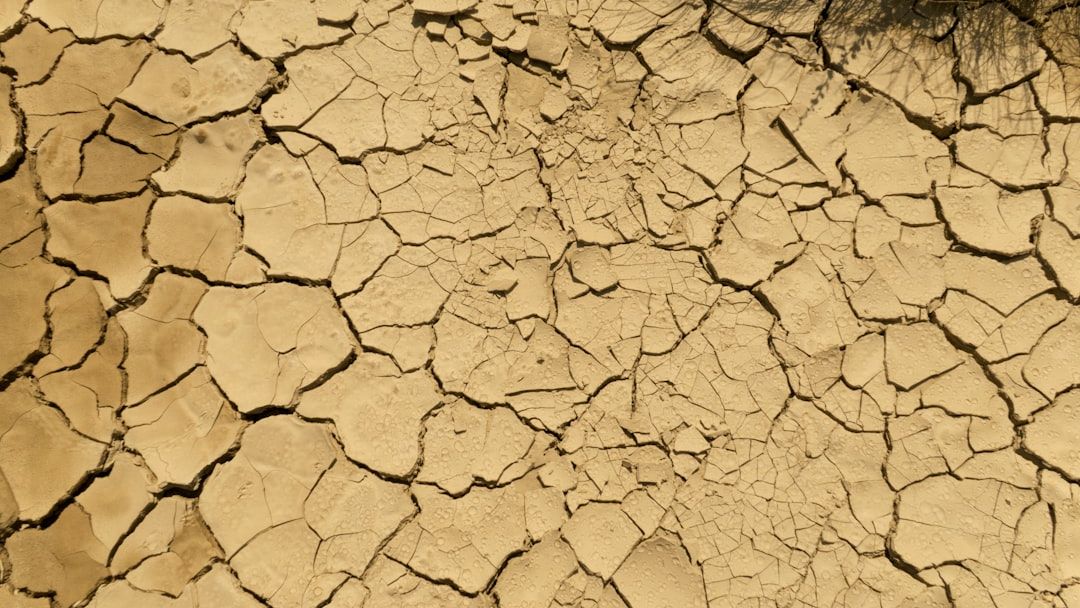
Let’s Not Forget About Long Droughts – Image for illustrative purposes only (Image credits: Unsplash)
Communities enduring extended dry spells often rely on hydrologic models to forecast water availability and guide tough decisions on rationing or infrastructure. Yet a recent analysis revealed that most of these tools falter when droughts stretch into years, as seen during Australia’s severe Millennium Drought from 1997 to 2009. That event strained water supplies across the continent, highlighting the real-world stakes when predictions go awry. Researchers now urge a shift toward more nuanced representations of underground water dynamics to better equip water managers for future crises.
Drought Dynamics Challenge Model Assumptions
Scientists tested over 40 conceptual rainfall-runoff models against data from prolonged dry periods. These models, designed for simplicity, aim to simulate how rainfall translates into streamflow and groundwater storage. The study, published in the March 2026 issue of Water Resources Research, focused on their performance during multi-annual droughts.
Results showed the vast majority failed to capture essential storage shifts over extended timelines. Even calibration efforts, meant to fine-tune the models to observed data, often led to overfitting rather than genuine improvement. This sobering outcome underscores a core limitation: many models overlook deep aquifer processes that govern long-term water retention.
Australia’s Millennium Drought as a Test Case
The Australian Millennium Drought provided a stark real-world benchmark. Lasting more than a decade, it depleted reservoirs and aquifers, forcing widespread conservation measures and investments in desalination plants. Water authorities turned to hydrologic models for guidance, but the tools struggled to reflect the slow depletion of deep groundwater reserves.
During this period, surface water sources dried up quickly, while subsurface stores released water more gradually – a dynamic most conceptual models could not replicate. The study’s authors demonstrated how this mismatch distorted forecasts, potentially leaving planners unprepared for the drought’s full duration and severity.
Root Causes of Model Shortcomings
Conceptual models prioritize parsimony, using fewer parameters to avoid complexity. While this approach works for short-term events, it misses hydrodynamic processes in deep aquifers. These include slow recharge rates and variable release mechanisms that become critical during droughts lasting years.
Without accounting for these time scales, models produce unreliable simulations of storage recovery. Calibration exacerbated the issue by fitting noise rather than underlying physics, as noted by Stefan Kollet, editor of Water Resources Research. He described the findings as “a constructive reminder that model parsimony is not necessarily a good thing.”
Implications for Water Management and Research
Water resource planners worldwide face increasing drought risks amid climate variability. Faulty models could lead to misguided policies, such as over-reliance on short-term reserves or delayed emergency measures. The study calls for integrating detailed physical processes into hydrologic frameworks.
Key areas for advancement include:
- Enhanced representation of deep aquifer storage and flow dynamics.
- Development of hybrid models blending conceptual simplicity with process-based detail.
- Better validation protocols using long-term drought datasets.
- Exploration of data assimilation techniques to counter overfitting.
These steps could yield more robust tools for regions prone to multi-year dry spells, from Australia to the American Southwest.
Toward More Reliable Forecasting
The research by Zhang, Fowler, and Peel offers a pathway forward through greater emphasis on physical realism in hydrologic modeling. Their work appears in Water Resources Research (Volume 62, e2025WR042226). As droughts grow more frequent, bridging this gap will prove vital for safeguarding water security.
Ultimately, the human cost of unreliable predictions – disrupted agriculture, strained cities, and economic losses – demands models that match the complexity of nature’s extremes.