

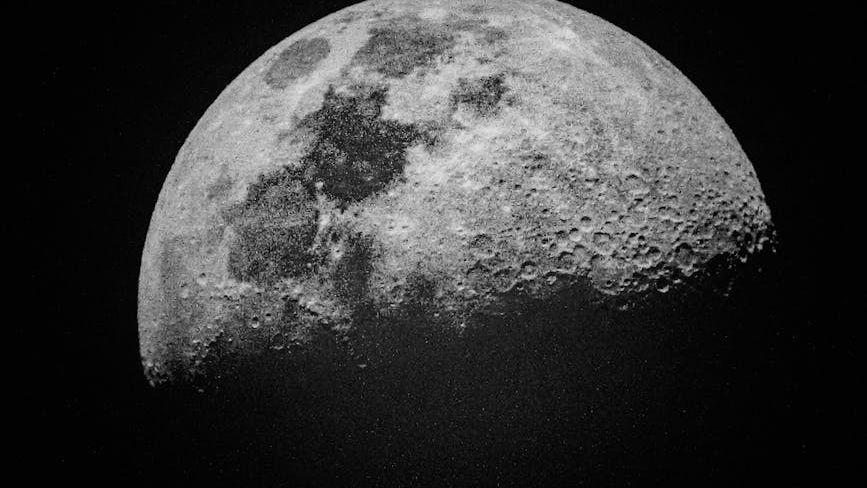
NASA wants to land astronauts on the moon in 2028. Will SpaceX’s Starship or Blue Origin’s Blue Moon lander be ready in time? – Image for illustrative purposes only (Image credits: Pexels)
NASA’s Artemis II mission concluded successfully in April 2026, sending four astronauts on a historic flyby of the Moon and validating key systems for deeper space exploration.[1][2] That achievement has shifted focus squarely to the commercial lunar landers that will enable the program’s ultimate goal: returning humans to the lunar surface in 2028. SpaceX’s Starship and Blue Origin’s Blue Moon now face intense scrutiny as unproven technologies central to the timeline.
Artemis II Marks a Pivotal Milestone
The Artemis II crew launched aboard the Orion spacecraft atop the Space Launch System rocket on April 1, 2026, from Kennedy Space Center. Over nine days, they looped around the Moon, testing life support, communications, and reentry capabilities in deep space.[1] The mission splashed down off California on April 10, confirming Orion’s readiness for crewed operations far from Earth.
Engineers addressed minor issues during the flight, such as a helium leak in the service module and propulsion adjustments. These fixes inform preparations for subsequent missions. With Artemis II complete, NASA gained confidence in its heavy-lift hardware, clearing a major hurdle toward surface landings.
A Revised Roadmap for Artemis III
Artemis III, once eyed for a mid-2027 lunar landing, now targets no earlier than late 2027 for a demonstration in low Earth orbit. The mission will involve rendezvous and docking tests with one or both commercial landers, simulating transfers without venturing to the Moon.[3][4] NASA Administrator Jared Isaacman confirmed both SpaceX and Blue Origin indicated readiness for this interoperability check.[5]
This redesign prioritizes safety, drawing parallels to Apollo 9’s Earth-orbit trials. It allows validation of docking mechanisms and life support before lunar risks. Meanwhile, the first crewed landing shifts to Artemis IV in early 2028, with Artemis V potentially following later that year.[2]
| Mission | Target Date | Key Objective |
|---|---|---|
| Artemis II | April 2026 (complete) | Crewed lunar flyby |
| Artemis III | Late 2027 | Earth orbit lander demo |
| Artemis IV | Early 2028 | First crewed lunar landing |
| Artemis V | Late 2028 | Second landing, base setup |
Starship HLS: Scale and Refueling Challenges
SpaceX’s Starship Human Landing System represents a leap in scale from Apollo-era craft. Designed for full reusability, it requires multiple in-orbit refuelings using tanker variants to carry enough cryogenic propellant for lunar descent and ascent.[5] The vehicle nears Version 3 test flights with upgraded Raptor 3 engines, but crew accommodations and life support remain in development.
Progress includes ongoing Starship launches, though early tests showed mixed results with heat shield and flap issues. NASA monitors these for certification. Isaacman highlighted the investment: “It’s that capability that allows us not just to get back to the Moon, but really build the Moon base.”[3]
Blue Moon’s Methodical Advance
Blue Origin’s Blue Moon lander emphasizes reliability through iterative testing. The Mark 1 cargo variant recently completed vacuum chamber trials at Johnson Space Center and moved to Cape Canaveral for launch preparations, eyeing an uncrewed south pole demo later in 2026.[5] Crewed versions will build on this foundation for Artemis missions.
A recent New Glenn rocket anomaly delayed some clearances, but the company presses forward. Like Starship, Blue Moon must prove cryogenic propellant handling and independent propulsion. Both landers support NASA’s strategy of selecting the first ready option for early flights.
Critical Hurdles on the Horizon
Technical obstacles persist for both vehicles. Cryogenic boil-off demands precise in-space refueling demos, untested at scale. Docking with Orion, human-rated cockpits, and spacesuit integration add complexity.[3]
- Uncrewed lunar landings and ascents remain milestones ahead.
- Life support systems require full qualification.
- Orion heat shield upgrades from Artemis I and II data must integrate seamlessly.
- Launch cadence aims for 10 months between missions, straining schedules.
NASA protects two 2028 landing slots, prioritizing whichever lander proves out first. Success in late 2027 demos could accelerate base-building; slips risk ceding ground to international rivals.[5]
The Artemis program’s pivot reflects pragmatic engineering amid ambitious goals. With SpaceX and Blue Origin committing beyond NASA funds, late 2027 tests offer a proving ground. A 2028 landing remains within reach, provided demonstrations unfold as planned, positioning the U.S. for sustained lunar presence.