

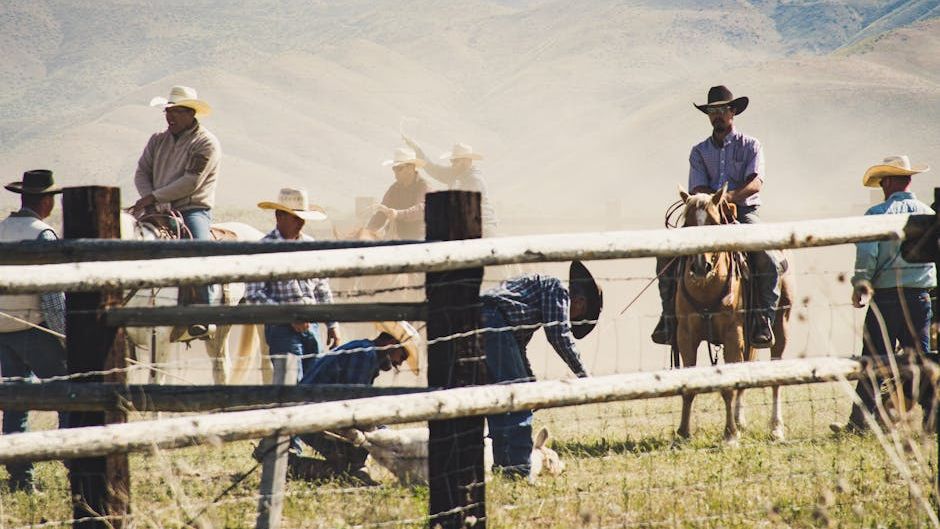
Why a Montana rancher is speaking up for climate action – Image for illustrative purposes only (Image credits: Pexels)
Broadus, Montana – Steve Held manages a cattle ranch in the Powder River Basin, where intensifying wildfires, storms, and floods have repeatedly endangered his livestock and infrastructure. A fourth-generation rancher, Held recalls winters when snow accumulated from Christmas until late March, reliably replenishing ponds for summer grazing. Those patterns have shifted, leaving less water and greater vulnerability to extremes. Now, he advocates for climate action, emphasizing that the issue transcends politics.[1][2]
Ranching Roots in a Changing Landscape
Steve Held traces his family’s ranching heritage to the late 1800s in southeastern Montana. The operation centers on 350 mother cows of registered black Angus breeding stock. They cultivate about 400 acres under pivots, 100 acres with flood irrigation, and 300 acres of dryland, mainly for alfalfa, along with crops like triticale, barley, and others. Held describes the work as demanding yet rewarding for those committed to it.[1][2][3]
Challenges have always marked ranch life in Powder River and Carter Counties. Variable weather tested previous generations. Recent decades brought harsher conditions, however, forcing constant adjustments to operations. Held invested in irrigation pivots by 2007 after prolonged droughts dried the Powder River.[2]
Wildfires Ignite a Crisis
Massive blazes have scorched vast areas near Held’s ranch, destroying fences, cutting power to wells, and trapping cattle. The Ash Creek Fire in June and July 2012 burned 250,000 acres to the west, leading to livestock deaths from burns, thirst, and starvation amid rugged terrain. More recently, the Remington Fire consumed 200,000 acres in August 2024, while the Short Draw Fire razed 40,000 acres in September 2024, wiping out a neighbor’s property.[2][3]
These events disrupted water and feed supplies, requiring hauls across damaged land. Neighbors observe the uptick in fire frequency and intensity without invoking climate terms, yet the costs mount for all. Smoke from such fires further complicates grazing and health.[2]
Storms, Floods, and Vanishing Snowpack
Extreme storms deliver hail, high winds, flash floods, and heavy downpours, damaging crops and livestock. Single-day rains reached 2.6 to 3.5 inches in 2002, 2013, and 2017, heightening flood risks. Droughts from 2000 to 2006 halved Powder River flows, drying channels in summer and straining irrigation.[2][3]
Winter snowpack, once a reliable water source, now melts earlier or fails to build adequately. Held remembers snow lasting until March, rushing down creeks to fill ponds. That cycle broke, leaving summer shortages. Rising temperatures exacerbate the strain: average maximum daily highs climbed 3 to 4 degrees Fahrenheit from the 1940s to the 2020s, with days above 90 degrees Fahrenheit doubling to about 54 annually.[1][2]
| Climate Metric (Broadus, 1940s vs. 2020s) | Past | Present |
|---|---|---|
| Average Max Daily High | 101°F | 104°F |
| Days Over 90°F (Annual) | ~26 | ~54 |
| Annual Precipitation Average | ~13.5 inches | ~14.9 inches |
A Call Beyond Partisan Lines
Held attributes these shifts to climate change, backed by decades of scientific warnings. He criticizes the politicization of the issue. “It’s absolutely shameful that politics have turned this into a kicking ball. And the people who are suffering are the people on the land,” he said.[1][3]
Ranchers adapt to variability, but escalating extremes demand broader response. Held urges unity across divides. “Bottom line? We need state and federal policies to address and stop global warming so we can keep making a living and pass the ranch along to the next generation,” the Held family stated.[2]
As front-line witnesses, rural voices like Held’s highlight the human stakes. Their push for action underscores a growing consensus: sustained policies must safeguard working lands for the future.