

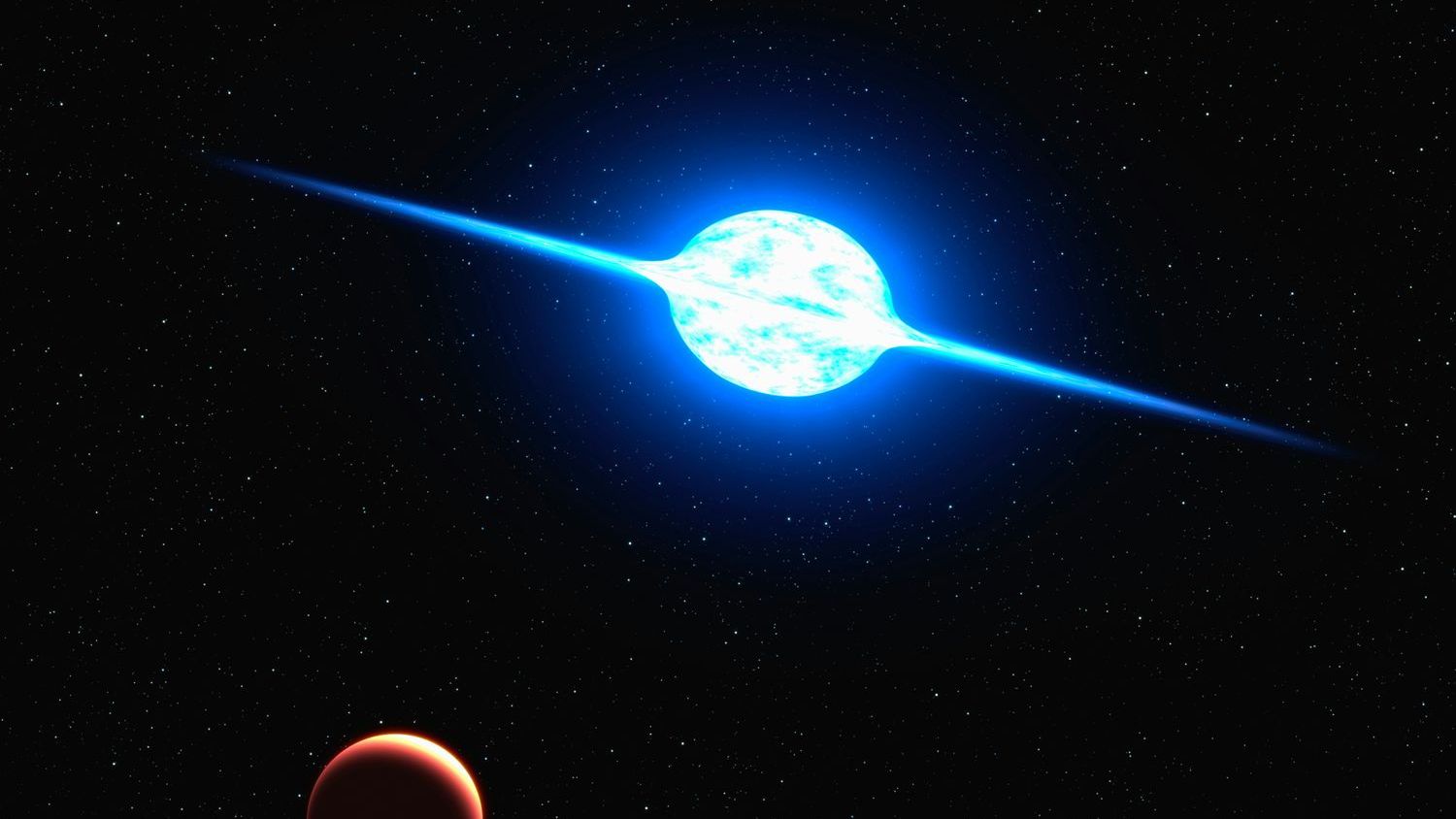
NASA’s Roman Poised to Transform Hunt for Elusive Neutron Stars – Image for illustrative purposes only (Image credits: Unsplash)
Neutron stars dot the Milky Way, remnants of massive stars that exploded in supernovae, yet most evade detection by even the sharpest telescopes. These ultra-dense objects, compressing solar masses into city-sized spheres, lurk invisibly unless they pulse in radio waves or emit X-rays. A recent study in Astronomy and Astrophysics outlines how NASA’s Nancy Grace Roman Space Telescope will change that equation. Through precise observations, the mission promises to uncover dozens of these isolated neutron stars, offering fresh insights into stellar evolution and extreme physics.
Unseen Remnants of Stellar Explosions
Astronomers estimate tens of millions to hundreds of millions of neutron stars populate the galaxy, born from the collapse of massive stars. Only a few thousand have surfaced so far, mainly as pulsars or X-ray emitters. The rest remain dim and solitary, challenging researchers who seek to map the galaxy’s stellar graveyard.
Studying these objects reveals how stars forge heavy elements and what occurs under unimaginable pressures. Zofia Kaczmarek of Heidelberg University, who led the study, noted, “Most neutron stars are relatively dim and on their own. They are incredibly hard to spot without some sort of help.” Simulations of the Milky Way underscore this scarcity, highlighting the need for innovative detection methods.
Microlensing: A Gravitational Spotlight
Roman employs gravitational microlensing, where a foreground neutron star bends light from a distant background star. This warping briefly amplifies the star’s brightness and shifts its apparent position, creating a detectable signature. While photometric microlensing captures the brightening, Roman excels at astrometric microlensing by measuring the positional wobble with unprecedented accuracy.
The technique traces an elliptical path on the sky, whose size scales with the lensing object’s mass. Neutron stars, being hefty, generate pronounced shifts that lighter bodies cannot match. This allows Roman not just to find them, but to estimate their masses directly – a feat photometry alone rarely achieves.
Probing Masses, Kicks, and Cosmic Gaps
The mission’s Galactic Bulge Time Domain Survey will scan millions of stars frequently, sifting vast sky images for microlensing events. Researchers anticipate identifying promising candidates within months of launch, potentially characterizing dozens of isolated neutron stars. Peter McGill of Lawrence Livermore National Laboratory, a co-author, explained, “What’s really cool about using microlensing is that you can get direct mass measurements. Photometry tells us that something passed in front of the star, but it’s the amount the star’s position shifts that tells us how massive that object is.”
Such data could clarify the mass divide between neutron stars and black holes, where uncertainties persist. It would also quantify the high-speed “kicks” imparted during supernovae, propelling these remnants at hundreds of miles per second through the galaxy. To date, mass measurements have come mostly from binary systems, offering a biased sample. Kaczmarek emphasized, “We’re seeing a small sample that’s not representative of the big picture. Even a single mass measurement would be very powerful.”
McGill added, “We don’t know the mass distribution of neutron stars, black holes, or where one ends and the other begins with any certainty. Roman will really be a breakthrough in that.” These findings promise to refine models of stellar deaths and the behavior of matter at extremes, even from a modest haul of detections.
Expanding Roman’s Legacy Beyond Planets
Originally geared toward exoplanet hunts via photometric microlensing, Roman’s astrometric prowess unlocks bonus science. McGill observed, “This wasn’t part of the original plan. But it turns out Roman’s astrometric capability is really good at detecting neutron stars and black holes, so we can add a whole new kind of science to Roman’s surveys.” The telescope, managed at NASA’s Goddard Space Flight Center, involves partners like NASA’s Jet Propulsion Laboratory and the Space Telescope Science Institute.
If simulations prove accurate, Roman could deliver the first substantial catalog of gravity-revealed isolated neutron stars. This hidden population, long beyond reach, stands to reshape our view of the Milky Way’s underbelly. For more details, visit NASA’s Roman Space Telescope page.
As Roman prepares for its observations, astronomers anticipate a pivotal shift in uncovering the galaxy’s faint echoes of cataclysmic births. A handful of precise measurements may illuminate vast unknowns, bridging gaps in our cosmic ledger.