

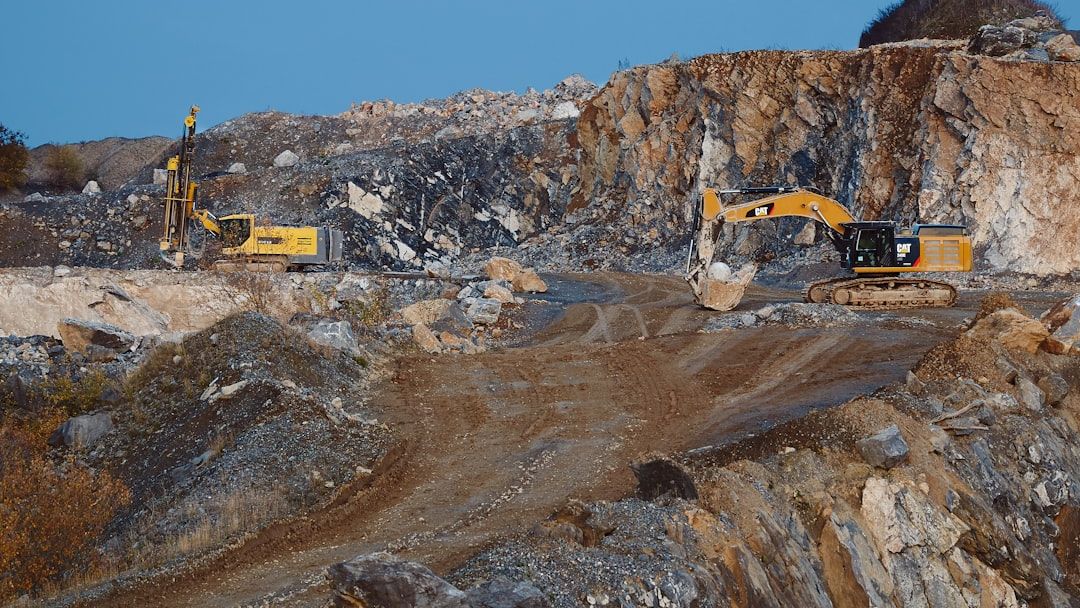
Kinross: Printing Cash Today As Its Apex Asset Advances – Image for illustrative purposes only (Image credits: Unsplash)
Investors in Kinross Gold Corporation reaped substantial rewards from the company’s first-quarter 2026 results, as record free cash flow enabled accelerated returns to shareholders.[1][2] The Toronto-headquartered miner produced nearly 493,000 attributable gold equivalent ounces while navigating elevated gold prices around $4,873 per ounce. Strong contributions from flagship operations underscored Kinross’s operational resilience, positioning the firm with a fortress balance sheet amid market volatility.
Financial Results Break Records Across the Board
Kinross posted revenue of $2.4 billion for the quarter ended March 31, 2026, a sharp rise from $1.5 billion in the prior-year period.[1] Net earnings climbed to $843 million, or $0.70 per share, more than doubling the $368 million recorded a year earlier. Attributable adjusted operating cash flow reached $1.13 billion, supporting the standout free cash flow figure of $837.5 million – the fourth straight quarterly record.[2]
Costs remained disciplined, with attributable production costs at $1,380 per gold equivalent ounce sold and all-in sustaining costs at $1,732 per ounce. Margins expanded dramatically to a record $3,476 per ounce sold, outpacing the gold price increase through effective cost controls and hedging strategies. Cash and equivalents swelled to $2.2 billion, bolstering total liquidity to nearly $4 billion.
Paracatu Leads Production Charge
Brazil’s Paracatu mine emerged as the portfolio’s powerhouse, delivering 160,583 attributable gold equivalent ounces – its strongest contribution yet.[1] Enhanced recoveries from a multi-phase plant optimization program, including a new gravity gold circuit, drove the uptick. Year-over-year output rose thanks to better processing efficiency and ore timing.
Tasiast in Mauritania followed closely with 130,014 ounces, benefiting from elevated grades that lowered costs per ounce compared to the previous quarter. Production across U.S. sites like Fort Knox, Round Mountain, and Bald Mountain totaled about 148,000 ounces, though some faced transitional challenges with grades and leach timing. Overall attributable production dipped 4% to 492,563 ounces as planned, but margins highlighted underlying strength.
Development Pipeline Gathers Momentum
Kinross advanced several high-potential projects, reinforcing long-term growth prospects. At Great Bear in Canada, the advanced exploration program reached 90% completion on surface construction, with all permits secured and engineering 45% done.[2] Fresh drilling at the Strider zone intercepted 2.1 meters grading 215.4 grams per tonne gold, signaling further upside.
In Chile, the Lobo-Marte environmental impact assessment moved into regulatory review after submission in April, kicking off permitting for a project poised to yield 4.7 million ounces over 16 years. U.S. initiatives progressed ahead of schedule: Round Mountain’s Phase X underground development covered 7,200 meters, Kettle River-Curlew hit high-grade intercepts like 12.5 meters at 7.0 grams per tonne, and Bald Mountain’s Redbird expansion neared key infrastructure milestones. These efforts align with 2026 guidance for 2.0 million ounces, $1,380 production costs, and $1,500 million in capital spending.
- Paracatu: Record recoveries propel top output.
- Tasiast: Grade gains cut costs.
- Great Bear: Exploration and engineering accelerate.
- Lobo-Marte: Permitting underway for major expansion.
- U.S. projects: Multiple sites advance ahead of plan.
Shareholders Feel the Benefits
The quarter saw Kinross return roughly $350 million to owners through $250 million in share repurchases and dividends – the latest in over $1 billion disbursed in the past year.[1] The company reduced its share float by more than 3% via buybacks and targets 40% of free cash flow for returns in 2026. A quarterly dividend of $0.04 per share heads to payment on June 4.
CEO J. Paul Rollinson emphasized the results: “We generated record free cash flow of approximately $840 million, representing our fourth consecutive quarterly record. Strong operational performance and disciplined cost management drove record margins.”[1] Fuel and currency hedges, plus grade enhancement strategies, shielded against oil price spikes.
Kinross’s transformation from a net debt position in 2022 to a $1.4 billion net cash fortress underscores its strategic pivot. As gold’s allure persists amid global tensions, the miner’s low-cost profile and project momentum promise sustained value for stakeholders, though execution risks and commodity swings remain in play.