


Why Fear of Failure Is So Widespread and So Stubborn

Research from Linkagoal’s Fear Factor Index, conducted in partnership with YouGov and surveying over a thousand respondents, found that roughly one in three Americans report being scared of failure, outranking fears like spiders or the paranormal. That’s not a niche anxiety. It’s a mainstream experience that quietly shapes decisions, derails goals, and triggers procrastination across every demographic.
The fear is especially pronounced among younger people, with well over a third of adults aged 18 to 34 admitting to being afraid of failure at work, a figure that drops significantly in older age groups. The pattern is consistent globally, too. According to the 2023 Global Entrepreneurship Monitor report, more than half of Canadian adults said they would not start a business for fear it might fail, and that number has been rising steadily over the last decade.
Fear of failure is a complex interplay of emotion and cognition that occurs when a person believes they may not be able to meet the needs of an achievement context. Because it is rooted in emotionally charged memory, standard daytime willpower or positive thinking tends not to dislodge it reliably. The encoding happens deeper than rational thought can easily reach.
The Science of the Hypnagogic State

The hypnagogic state refers to a transitional stage between wakefulness and sleep, in which sensory perceptions can be experienced. It is where the ordinary logic of the waking mind begins to give way, and the brain enters a genuinely different mode of processing. Scientists have studied this state seriously for decades, and its relevance to learning and emotional reprogramming is increasingly well understood.
The pre-sleep period is especially valuable for subconscious influence. During this time, the brain transitions from beta waves associated with active thinking toward alpha waves of relaxed awareness, creating a receptive state for new programming. This shift is not a minor fluctuation. It marks a fundamentally different relationship between the conscious and unconscious mind.
The hypnagogic state can be characterized by spontaneously appearing visual, auditory, and kinaesthetic images, qualitatively unusual thought processes, and tendencies toward extreme suggestibility. That suggestibility is the key ingredient. It is the window the “liminal memory” approach is designed to use deliberately.
What Happens to Fear During Sleep

Sleep promotes both the consolidation of memory and the regulation of emotion, and can influence consolidation and modification of memories associated with both fear and its extinction. This is not a soft claim. It’s a finding backed by both animal and human studies, and it has significant implications for how we think about changing emotional patterns.
REM sleep is important for the processing of emotional memories, including fear memories. Rhythmic interactions, especially in the theta band, between the medial prefrontal cortex and limbic structures are thought to play an important role. In practical terms, this means the sleeping brain is actively working on the emotional content you carried into bed, not just storing it passively.
REM sleep is essential for maintaining emotional balance, reactivity, consolidation of emotional information, and reconsolidation of memories, particularly negative ones. The influence of sleep on next-day mood and emotion is believed to be especially associated with REM sleep, where hyperactivity in limbic regions occurs alongside normal activity in the medial prefrontal areas, offering an optimal environment for processing and reprocessing emotional experiences.
The “Liminal” Moment and Why It Matters

The term “liminal” comes from the Latin word for threshold. The few minutes before sleep are precisely that: a threshold state where normal conscious defenses soften and the brain becomes temporarily permeable to new emotional inputs. Stage 1 sleep, also known as the hypnagogic state, involves brainwave frequencies in the theta range where consciousness is fading, the critical mind is going offline, and the subconscious becomes increasingly open. This is one of the most receptive reprogramming windows that exists.
In drowsy pre-sleep states the prefrontal cortex is less critical, making suggestions, imagery, or repeated phrases more likely to be encoded without conscious resistance. This is the precise mechanism the liminal memory approach exploits. You are not fighting the fear head-on. You’re introducing new emotional material at the exact moment when the brain’s resistance to it is lowest.
Research indicates that whatever one dwells upon just before sleep exerts a greater influence on subsequent thoughts and behaviour than at any other time. That finding alone should reframe how most people think about those final few minutes each night.
How Sleep Consolidates and Can Soften Emotional Memories

Research combining fMRI and EEG sleep recordings tested the hypothesis that sleep decreases amygdala and behavioral reactivity in response to previously encountered emotional experiences, associated with re-established medial prefrontal cortex connectivity. The amygdala is the brain’s primary threat-detection hub. When sleep loosens its grip on a fear memory, the emotional charge around that memory genuinely decreases.
In humans, sleep also promotes generalization of extinction memory. This means that learning to feel less threatened by one type of failure scenario can, during sleep, generalize more broadly across related fear patterns. It isn’t a one-to-one fix. It’s a gradual softening of the whole category.
Post-learning sleep supports cued fear extinction memory consolidation in both circadian phases. The practical implication is that the emotional reframing you introduce just before sleeping gets a kind of biological overnight amplification, particularly if you also get adequate REM sleep afterward.
The 5-Minute Protocol: What to Actually Do

Spending five to ten minutes before sleep visualizing desired outcomes with all the senses engaged can be effective because the subconscious responds powerfully to images and emotions, making visualization a cornerstone technique for reprogramming during the pre-sleep window. The key word here is “senses.” Abstract positive thinking is less effective than rich sensory rehearsal of a specific scenario where you act competently and without fear.
Five to fifteen minutes of vivid, sensory-rich rehearsal of desired behaviors or outcomes immediately before sleep, with emotion and detail included, gives the brain a pattern to consolidate as an episodic trace during sleep. You are essentially handing your sleeping brain a new story to work with instead of the old one based on anticipated failure.
Creating three to five positive, present-tense statements that reflect a desired mindset and repeating them slowly while lying in bed, allowing each statement to sink in, is an effective tool for directing subconscious processing as you drift off to sleep. The framing matters more than the words themselves. Specific and concrete is far more effective than vague or aspirational.
The Role of Gratitude and Emotional Priming

Taking three minutes before sleep to mentally review three specific things to be grateful for from the day shifts the brain’s focus from problems to possibilities, creating a positive foundation for subconscious processing. The emotional boost from gratitude creates favorable conditions for positive overnight processing. This isn’t just motivational advice. It’s a deliberate way of setting the emotional tone at the exact moment the brain is about to begin its overnight memory work.
Fear of failure tends to amplify in the quiet of the night because the brain naturally reviews threats and unresolved challenges just before sleep. Deliberately inserting gratitude interrupts that loop without suppressing it. You acknowledge the day honestly, then reorient attention before the threshold crosses into sleep.
Setting clear goals before bedtime, practicing visualization, and using positive affirmations can direct subconscious processing at night. While the conscious mind rests, the subconscious continues to align with the new beliefs introduced before sleep.
Creativity, Problem-Solving, and the Liminal State

Scientists and creatives have long intuited that the pre-sleep state has unusual productive power. Many successful scientists, artists, and well-known professionals have intentionally used the hypnagogic state to solve problems or enhance creativity, including figures like Edison and Tesla. This wasn’t mystical thinking. They were, knowingly or not, leveraging the brain’s most receptive processing window.
A 2021 study on “sleep onset as a creative sweet spot” demonstrated that spending as little as roughly fifteen seconds in the N1 stage increased the chances of insight into a hidden mathematical rule, but this benefit vanished if participants drifted into deeper sleep. The window is real, measurable, and brief. That brevity is also what makes intentional use of it so important.
Hypnagogia is characterized by spontaneous dreams during which the brain tends to forge novel connections between otherwise semantically disparate concepts. When you prime that state with a new emotional frame around failure, you’re inviting the brain to make unexpected connections that support that new perspective while you sleep.
Consistency Is the Actual Mechanism

Significant change typically requires weeks to months of consistent practice, as subconscious patterns like habits, deep beliefs, and fears are resistant to one-off attempts. The liminal memory approach is not a single-night experiment. It’s a practice that, over time, gradually shifts what the sleeping brain treats as the default emotional truth about failure.
Consistency outweighs intensity when it comes to reprogramming the subconscious. Creating a fifteen-minute evening routine that incorporates two or three of these rituals, practiced at the same time each night, sends a clear signal to the brain that it’s time for this kind of processing work. The regularity itself becomes a cue. The brain starts entering a more receptive state in anticipation.
What this means practically is that a slightly boring, repeated nightly ritual is more powerful than an elaborate but occasional one. Five focused minutes every night beats thirty sporadic minutes once a week, almost certainly.
What the Science Cannot Promise, and Where Professional Help Fits

It’s worth being direct here. The research on sleep-based emotional processing is compelling, but it does not support the idea that any nightly ritual produces overnight transformation. Sleep is a prime window for influencing subconscious processing, but genuine reprogramming requires repeated, targeted input and supportive waking habits. Sleep alone doesn’t magically rewrite deep patterns.
For trauma-related or severe anxiety issues, professional therapy such as CBT, EMDR, exposure therapy, or clinical hypnotherapy, integrated with sleep-focused techniques, is the safer and evidence-based route. The liminal memory practice is a complement to good mental health habits, not a replacement for professional care when the fear is rooted in something deeper.
The evidence also remains mixed in some areas. While it appears from human research that sleep is crucial to emotional processing, no clear consensus has yet emerged about the respective roles of REM versus non-REM sleep, and it remains unclear whether emotional associative memory and emotional regulation are distinct or overlapping processes tied to specific sleep stages. Science is still working this out. Thoughtful, consistent use of what we do know is the reasonable position to take.
A Quiet Conclusion
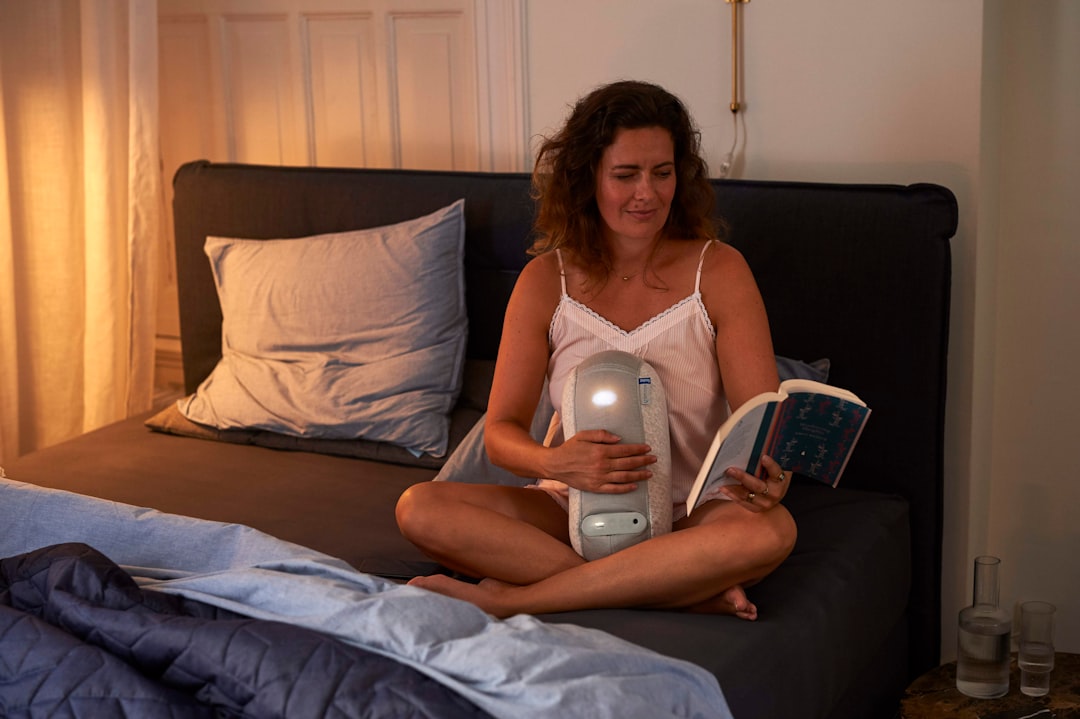
Fear of failure is not a character flaw. It’s a pattern encoded in the same biological systems that keep us alive and adaptive. The fact that those systems are highly active during sleep, and especially receptive in the liminal window just before it, means there is a genuine, research-grounded opportunity to begin influencing them from the inside out.
Five deliberate minutes. A specific visualization, a few present-tense statements, a moment of genuine gratitude. Not dramatic, not expensive, and not requiring any equipment other than your own attention. The brain does the heavy lifting overnight, every night, whether you’ve given it good material to work with or not.
What you carry across that threshold matters more than most people ever consider.