

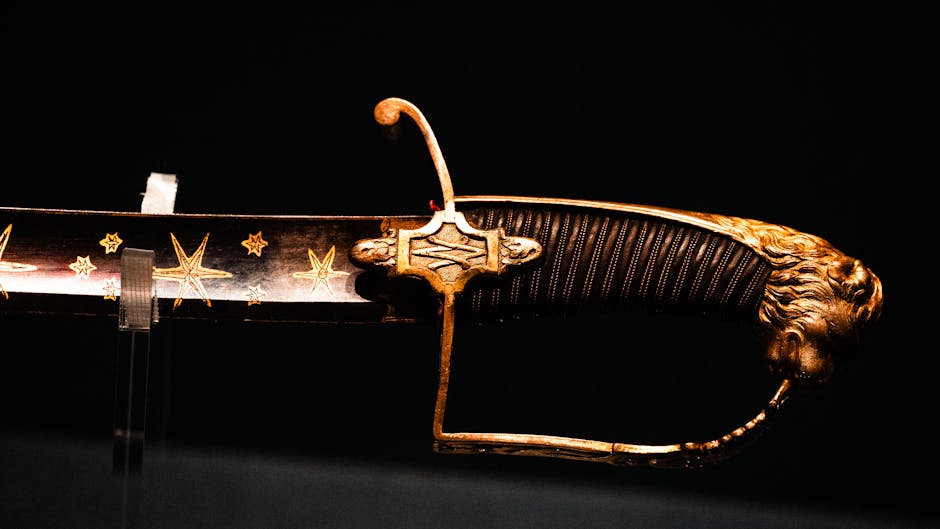
Gold sword scabbard discovered under toppled tree in Norway was likely ‘sacrificed’ by an elite warrior 1,500 years ago – Image for illustrative purposes only (Image credits: Pexels)
In the quiet outskirts of Sandnes, Norway, a local resident set out on an ordinary morning stroll that quickly turned extraordinary. Near the base of a hill called Riaren, the hiker noticed a tree that had fallen years earlier after a storm. Curious about a small mound exposed beneath its roots, he used a stick to probe the soil and caught a sudden glint of gold.
The object he retrieved proved to be a finely crafted fitting once attached to the scabbard of a high-status sword. Dating to the first half of the sixth century, the piece belongs to Norway’s Migration Period and stands out as one of only a handful of comparable finds across Northern Europe.
The Moment of Discovery
The artifact measures roughly six centimeters long and two centimeters wide, yet it weighs a substantial 33 grams. Its surface features intricate animal motifs formed from looped and knotted gold ribbons, with delicate beaded threads accentuating the design. Such workmanship points to skilled artisans working for powerful patrons rather than everyday use.
Archaeologists at the University of Stavanger quickly confirmed the find’s authenticity after the hiker brought it in. The location beneath the fallen tree suggests the piece had remained undisturbed for centuries, protected by the shifting soil and root system until recent weather exposed it.
Context of the Migration Period in Norway
During the Migration Period, Scandinavia experienced significant social and political change as Roman influence waned and new power structures emerged. Local chieftains and warrior elites consolidated control over territories, often marking their status through elaborate weapons and ornaments. Gold items like this scabbard fitting served both practical and symbolic roles, signaling rank and possibly participating in ritual practices.
Similar gold fittings have surfaced in limited numbers elsewhere in the region, each one reinforcing the idea that only the highest-ranking individuals carried such decorated swords. The Sandnes example adds valuable detail to this picture, showing that elite material culture extended into what is now southwestern Norway.
Why the Piece Matters to Researchers
Experts believe the fitting may have been deliberately deposited rather than lost in battle or everyday activity. In Migration Period societies, valuable objects were sometimes “sacrificed” or offered to the earth as part of ceremonies tied to leadership transitions or territorial claims. The isolated placement under a tree root aligns with patterns seen in other ritual deposits from the era.
Conservation work has already begun to stabilize the gold and document every detail of its decoration. Further analysis could reveal traces of the original sword’s materials or even microscopic evidence of how the fitting was attached, offering fresh clues about weapon-making techniques of the time.
The discovery also highlights how modern land changes, such as storm damage to trees, continue to bring ancient objects to light. Without the hiker’s curiosity, the piece might have remained hidden for decades more.
Broader Implications for Understanding Early Norwegian Society
Finds like this one help archaeologists map the reach of elite networks across Scandinavia during a turbulent century. They show that wealth and craftsmanship were not confined to a few central sites but appeared in smaller communities as well. The Sandnes fitting therefore contributes to a more nuanced view of power distribution in the region.
Public interest has grown quickly since the announcement, with local museums preparing displays that place the artifact alongside other Migration Period objects. Such exhibitions allow residents to connect directly with the deep history beneath their feet.
What stands out now:
- The fitting is one of fewer than twenty known examples from Northern Europe.
- Its weight and decoration confirm it belonged to a sword of exceptional quality.
- Deposition under a tree root suggests possible ritual significance.
- Further study may clarify connections between local elites and wider Scandinavian networks.
Future fieldwork around Riaren could uncover additional context, though archaeologists caution that such chance finds remain rare. For now, the gold ornament stands as a tangible reminder of the warriors and leaders who shaped Norway long before the Viking Age began.