

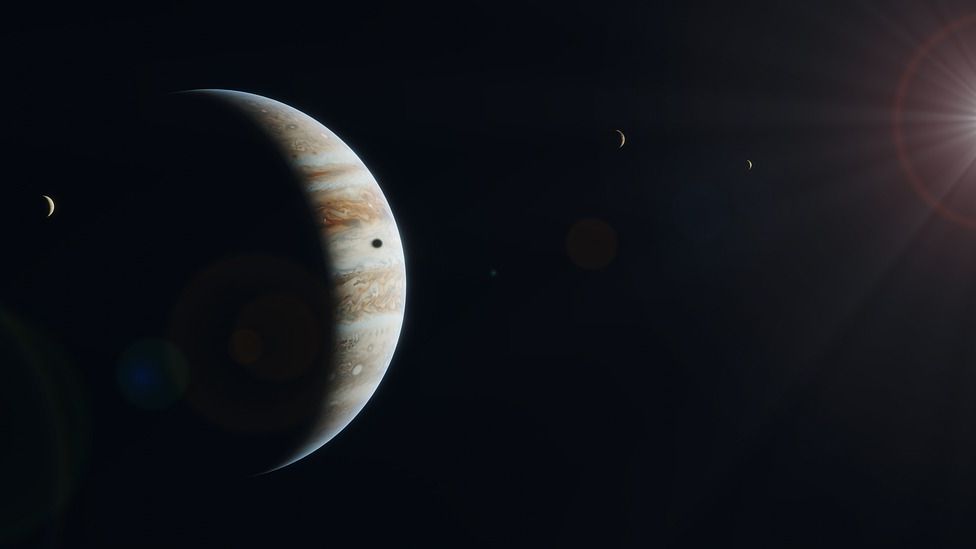
Moon joy at Jupiter | Space photo of the day for May 7, 2026 – Image for illustrative purposes only (Image credits: Pixabay)
NASA’s Juno spacecraft has added another chapter to its long-running exploration of Jupiter with a new image of the moon Thebe. Released on May 7, 2026, as the space photo of the day, the capture shows the small satellite against the backdrop of the planet’s swirling clouds. The moment underscores how even modest moons can offer valuable clues about the dynamics of the Jovian system.
Why This Particular Moon Matters
Thebe orbits Jupiter at a relatively close distance, completing its path in roughly seven hours. Its irregular shape and dark surface set it apart from larger, brighter companions like Europa or Ganymede. Scientists study such bodies because they help map the distribution of material that may have been captured or formed alongside the planet itself.
Images like the one from Juno allow researchers to track subtle changes in Thebe’s position and appearance over time. These observations refine models of how small satellites interact with Jupiter’s intense radiation belts and magnetic field. Each new data point reduces uncertainty about the moon’s composition and history.
How Juno Makes Such Captures Possible
The spacecraft has been circling Jupiter since 2016, using a series of close passes to gather information from multiple angles. Its suite of instruments includes cameras designed to operate in the harsh environment near the planet. The recent image of Thebe resulted from careful timing during one of these orbits.
Engineers adjust Juno’s trajectory and camera settings to balance scientific priorities with the spacecraft’s limited power and data transmission windows. The result is a steady stream of high-resolution views that ground teams analyze for patterns invisible from Earth-based telescopes. This methodical approach has already transformed understanding of Jupiter’s atmosphere and moons.
What Comes Next for Thebe and Similar Bodies
Future orbits will likely yield additional images of Thebe under different lighting conditions. Such views could reveal surface features or shadows that hint at recent impacts or dust activity. Continued monitoring also supports planning for any potential follow-on missions that might target the smaller Jovian satellites directly.
Public interest in these releases often translates into broader support for planetary science funding. When people see concrete results from long-duration missions, it becomes easier to appreciate the steady progress that comes from sustained investment rather than single dramatic events.
Looking Ahead to Ongoing Discoveries
Juno’s extended mission continues to deliver incremental advances that build on earlier findings. Thebe remains one of several targets that benefit from this persistent presence near Jupiter. As more data accumulates, the picture of how the planet and its moons formed and evolved grows clearer.
Each new image serves as a reminder that exploration of the outer solar system rewards patience and precision. Thebe’s latest appearance in the spotlight simply adds one more piece to a puzzle that scientists expect to study for years to come.