

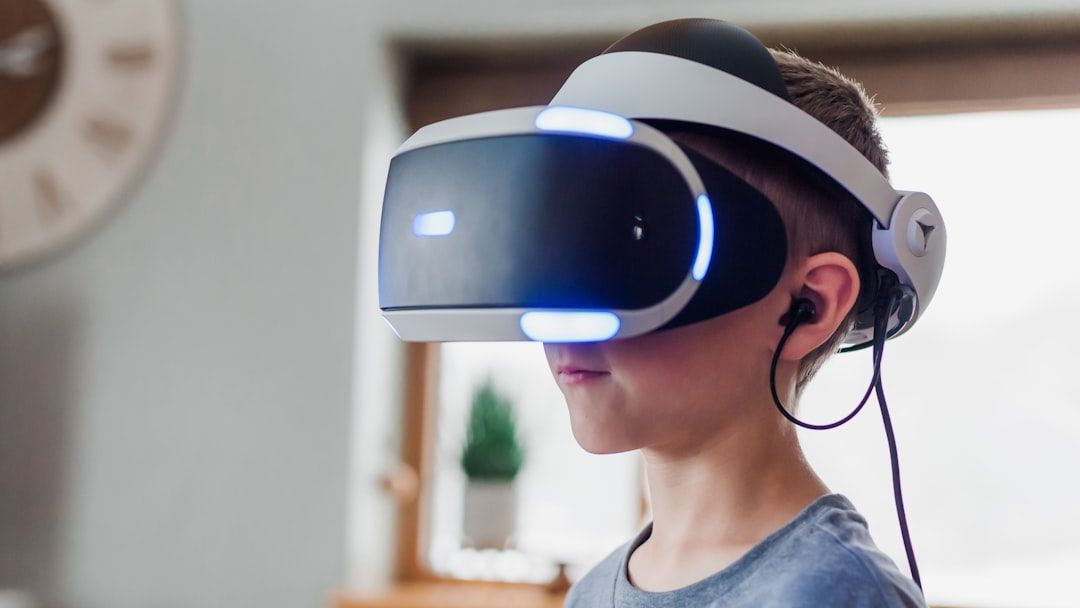
25 people learned to fly with virtual wings. Here’s how the brain changed – Image for illustrative purposes only (Image credits: Unsplash)
A week of training in virtual reality turned ordinary arm movements into the sensation of flight for 25 volunteers. Their brains began treating the virtual wings as extensions of their own bodies, with visual areas responding to images of wings much as they do to real arms and hands. The shift emerged after participants learned to flap, steer, and navigate in a simulated world where wrist rotations and arm swings controlled large, feathered appendages.
From Coffee Idea to Controlled Experiment
The project began when neuroscientist Yanchao Bi at Peking University mentioned a desire to fly during a casual conversation. Colleagues Kunlin Wei and Yiyang Cai turned the wish into a structured program. Participants donned VR headsets and motion trackers that mapped their physical gestures onto bird-like figures visible in a virtual mirror.
Over seven days, the volunteers practiced a progression of skills. Early sessions focused on basic flapping to stay aloft. Later tasks required dodging falling objects, gliding above cliffs, and threading through aerial rings. Some mastered the controls immediately; others needed repeated sessions before their movements became fluid and precise.
Brain Scans Reveal New Ownership
Before and after training, researchers scanned participants while showing them pictures of various wings and of human limbs. The visual cortex, which normally processes body-part images, showed stronger activation for wings after the experience. Its response pattern to wings also grew more similar to its response to upper limbs.
This overlap suggests the brain had begun to incorporate the wings into its internal map of the body. Participants reported a growing feeling that the wings belonged to them, even outside the headset. The change occurred without any physical alteration to their actual anatomy, highlighting how quickly the brain can update its sense of self when given consistent sensory feedback.
What the Training Actually Taught
The program did more than improve motor skills. It gave participants direct, embodied experience of flight mechanics that abstract explanations rarely convey. One researcher noted that firsthand practice transformed how people understood the physics and sensations of soaring in ways reading or watching videos could not.
Tasks were designed around real bird-flight principles, such as using wing angle for lift and steering. Success depended on timing and coordination rather than raw strength. By the end, most volunteers could perform complex maneuvers with minimal conscious effort, mirroring how people learn to use tools or prosthetics.
Broader Implications for Plasticity
Outside experts described the results as evidence that the brain remains remarkably adaptable even when asked to accept something as nonhuman as wings. Cognitive neuroscientist Jane Aspell observed that if the brain can claim wings, it may also accept other forms of limb enhancement or augmentation in the future.
The study leaves open questions about how long these changes last and whether similar effects appear with different virtual appendages. Researchers also wonder how extended time in VR environments might influence body perception more generally as such technology becomes commonplace.
Still, the findings already show that targeted virtual experiences can expand the brain’s definition of what counts as “self.” That capacity could matter for rehabilitation, skill training, and the design of future interfaces that feel truly embodied.