

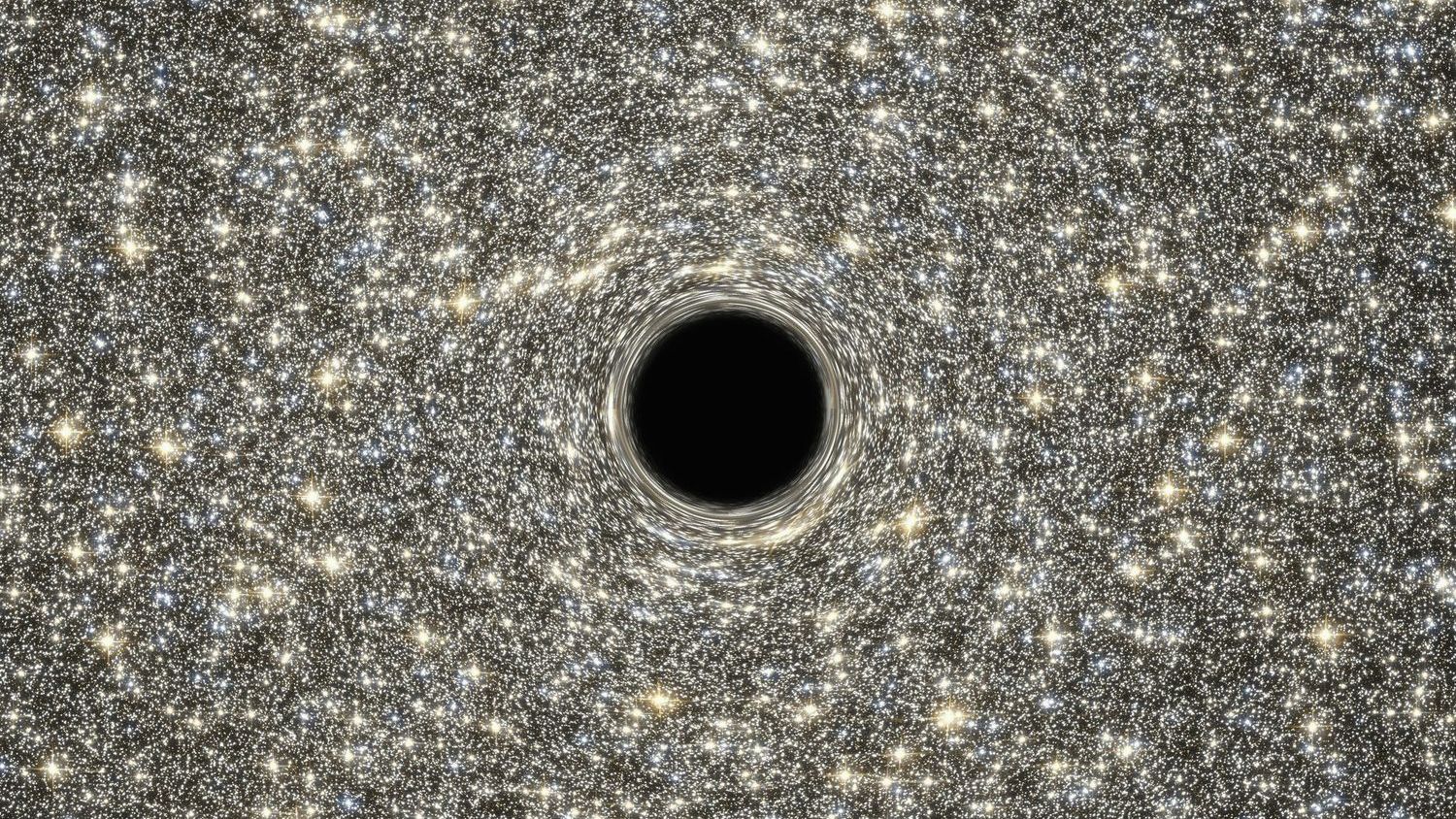
The Universe’s biggest black holes may be forged in violent mergers – Image for illustrative purposes only (Image credits: Unsplash)
Gravitational-wave observatories have now recorded dozens of black-hole collisions, and the patterns emerging from those signals are reshaping ideas about how the largest black holes come into existence. Rather than forming as single, massive objects when stars collapse, the heaviest examples appear to grow through successive mergers inside tightly packed star clusters. This process creates a distinct population of rapidly spinning black holes that stand apart from those produced by ordinary stellar death.
Why the Latest Data Shift the Picture
Earlier models assumed that black holes above roughly 50 solar masses formed directly from the collapse of extremely massive stars. The new analysis of merger signals shows that such heavy objects are more likely the products of earlier collisions that left behind larger remnants. Those remnants then participate in further mergers, steadily increasing in mass and acquiring distinctive spin properties.
The key clue lies in the distribution of masses and spins recorded by detectors such as LIGO and Virgo. A clear excess of high-mass, high-spin events matches predictions for repeated mergers rather than single-star origins. This finding does not rule out direct formation entirely, but it indicates that the extreme end of the mass spectrum is dominated by the merger channel.
How Crowded Star Clusters Drive the Process
In dense clusters, black holes quickly sink toward the center through gravitational interactions with surrounding stars. Once there, they encounter one another at high speeds and merge. The product of each merger carries away some orbital energy but retains most of the combined mass and gains additional spin from the orbital motion of the pair.
Because the cluster remains crowded, the newly formed black hole is likely to meet another partner within a relatively short time. This chain reaction can continue until the object grows large enough to be ejected from the cluster by the recoil of its final merger. The entire sequence unfolds over millions of years, far faster than the billions of years required for isolated black holes to grow through gas accretion alone.
Observable Signatures That Set These Objects Apart
Black holes formed through repeated mergers exhibit two clear traits. Their masses often exceed the range expected from single-star collapse, and their spins tend to be higher because each merger adds angular momentum. Detectors have already recorded several events whose combined mass and spin values align with this repeated-merger pathway.
Researchers also note that the rate of such high-mass mergers appears higher in regions where star clusters are known to exist. This spatial correlation strengthens the case that the environment, rather than the initial stellar mass, determines whether a black hole reaches extreme sizes.
Remaining Uncertainties and Next Steps
While the merger channel accounts for many of the heaviest events, the precise fraction of black holes that grow this way remains under study. Cluster densities, escape velocities, and the initial mass function of stars all influence the outcome, and current models still carry sizable uncertainties in these parameters.
Future observing runs with improved detector sensitivity are expected to deliver hundreds more events. Those additional signals will allow astronomers to map the mass and spin distributions with greater precision and to test whether the repeated-merger signature persists across different cosmic environments.
What matters now
- Gravitational-wave catalogs already show an excess of high-mass, high-spin mergers consistent with repeated collisions.
- Dense star clusters provide the necessary conditions for these chain reactions to occur.
- Upcoming detector upgrades will sharply increase the number of events available for statistical tests.
The emerging view does not replace earlier ideas about black-hole formation but adds an important pathway that operates alongside them. Continued observations will determine how large a role this violent recycling process plays in shaping the upper end of the black-hole mass spectrum across the observable universe.