

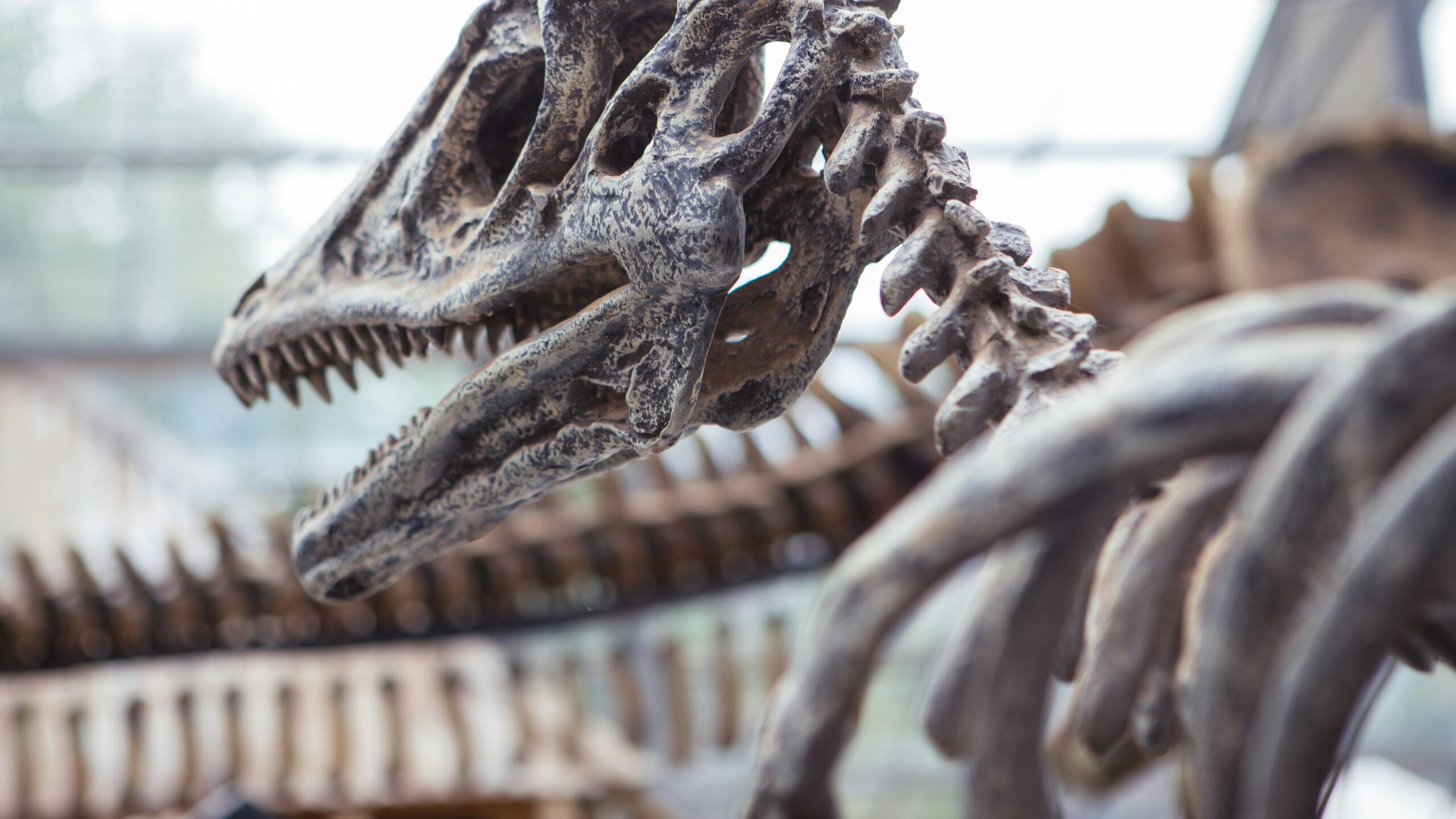
Dinosaur dental fossils reveal bird-like parental care bonds – Image for illustrative purposes only (Image credits: Unsplash)
Paleontologists examining fossilized teeth from a herd of duck-billed dinosaurs have uncovered evidence that adults supplied their young with higher-quality nutrition than they consumed themselves. The finding comes from detailed analysis of wear patterns on teeth belonging to Maiasaura peeblesorum, a species that roamed what is now Montana roughly 75 to 80 million years ago. Such selective feeding points to organized parental investment that went beyond simple protection and suggests these animals maintained complex social structures centered on offspring survival.
Evidence Written in Tooth Wear
Researchers compared microscopic scratches and abrasion levels across teeth from different age groups within the same fossil beds. Juvenile teeth showed far less damage from tough plant fibers, indicating the young received softer, more nutrient-dense vegetation. Adult teeth, by contrast, carried heavier wear consistent with a diet that included coarser, lower-quality forage. This difference in dental condition could not be explained by simple growth stages alone. Instead, the patterns align with deliberate food selection by parents, who apparently reserved the best available plants for their offspring while accepting less nutritious material for themselves. The consistency of the pattern across multiple individuals strengthens the case that this behavior was widespread within Maiasaura herds rather than an occasional occurrence.
Daily Life in Late Cretaceous Herds
Maiasaura lived in large groups that moved across floodplains in search of seasonal vegetation. Nesting sites preserved in the same region show that adults returned to the same locations year after year, a sign of stable social bonds. Within those colonies, the new dental data add another layer: parents appear to have coordinated feeding efforts to support rapid growth in the young. Such coordination would have required adults to recognize and respond to the needs of specific age classes. The result was faster development for the next generation, an advantage in an environment filled with predators and shifting food supplies. The behavior mirrors strategies seen in some modern herd animals that invest extra resources in calves during vulnerable early months.
Links to Bird-Like Care
Maiasaura belongs to a group of dinosaurs whose descendants include modern birds. The selective feeding documented in the teeth fits a pattern of extended parental care already known from nesting sites, where adults remained with hatchlings for extended periods. This combination of evidence suggests that the social complexity once thought unique to birds had deeper roots among their dinosaur relatives. The dental findings also help explain how these large herbivores could raise multiple young successfully despite their size and the demands of herd living. By prioritizing nutrition for the smallest members, adults increased the odds that more offspring would reach independence. The practice represents an evolutionary step toward the intensive chick-rearing behaviors observed in many bird species today.
Broader Impact on Dinosaur Studies
The discovery shifts attention from physical traits such as size and speed toward behavioral evidence preserved in fossils. Paleontologists can now use similar tooth-wear techniques on other species to test whether comparable parental strategies existed elsewhere. The approach offers a practical way to reconstruct daily decisions made by animals that vanished millions of years ago. For scientists tracking the transition from dinosaurs to birds, the Maiasaura data provide a concrete example of how social investment may have evolved. The pattern of adults sacrificing dietary quality for their young adds weight to the view that sophisticated family structures appeared well before the first true birds took flight. Further work on additional fossil sites will determine how common this level of care was across the dinosaur world.