

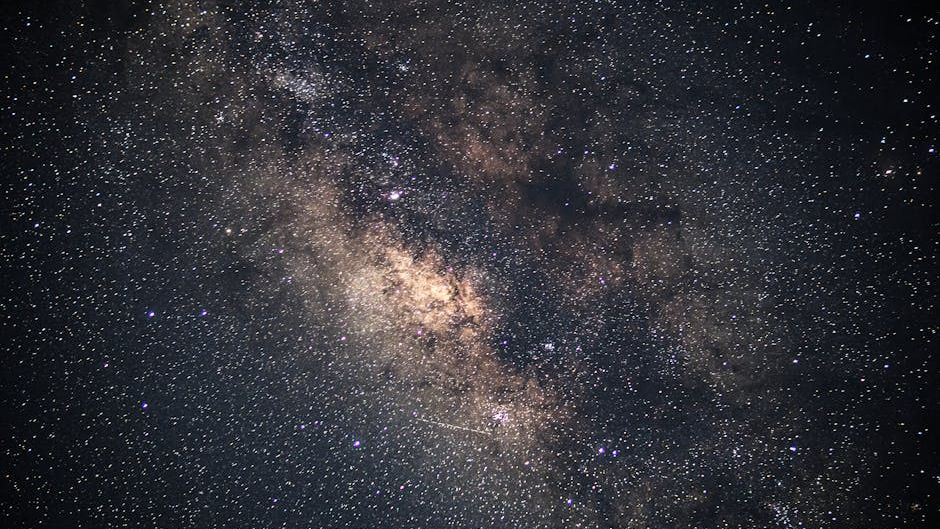
This is your best chance to spot the Milky Way’s core in May – Image for illustrative purposes only (Image credits: Pexels)
The Milky Way’s core reaches its highest point in the spring sky during May, creating a rare window for observers to see the dense, glowing arch that marks the heart of our galaxy. This alignment occurs as Earth orbits the Sun, positioning the galactic center higher above the horizon than at other times of year. For those in the right locations, the sight transforms an ordinary night into a direct view of billions of stars packed along the plane of the Milky Way.
The Seasonal Shift That Makes May Stand Out
Throughout winter and early spring, the galactic center stays low or hidden below the horizon for much of the night. By May, however, it climbs steadily after sunset and remains visible for several hours before dawn. This change happens because the Sun’s position relative to the Milky Way shifts gradually each month, lifting the core into better view.
Observers in the Southern Hemisphere enjoy the longest and clearest displays, while those farther north still catch a substantial portion of the arch if they look toward the south. The effect builds through the month, reaching its strongest expression around the middle of May before the core begins to sink again toward summer.
Locating the Arch Without Special Equipment
Finding the core requires only a clear, dark sky and basic knowledge of the constellations. Look south after 10 p.m. local time and scan for the bright, hazy band that stretches upward from the horizon. The constellation Sagittarius sits near the center of this glow, serving as a reliable marker even when light pollution is moderate.
Once the arch is spotted, binoculars or a small telescope reveal finer details such as dark dust lanes that cut across the brighter regions. No advanced gear is necessary for the initial sighting, though darker sites dramatically improve contrast and make the structure more vivid.
Conditions That Maximize the View
Success depends on minimizing light pollution and waiting for the right weather. Rural areas or designated dark-sky parks provide the clearest results, while urban skies often wash out the fainter parts of the arch. Moonless nights are essential, so checking the lunar calendar before heading out is worthwhile.
Atmospheric clarity also plays a role. High humidity or haze can dim the view, whereas crisp, dry air after a cold front passes tends to sharpen the image. Patience helps as well; the core becomes more prominent as the night deepens and the sky fully darkens.
Why This Window Matters for Sky Watchers
The May alignment gives both casual observers and dedicated astronomers a reliable annual opportunity to connect directly with the structure of the Milky Way. Many people never see the core at all because it stays below the horizon or is lost in city lights during other seasons.
Those who make the effort this month often describe the experience as a reminder of Earth’s place within a vast spiral galaxy. The glowing arch serves as a visible reminder that our solar system is just one small part of something much larger, and May simply makes that connection easier to witness than at almost any other time.