

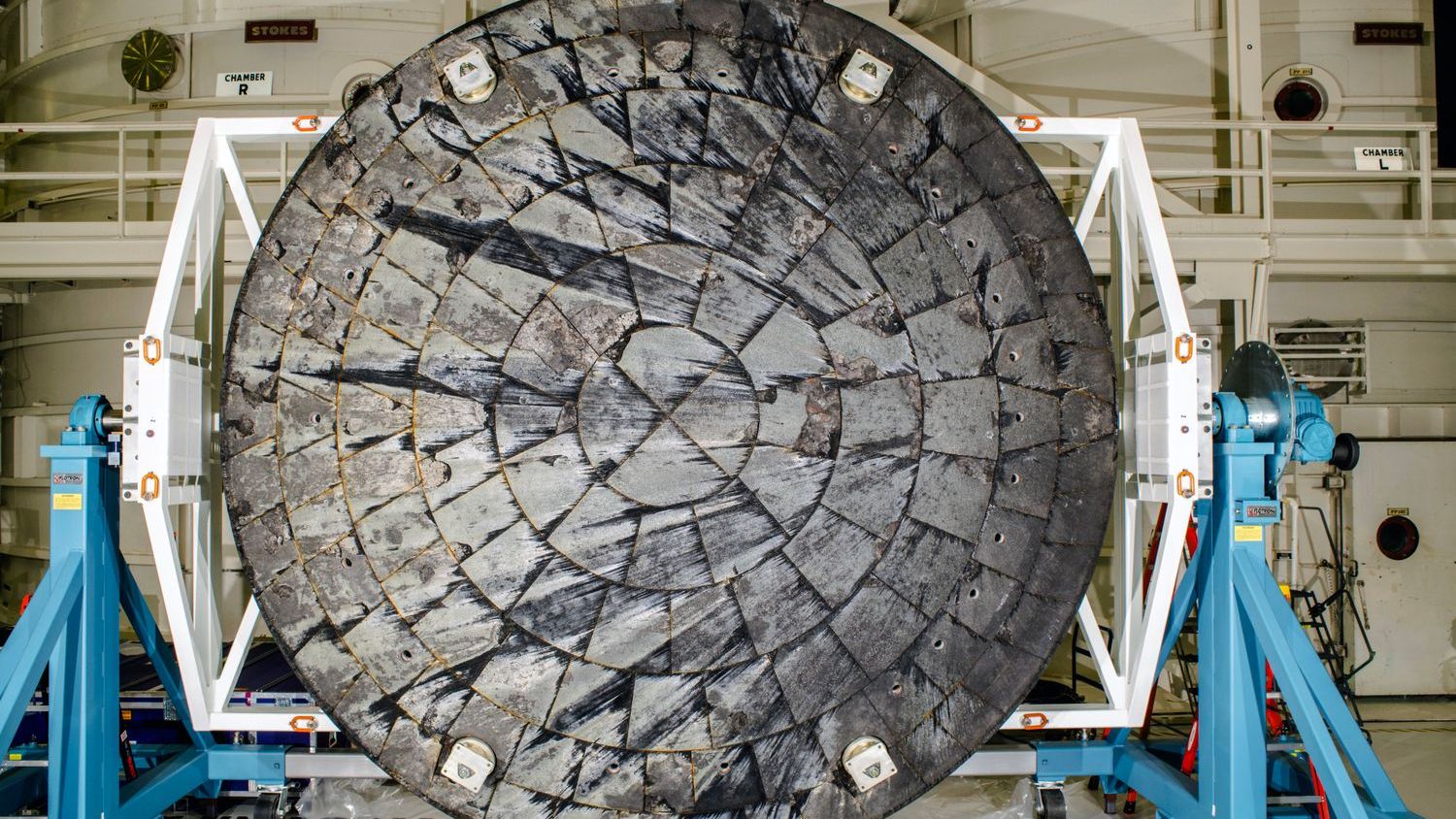
The charred hull of Artemis 2’s Orion | Space photo of the day for May 8, 2026 – Image for illustrative purposes only (Image credits: upload.wikimedia.org)
The Orion spacecraft from NASA’s Artemis 2 mission now rests on the ground, its exterior darkened and marked by the extreme heat of atmospheric reentry. Released as the space photo of the day for May 8, 2026, the image captures the capsule after it completed a flight that carried it around the moon and back. The charred surface stands as a direct record of the conditions the vehicle faced during its final descent.
The Mission’s Path to This Moment
Artemis 2 marked an important step in NASA’s efforts to return humans to the moon. The Orion capsule performed a flyby of the lunar surface before heading home. Upon arrival, it endured the rapid deceleration and friction that generate temperatures high enough to alter the outer layers of its heat shield.
The resulting discoloration and charring visible in the photograph reflect the protective role of that shield. Engineers designed the material to erode in a controlled way, carrying away excess heat and keeping the interior safe. The image therefore shows both the success of the design and the physical toll of the journey.
What the Charred Hull Reveals
Close examination of the darkened areas highlights how the heat shield performed under real flight conditions. The pattern of charring is not uniform, which is expected given the varying angles and speeds the capsule experienced. Such details provide data that ground tests alone cannot fully replicate.
Teams will study these marks to confirm that the shield behaved as predicted. Any deviations from models can guide refinements for later missions. The photograph serves as a starting point for that analysis, offering a clear visual reference before more detailed inspections begin.
Because the spacecraft completed its objectives and returned intact, the visible wear also underscores the margin built into the system. Future crews will rely on the same technology, so every piece of evidence from this flight adds to the overall confidence in the design.
Next Steps for the Artemis Program
With Artemis 2 concluded, attention now turns to preparing the next vehicles in the series. Data collected from the charred hull will feed directly into those preparations. Engineers expect to apply lessons learned to improve both performance and reliability on subsequent flights.
The image also reminds observers that spaceflight remains a demanding process even when everything goes according to plan. The capsule’s appearance after reentry illustrates why each mission contributes incremental knowledge rather than final answers.
Key points from the image:
- Visible charring confirms heat-shield function during reentry.
- Non-uniform pattern matches expected flight dynamics.
- Findings will inform design updates for Artemis 3 and beyond.
Photographs like this one keep the public connected to the tangible realities of exploration. They show that progress in space travel is measured not only in distance traveled but also in the careful study of what returns home.