

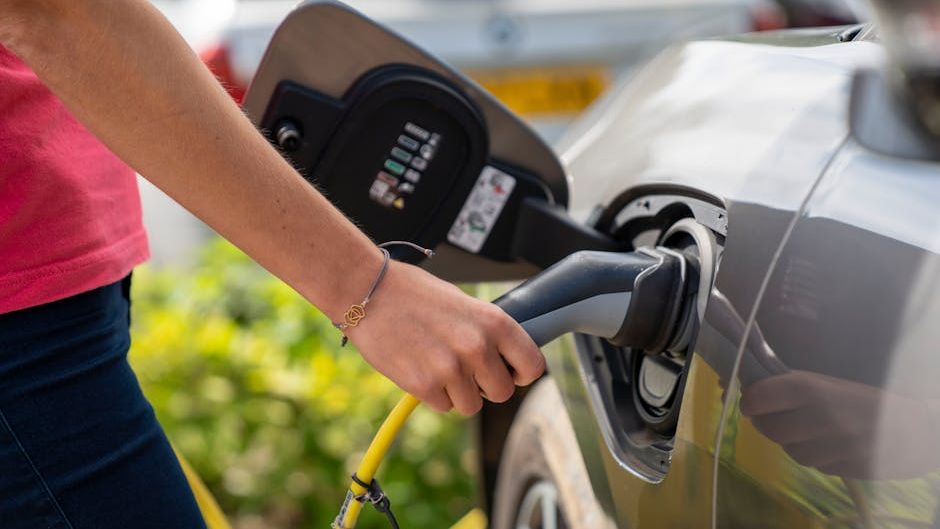
Factcheck: What the UK car industry is not saying about EV targets – Image for illustrative purposes only (Image credits: Pexels)
The debate over electric vehicle sales targets continues to influence what new cars reach UK showrooms and how quickly manufacturers adjust their lineups. Drivers face mixed signals as official compliance figures diverge from industry warnings, while the government prepares a formal review of the rules. This tension affects not only car prices and availability but also the pace at which Britain reduces transport emissions.
Early Warnings Gave Way to Stronger-Than-Expected Results
In late 2024 the Society of Motor Manufacturers and Traders warned that electric vehicle sales would fall short of the 22 percent share required under the zero-emission vehicle mandate. The group projected a potential shortfall that could trigger compliance costs of up to £1.8 billion. Official data released in early 2026 showed a different picture.
Electric vehicles accounted for 19.8 percent of new car registrations in 2024. After accounting for the mandate’s built-in flexibilities, the market achieved the equivalent of a 24.5 percent zero-emission share. Manufacturers therefore avoided fines and banked a 2.5 percent surplus for future years. The gap between the November forecast and the final tally exceeded one percentage point.
Flexibilities Allow Compliance Even When Headline Figures Lag
The mandate includes several mechanisms that lower the effective target for individual companies. These include credits earned by selling lower-emission petrol cars, hybrids and plug-in hybrids. When these options are applied, the 22 percent headline requirement for 2024 translated into a lower practical threshold.
Similar adjustments apply in later years. For 2026 the headline target stands at 33 percent, yet analysts estimate the real requirement falls to around 25 percent once flexibilities are included. Industry forecasts expect electric vehicles to reach 27 percent of sales this year, placing the market comfortably ahead of the adjusted level.
Industry Continues to Highlight Shortfalls and Call for Review
Despite the 2024 compliance outcome, the Society of Motor Manufacturers and Traders has repeated its concern that natural demand remains below mandate levels. In January 2026 the group described an increasing gap between buyer interest and policy ambition. It repeated the message in May, citing a six-percentage-point shortfall against the 2026 and 2027 targets.
The organisation has urged an urgent review to align rules with market conditions. Chief executive Mike Hawes stated that policy should reflect current sales patterns. The government has already committed to publishing the results of its own review in early 2027.
Stakeholders Weigh Next Steps as Prices Shift
Buyers, manufacturers and policymakers now face several concrete developments. New electric models became cheaper on average to purchase than petrol equivalents for the first time in April 2026, according to Autotrader data. Running costs for electric vehicles have long been lower.
Key points to watch include:
- Whether the 2025 compliance figures, due in 2027, match independent forecasts that proved accurate for 2024.
- How the government’s review balances the existing flexibilities against calls for tighter or looser rules.
- The effect of falling electric vehicle prices on showroom traffic and fleet purchasing decisions.
These changes will determine how quickly the UK fleet turns over and how much pressure remains on manufacturers to expand electric offerings.
Practical Outcomes for Drivers and the Wider Market
The pattern of industry messaging followed by later confirmation of compliance has repeated across multiple years. Media coverage has often echoed the initial warnings without noting the flexibilities that allow targets to be met. This leaves many buyers uncertain about whether electric vehicles will remain widely available or whether policy adjustments could slow their rollout.
Ultimately the outcome affects everyday choices at the dealership and the long-term cost of motoring for households and businesses. The government’s 2027 review will set the direction for the remainder of the decade.