

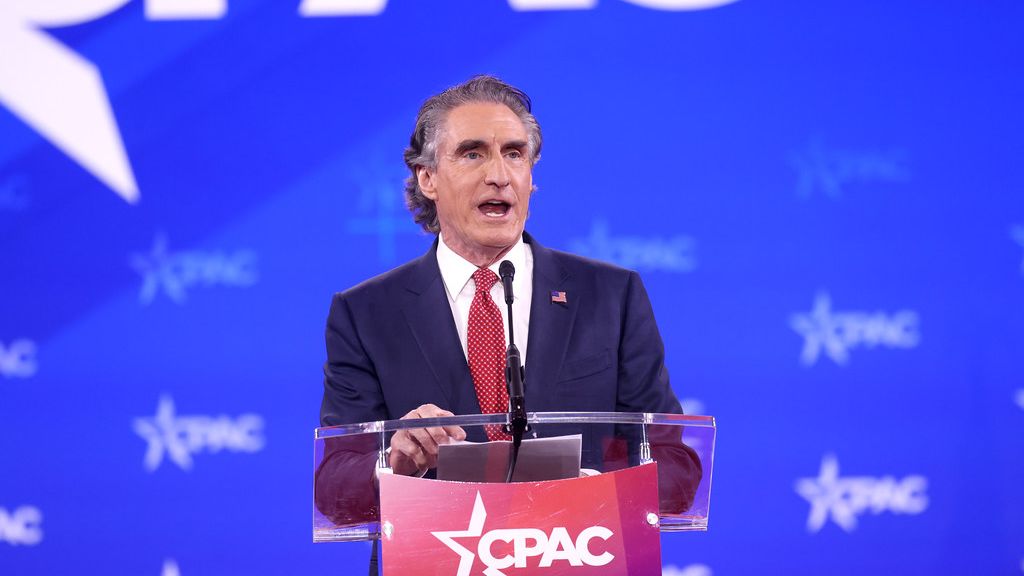
Cabinet Secretary Touts ‘Efficiency’ While Making Staff Sit Through 88-Minute Speech – Image for illustrative purposes only (Image credits: Flickr)
Interior Secretary Doug Burgum spent 88 minutes addressing roughly 70,000 department employees in an all-hands meeting this week, emphasizing the need for greater administrative efficiency. The lengthy remarks came at a time when the Trump administration is advancing plans to reduce budgets and staffing levels at key agencies such as the National Park Service and the U.S. Geological Survey. Employees who attended the session, some of whom spoke on condition of anonymity, noted the contrast between the call for streamlined operations and the duration of the presentation itself.
Repeated Themes and Notable Anecdotes
Burgum organized much of the first portion of his remarks around four guiding words: gratitude, humility, curiosity, and courage. Several attendees observed that the structure and some of the personal stories closely mirrored comments he had delivered at a similar department-wide meeting approximately one year earlier. The session concluded, as it had the previous year, with the Creed song “Higher” playing over the audio system.
One extended aside involved Burgum’s recent encounter with a U.S. Park Police horse named Sibbell during an event tied to the planned 2027 NFL draft on the National Mall. He described offering the animal cinnamon Altoids, his preferred variety, only to find the horse uninterested. The story served as a light illustration of the Park Police’s role, an agency that has received increased funding under the current administration.
Park Police Operations and Related Priorities
Burgum highlighted the Park Police’s contributions to efforts aimed at making Washington, D.C., safer and more orderly. He stated that the agency had removed 82 homeless encampments from federal land without generating significant media coverage. In reality, multiple news organizations documented the clearances and noted that many displaced individuals did not receive shelter placements or other services, with some later returning to the same areas.
The secretary also referenced international park management models in Rwanda and Ecuador as examples worth studying. He suggested that higher fees for foreign visitors could help offset costs, drawing a parallel to daily rates that can reach $800 at certain overseas sites. Critics have argued that such increases risk reducing overall visitation to U.S. national parks.
Technology Initiatives and Content Adjustments
Burgum expressed enthusiasm for an upcoming “AI Teddy” exhibit scheduled to open July 4 at Theodore Roosevelt National Park in his home state of North Dakota. The interactive feature is intended to let visitors pose questions that the system will answer using only words and phrases drawn from Theodore Roosevelt’s own writings and speeches. The project forms part of broader 250th anniversary commemorations that include several large-scale events on federal property.
At the same time, the department has begun removing hundreds of signs and exhibits at national parks and historic sites. The changes follow a directive to ensure displays remain uplifting and free of what the administration describes as improper ideology. Affected locations include Fort Laramie in Wyoming, Glacier National Park, and Big Bend National Park, where content on topics such as Native American history, wildfires, and geology has been taken down.
Employee Reactions and Operational Realities
Staff members described a disconnect between the secretary’s efficiency message and day-to-day conditions. One employee noted that the department has introduced roughly 1,700 new approval requirements for routine activities, including exhibits, social media posts, travel, and credit card use. These added layers, the employee said, have slowed work rather than accelerated it.
The all-hands meeting also featured recognition for employees who had successfully reduced red tape, along with a QR code linking to an internal survey on inefficiencies. The form invites staff to identify obstacles that, if addressed, could improve mission delivery. A group of current and former National Park Service employees has encouraged colleagues to use the survey to highlight funding shortfalls and restrictions on scientific and historical content.
By mid-2025 the National Park Service had already lost nearly a quarter of its workforce through departures and reductions. Additional budget proposals now under consideration would further constrain remaining operations. For many employees, the emphasis on learning to work with artificial intelligence as a safeguard against job loss has not eased concerns about the pace and scope of ongoing changes.