

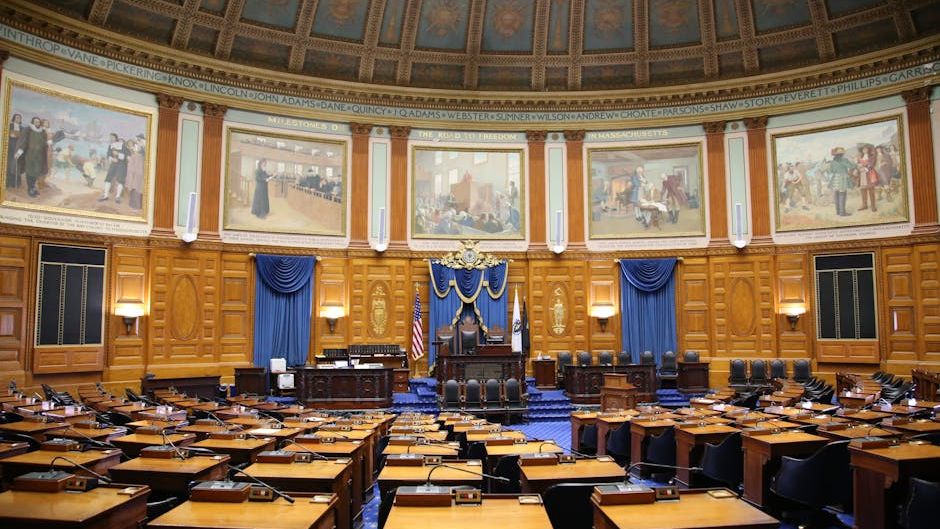
Alabama lawmakers pass plan for new US House primary if courts allow different districts – Image for illustrative purposes only (Image credits: Pexels)
Montgomery, Alabama – State lawmakers approved legislation Friday that would trigger new U.S. House primaries if federal courts lift an existing injunction and allow alternative congressional districts for this year’s elections. The measure now moves to Republican Gov. Kay Ivey. The action reflects broader efforts by Republican-led legislatures in the South to adjust maps following a U.S. Supreme Court ruling that narrowed Voting Rights Act protections for minority voters.
Details of the Alabama Measure
The bill directs the governor to schedule a fresh primary round for congressional seats if courts accept a map different from the one currently in use. Under the current court order, Alabama must maintain a second district where Black voters form a majority or near-majority. That requirement produced the 2024 election of Democratic Rep. Shomari Figures.
Republican Sen. Greg Albritton emphasized that the new primary would occur only if judges remove the injunction that locked in the court-drawn map until after the 2030 Census. Without such a court order, the legislation would have no effect. Black Democratic lawmakers, including Senate Minority Leader Bobby Singleton, argued the plan seeks to reduce Black voting influence and reclaim the seat for Republicans.
Context of Ongoing Redistricting Battles
Republicans across multiple states have accelerated map revisions since the Supreme Court’s Louisiana decision weakened earlier safeguards for minority representation. The goal, according to party strategists, is to secure additional House seats ahead of the midterms that will decide control of the narrowly divided chamber. Democrats, meanwhile, have pursued their own adjustments in states where they hold power, though recent court setbacks have limited those gains.
Before the high court ruling, both parties were already locked in litigation over district lines. The new legal environment has tilted the field toward Republican proposals in several Southern states, though analysts note that aggressive redrawing can sometimes produce unintended competitive districts.
Developments in Virginia, Louisiana, and South Carolina
On the same day Alabama acted, the Virginia Supreme Court struck down a Democratic-backed redistricting amendment. The court found that lawmakers violated constitutional timing rules by approving the measure during early voting for the prior general election. The ruling eliminated a plan that Democrats had hoped would yield up to four additional House seats.
In Louisiana, a Senate committee reviewed Republican proposals that would reduce or eliminate the state’s two Black-majority districts. Democratic Sen. Sam Jenkins warned that every option presented would diminish Black voting strength. In South Carolina, lawmakers held an initial hearing on a map designed to give Republicans all seven House seats, though the plan has drawn internal Republican concerns because it weakens some currently safe districts.
Tennessee completed its own redistricting last week, splitting a Democratic-held, Black-majority district in Memphis. The state Democratic Party filed suit Friday to block the changes until after this year’s elections, citing the compressed timeline.
What matters now
- Alabama’s plan remains dormant unless courts act first.
- Similar contingency measures are under discussion in other states facing active lawsuits.
- Any approved changes must still clear tight election calendars and potential further legal challenges.
Practical Consequences for Voters and Candidates
If Alabama’s contingency primary is activated, candidates would face a second filing period and a compressed campaign window. Voters who have already begun receiving absentee ballots for the scheduled May 19 primary could see those ballots invalidated for congressional races. The same pattern appears in South Carolina, where lawmakers have discussed moving the June 9 primary to August if a new map is adopted.
Stakeholders on both sides have stressed the need for clarity before ballots are finalized. Civil rights groups continue to monitor the cases, arguing that rapid map changes risk diluting minority voting power. Republican officials maintain that the revisions simply restore maps previously blocked by lower courts and comply with the latest Supreme Court guidance.
The sequence of court rulings and legislative responses will determine how many districts ultimately shift before November. For now, the Alabama legislation stands as one of several parallel efforts to keep redistricting options open while litigation continues.