

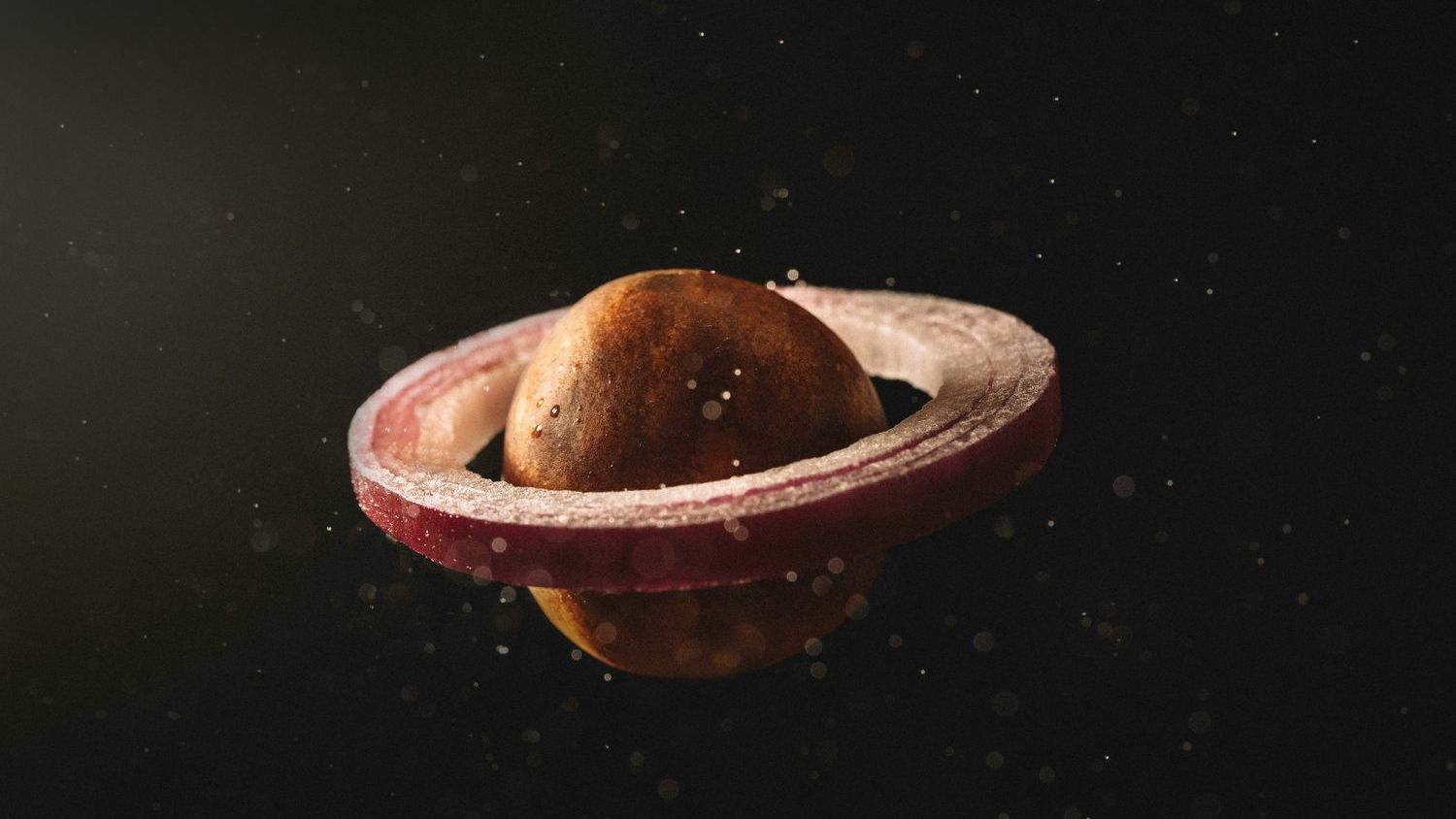
Saturn’s Icy Rings Likely Formed from Lost Moon “Chrysalis” – Image for illustrative purposes only (Image credits: Unsplash)
Saturn’s rings are far younger than the planet they encircle. New modeling indicates they took shape about 100 million years ago when a sizable moon was ripped apart by gravitational forces. That timing places the event squarely in the age of dinosaurs on Earth.
The Moon That No Longer Exists
Researchers have named the hypothetical body Chrysalis. It would have been roughly the size of Iapetus, Saturn’s third-largest moon today. Orbital calculations show that Chrysalis once circled Saturn in a path that gradually became unstable.
Over time, the moon’s orbit brought it close enough for Saturn’s gravity to stretch and finally tear it into fragments. Most of the debris fell inward and spread into the thin, bright rings visible from Earth. A smaller portion may have been ejected or absorbed by other moons.
Why the Rings Look So Fresh
Older rings would have darkened from micrometeorite dust and cosmic rays. Saturn’s rings remain bright and icy, a sign they have not had long to accumulate that material. The 100-million-year age fits this observation without requiring unusual cleanliness assumptions.
Earlier estimates placed the rings at billions of years old, nearly as ancient as Saturn. The revised timeline removes that contradiction and aligns the rings with other recent changes in the Saturn system, including the current orbits of several smaller moons.
Dinosaurs Could Have Seen the Change
One hundred million years ago, large dinosaurs still walked the continents. A bright point of light in the night sky would have grown noticeably larger and then vanished or dimmed as Chrysalis broke apart. The resulting ring system would have appeared gradually over thousands of years.
The event would not have been a single dramatic explosion visible in daylight. Instead, the moon’s destruction unfolded across centuries, spreading ice and rock into the equatorial plane where the rings now lie.
What Remains Uncertain
The model relies on computer simulations of orbital dynamics and tidal forces. Direct evidence of Chrysalis itself has not been found, and alternative explanations for the rings’ youth continue to be tested. Future missions that measure the rings’ mass and composition more precisely could strengthen or weaken the scenario.
Even with those limits, the Chrysalis hypothesis offers a coherent account that matches both the rings’ appearance and the broader history of Saturn’s moons. It also illustrates how quickly dramatic changes can occur in planetary systems once thought to be static.