


The Numbers That Turned Heads

The performance gap between copper and Bitcoin through late 2025 was stark enough to stop even crypto enthusiasts mid-sentence. Copper gained over 40% while Bitcoin fell approximately 6%. That kind of divergence, playing out in the same macro environment, forced investors to ask serious questions.
Copper surged to record highs, surpassing $12,000 per metric ton in 2025, driven by structural demand from electrification, AI infrastructure, and geopolitical tensions. Meanwhile, copper’s price increase reflects its role in productive technologies, contrasting sharply with Bitcoin’s volatility and lack of sovereign demand despite ETF adoption.
While the crypto community remained focused on the possibility of an altcoin season and fresh Bitcoin highs, a different narrative unfolded. By late 2025, what many analysts now describe as a “metal season” had taken shape, with precious metals and even base metals outperforming cryptocurrencies. The shift wasn’t subtle or temporary.
Dr. Copper Gets a New Diagnosis

Copper has long been nicknamed “Dr. Copper” for its supposed ability to diagnose the health of the global economy. Copper, often called “Dr. Copper” for its diagnostic ability, sees demand surge during industrial expansion and infrastructure projects, while gold serves as a classic safe-haven asset during uncertainty. A rising copper-to-gold ratio typically indicates a “risk-on” environment where investors favor growth-oriented assets.
That framework still holds, but something bigger is happening underneath it. Analysts are increasingly discussing a copper “supercycle,” a period of prolonged high demand and structural supply deficits, primarily fueled by the green transition. This isn’t a typical commodity cycle driven by construction booms in a single country.
S&P Global’s comprehensive study identifies a transformative trajectory for copper demand, projecting a surge from 28 million metric tons in 2025 to 42 million metric tons by 2040, a 50% increase that underscores the metal’s pivotal role in multiple technological and economic domains. That’s a structural shift, not a blip.
Electric Vehicles Are Rewriting the Rules

The transition from combustion engines to electric vehicles is one of the most copper-intensive industrial shifts in modern history. Electric vehicles require 2.9 times more copper than a conventional car, and the population of EVs is growing. At a practical level, that’s a massive multiplier applied to every new car rolling off an assembly line.
An EV requires 53 kilograms of copper in electric motors, batteries, inverters, wiring and charging stations, roughly 2.4 times more than a conventional combustion vehicle uses. That volume of wire can extend up to a mile in length. Think about what that means at scale, across tens of millions of vehicles per year.
Electric vehicle-related copper demand is set to double by 2035, cementing the metal’s role at the heart of the global energy transition. Some 22 million EVs were sold worldwide in 2025, compared to only about 10,000 just 15 years earlier in 2010. The compounding effect on copper demand is real and measurable.
Renewable Energy Needs It Too

Wind and solar installations are dramatically more copper-intensive than fossil fuel power plants. The IEA reports that renewable energy infrastructure, including solar and wind power, needs 2.5 to 7 times more copper than fossil fuel-based technologies, depending on whether the wind installations are onshore or offshore. That’s a staggering premium baked into every turbine and solar farm built worldwide.
Wood Mackenzie says the broader energy transition is “fundamentally reshaping copper consumption patterns,” with the shift to renewables expected to require an additional 2 million metric tons of copper supply over the next decade. Two million tonnes is not a rounding error. It’s equivalent to the entire annual production of some major mining nations.
Through 2040, S&P Global projects global electricity demand to grow nearly 50% compared to 2025 levels. Every new megawatt and every new line of digital code ultimately depends on copper. The grid that carries all of that power is essentially a web of copper conductors, transformers, and switching equipment.
AI Data Centers: The Demand Nobody Saw Coming

Electric vehicles and renewables were the anticipated sources of future copper demand. The AI revolution was not. In 2025, half of U.S. GDP growth is attributed to AI spending, largely on computer chips, data centers, and the electric power systems on which they run. This explosive growth of AI and data centers has introduced a new, rapidly expanding vector of copper demand, as data centers are electricity-intensive and their proliferation drives massive investments in both direct copper use and the electric grid infrastructure that supports them.
Large AI campuses are now routinely designed around blocks of 50 to 150 megawatts, and industry estimates place copper use at roughly 27 to 33 tonnes per megawatt of installed capacity. A single 100-megawatt site can therefore absorb several thousand tonnes of copper before accounting for the upstream grid reinforcements required to supply it.
A Macquarie analysis estimates that by 2030, data centers could consume between 330,000 and 420,000 tonnes of copper annually, with a midpoint of 375,000 tonnes. This projection factors in recent mega-project announcements from Microsoft, Meta, and the $500 billion Stargate Project, as well as a forecast jump in required data center power capacity from 77 gigawatts in 2023 to 334 GW in 2030.
Supply Is Buckling Under the Pressure
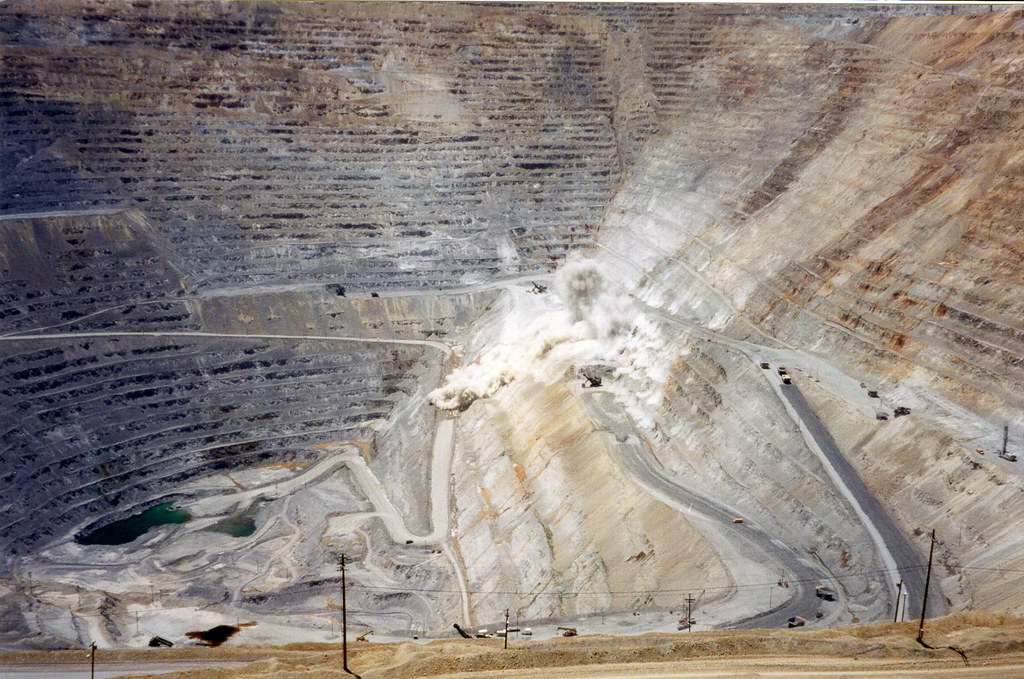
While demand accelerates across three powerful sectors simultaneously, the supply side of the copper equation is struggling in ways that go beyond ordinary market cycles. Copper ore grades have declined 40% since 1991, mine development timelines now average 17 years, and only 14 new copper deposits have been discovered in the past decade compared to 225 in the previous 23 years. Finding copper is getting harder. Getting it out of the ground takes longer. That’s a compounding problem.
On July 31 and August 1, 2025, a tunnel collapse triggered by a tremor killed six workers and forced a complete shutdown of underground operations at the El Teniente mine in Chile. Codelco, Chile’s state-owned mining company, halted all extraction. Meanwhile, on September 8, approximately 800,000 tons of wet material flooded multiple levels of the Grasberg Block Cave mine in Papua, Indonesia, leading to the suspension of all underground operations.
Major accidents at the Grasberg, El Teniente, and Kakula mines wiped out hundreds of thousands of tons of expected copper output in 2025. Analysts now forecast a global copper deficit exceeding 400,000 tons in 2026, with recovery unlikely before 2027. The dominoes fell fast, and the market responded.
The Long-Term Supply Deficit Is Structural, Not Cyclical
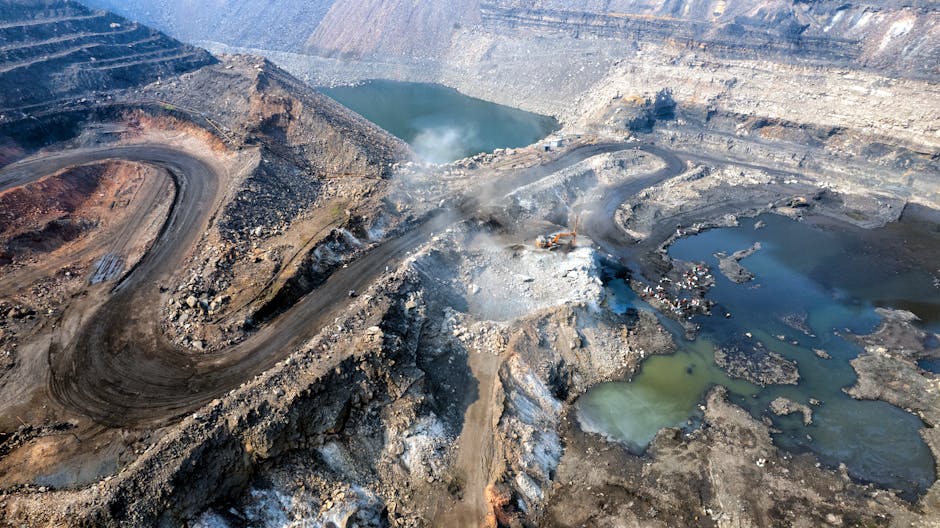
The near-term supply disruptions are concerning, but the longer-term picture is arguably more significant. The International Energy Agency projects a critical 30% copper supply shortfall by 2035, with demand rising from 27 million tonnes in 2024 to 37 million tonnes by 2050 while mine output is expected to decline after the late 2020s. This is not a problem that resolves itself in a year or two.
To meet projected demand, the industry will need 8 million tons of new mining capacity, requiring investment exceeding $210 billion. To put that into context, total capital investment in copper mining over the past six years was only around $76 billion. The math doesn’t work without a dramatic and sustained redirection of capital toward mining.
The time required to bring a new copper mine online in the U.S. averages 19 years, one of the longest in the world. That’s not a regulatory inconvenience. It’s a structural ceiling on how quickly supply can respond to demand signals, no matter how loud the price is shouting.
Bitcoin Loses Its Inflation Hedge Credentials
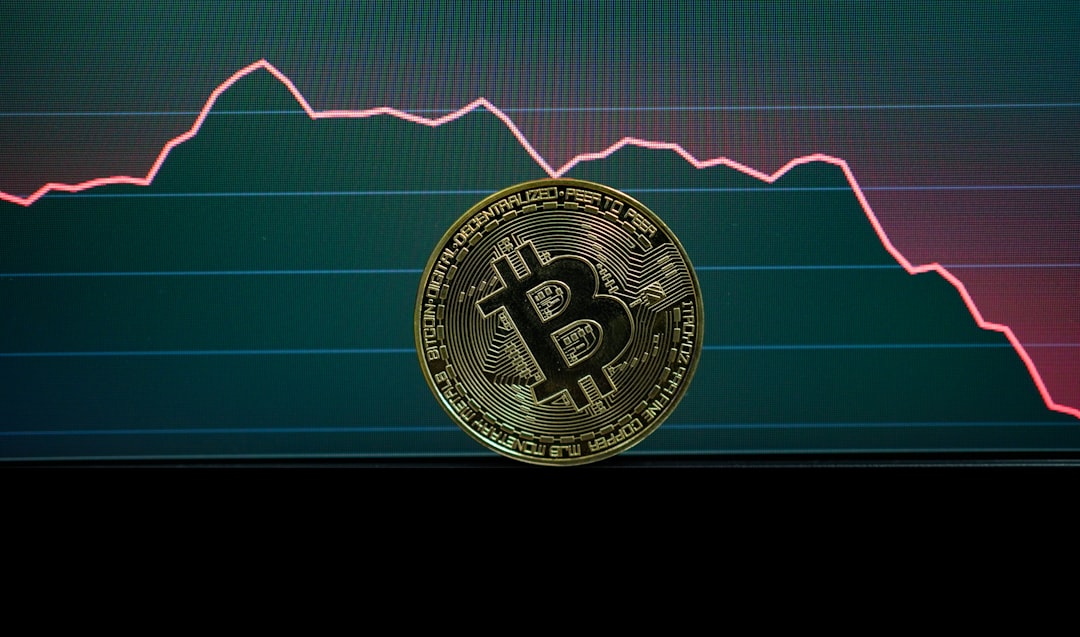
Part of what made Bitcoin’s relative underperformance so striking in 2025 was that inflation and dollar weakness were the exact conditions under which it was supposed to shine. Bitcoin’s underperformance in 2025 underscores its vulnerability to macroeconomic shifts. Despite institutional adoption via ETFs and a rally fueled by rate-cut expectations, the cryptocurrency failed to capture the “fear and AI” trade that boosted gold and copper.
According to Saxo Bank, copper’s price increase in 2025 reflects a “hedge for innovation-led growth,” as its demand is tied to capex-driven industrial activity rather than speculative flows. This divergence highlights a key distinction: copper reflects productive inflation, while Bitcoin behaves more like a high-beta tech stock.
A report by Investing.com notes that the Fed’s rate cuts in late 2025 did not trigger a Bitcoin rally, exposing its limited utility as a hedge against fiat debasement. Copper, by contrast, kept climbing on the back of real-world demand fundamentals that no monetary policy decision can easily override.
National Security Enters the Conversation

The shift in how governments view copper has been one of the more underreported dimensions of this story. The importance of copper has been underlined over the last half decade as a number of countries have deemed it a “critical metal,” including in 2025 the United States. Copper is the connective artery linking physical machinery, digital intelligence, mobility, infrastructure, communication, and security systems.
There is also a growing call on copper coming from the global surge in defense spending and the development of new types of weapon systems that depend on advanced electronics, sensors, propulsion, and communication systems. Combined with AI’s defense applications, ensuring reliable copper supply has become as central to national security as it is to industrial policy, AI, and clean-energy transition strategies.
Thirteen Chilean copper projects worth $14.8 billion are expected to hit key milestones in 2026 as prices rise on fears of a global supply squeeze. Seven domestic projects aim to start operations in the coming year, adding almost 500,000 tonnes of annual capacity backed by $7.1 billion in investment, according to official government figures. Countries are not waiting for the market to sort this out on its own.
What This Means for Investors in 2026 and Beyond

The investment case for copper has shifted from cyclical to structural, and the breadth of demand drivers makes that argument unusually durable. Investment banks are bullish. JPMorgan expects copper to reach $12,500 per ton in the second quarter of 2026, averaging around $12,075 for the full year. UBS is even more optimistic, projecting $13,000 by the end of the year.
Global copper demand is set to surge 24% by 2035, rising by 8.2 million tonnes per annum to 42.7 million tonnes, according to Wood Mackenzie, with growth driven by traditional economic development alongside new structural demand from electrification and digitalisation. That kind of trajectory, backed by multiple independent forecasts, is hard to dismiss as speculative momentum.
Still, copper is not without its own risks. Geopolitical pressures, trade tariffs, Chinese demand fluctuations, and the very real possibility of demand substitution over long time horizons all complicate any simple bullish thesis. A significant supply surplus was recorded in 2025 at 600 kilotonnes, the largest since 2009, which served as a reminder that commodity markets rarely move in a straight line. The long-term story looks compelling. The short-term path remains choppy.
The real takeaway here isn’t that copper has “beaten” Bitcoin in some permanent hierarchy of assets. It’s that the physical world, with its wires and motors and transmission lines, turned out to matter more than many people expected. Every solar panel bolted to a rooftop, every EV rolling out of a factory, every server rack cooling an AI model – all of it runs on copper. That’s not a trend. That’s infrastructure. And infrastructure tends to win in the long run.