

Your Brain Has a Daily Budget, and Clothes Are Spending It

Research estimates that the average adult makes roughly 35,000 decisions per day, and that figure only accounts for conscious choices. Every one of those decisions draws from the same cognitive pool. Decision fatigue is the idea that you are capable of making a limited number of good decisions each day, and the more decisions you make throughout the day, the worse you are at making them.
Bob Pozen, a productivity expert at MIT and author of “Extreme Productivity,” points out that we make thousands of decisions every day, some trivial and others life-altering. From deciding what to wear to figuring out what to have for breakfast, the constant stream of decisions adds up quickly. The more time and energy we spend on those everyday choices, the less cognitive power we have for the decisions that truly matter.
The Science of Ego Depletion: Where It All Began

The idea of decision fatigue was first explored by social psychologist Roy F. Baumeister. His research showed that our mental resources, much like a muscle, become depleted after extended use. That foundational insight sparked decades of follow-up work across psychology and behavioral economics.
Ego depletion is the idea that self-control or willpower draws upon conscious mental resources that can be taxed to exhaustion when in constant use. The theory proposes that when the energy for mental activity is low, self-control is typically impaired. Experiencing a state of ego depletion impairs the ability to control oneself later on.
In Baumeister’s classic cookie and radish experiment, participants in the indulgence condition persisted on follow-up puzzles for an average of about 19 minutes. Participants in the temptation condition, who had resisted eating cookies, gave up in just 8 minutes. Resisting the tempting cookies had depleted their limited self-regulatory resources, leaving them with less willpower for the subsequent cognitive task.
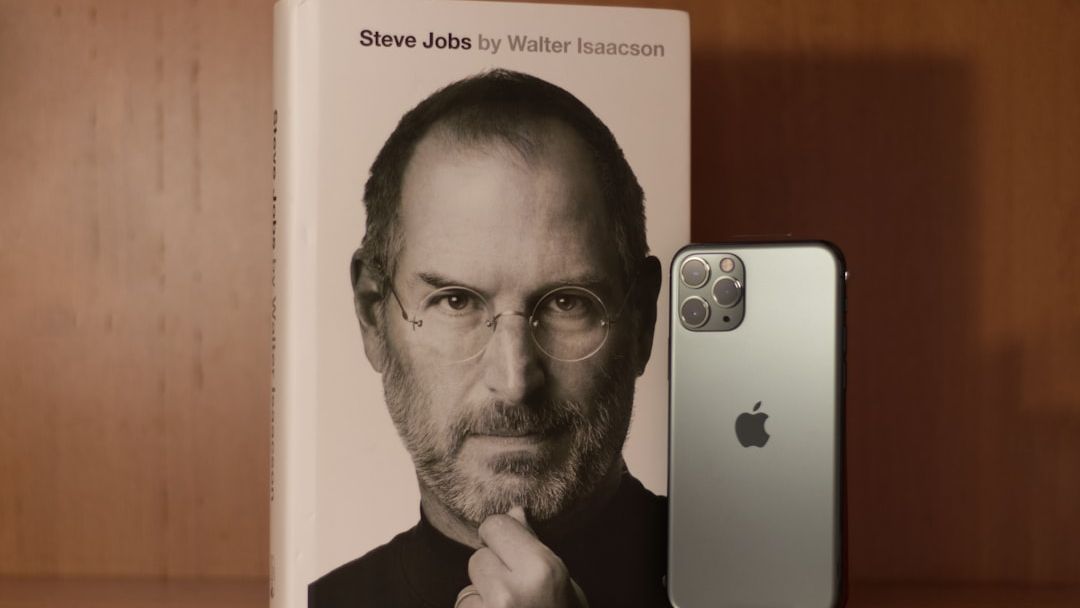
Steve Jobs: The Turtleneck as a System Choice

Jobs famously wore the same black turtleneck, blue jeans, and New Balance sneakers every day. This wasn’t a fashion choice. It was a systems choice. He understood, intuitively or otherwise, that protecting mental energy at the start of the day compounded into better decisions across the entire day.
Known for his black turtlenecks, jeans, and sneakers, Jobs intentionally minimized his outfit choices so he could conserve mental energy for more important tasks, like leading Apple and innovating technology. The outfit became iconic. What it really represented, though, was Jobs’ approach to leadership: preserve mental energy for what truly matters.
Barack Obama: Blue Suits, Gray Suits, Nothing Else
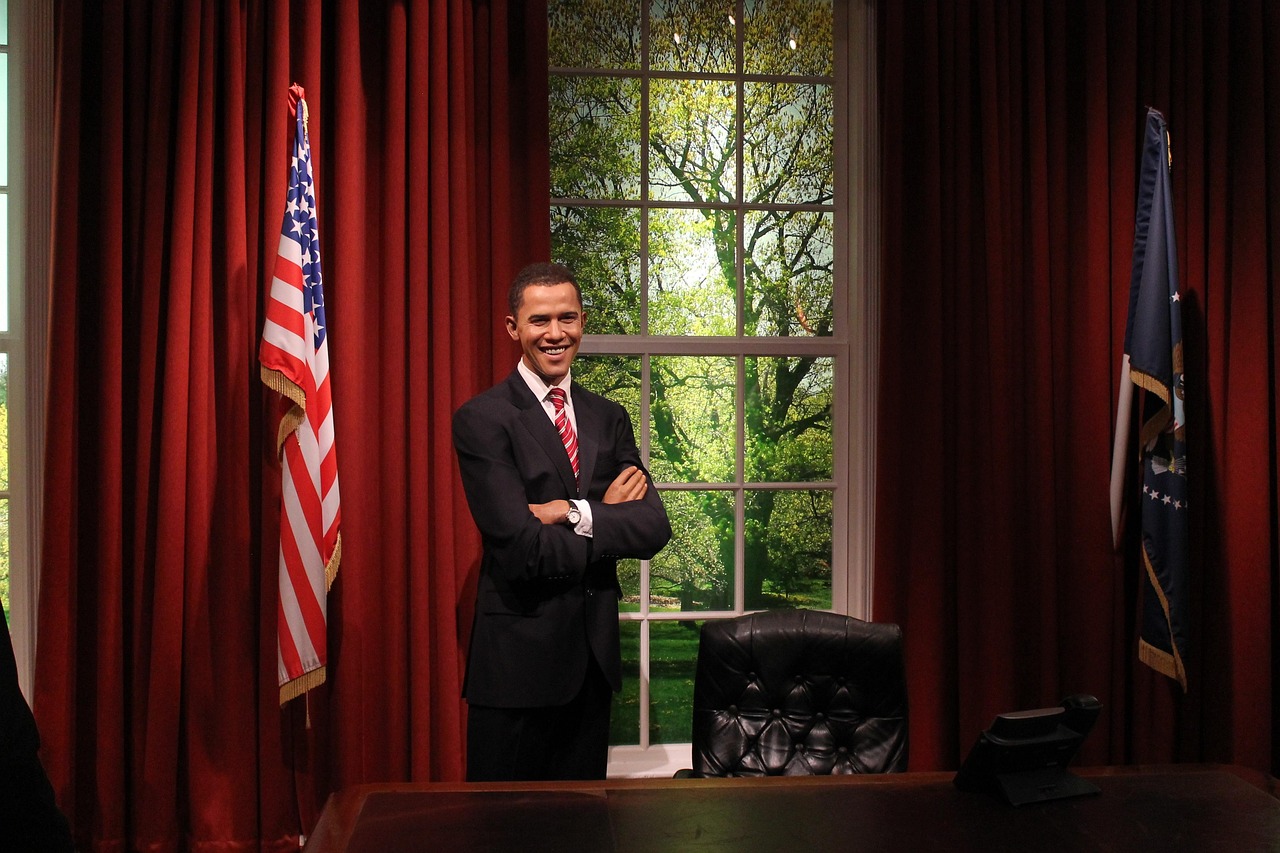
As president of the United States, Obama had countless decisions to make every day. Some were incredibly important, like how to deal with overseas threats, while others were more mundane, like what to wear. To limit the number of decisions he had to make, and to ensure that he was in top form for the most important ones, he claims to have worn the same colored suits every day.
Barack Obama wore only gray or blue suits. That quiet discipline was intentional. The more decisions made throughout the day, the harder each decision becomes. Eventually, the brain looks for shortcuts to circumvent decision fatigue, leading to poor choices. Obama’s wardrobe routine was a preemptive strike against that slide.
Mark Zuckerberg: The Gray T-Shirt Strategy
Mark Zuckerberg is known for wearing the same grey T-shirt and hoodie almost every day. At first glance, it feels like a random personal quirk. It is not. As CEO of Meta, Zuckerberg faces hundreds of decisions daily.
Zuckerberg has publicly said he wants to make as few decisions as possible about trivial things, like what to wear or eat. He adopted a uniform approach, gray T-shirts and hoodies, so he could spend all his energy making the best decisions about Facebook and the company. When small, low-stakes choices disappear, attention shifts to the work that truly matters. Innovation, hiring judgment, product strategy, and long-term thinking require cognitive space. Fewer minor decisions mean more clarity for complex ones.
Albert Einstein: A Simpler Mind for a Complicated Universe

Albert Einstein, known for his theory of relativity, consistently wore a simple gray suit, white shirt, and slip-on shoes, which became his signature look. Long before psychologists had a name for the phenomenon, Einstein was already engineering his daily life around the same principle.
Einstein favored a simple gray suit, white shirt, and slip-on shoes. This no-fuss attire became his trademark, enabling him to focus on his revolutionary theories without the distraction of varied outfits. The pattern across these figures is striking. None of them stumbled into a wardrobe uniform by accident.
The Judges Who Proved Decision Fatigue Is Real

Perhaps the most unsettling real-world evidence for decision fatigue doesn’t come from a tech campus. It comes from a courtroom. In 2011, Levav and two other researchers published a study in the Proceedings of the National Academy of Sciences that found Israeli judges paroled prisoners who appeared early in the morning about 65 percent of the time, while those with late-session appointments were paroled nearly zero percent of the time. After a meal break, the probability jumped back to about 65 percent before resuming its decline. The later-session prisoners weren’t significantly different. They just showed up when the judges had decision fatigue and were making the lowest-maintenance calls.
In a study of business analysis, forecasters became less accurate as the day wore on. This dip in accuracy was accompanied by a greater proportion of choices made according to heuristic decision-making methods. The pattern holds across professions and contexts: fatigue degrades judgment, often invisibly.
The Debate: Is Ego Depletion Really That Powerful?

It would be misleading to present all of this as settled science. Ego depletion became one of the most prominent casualties of psychology’s replication crisis. A major coordinated effort involving 23 laboratories and over 2,100 participants failed to replicate the effect. That’s a significant challenge to the original framing.
While the scientific debate over the precise mechanism of ego depletion continues, there is broad agreement on the downstream consequences of a state of mental exertion induced by repeated decision-making. Whether this state is caused by a literal resource drain or a strategic motivational shift, the resulting cognitive and behavioral outcomes are consistent and predictable.
The focus has shifted toward understanding willpower as a complex interplay of psychological, physiological, and cultural factors. Researchers are now exploring how personal beliefs, motivation, environmental cues, and even societal norms shape our ability to exert self-control. The core practical insight, however, remains broadly intact: accumulated trivial decisions tend to erode the quality of the bigger ones.
What Happens to Your Brain When You’re Depleted
Several studies have indicated that decision fatigue can increase reliance on mental shortcuts and biases. That matters because mental shortcuts often mean worse outcomes, particularly in high-stakes moments. Compromise and integrative thinking are reduced, leading often to fairly simplistic decisions. Decisions can be irrationally biased by logically irrelevant information, because people fail to recognize the irrelevance of certain factors. Some decision makers also prefer to avoid or postpone decisions when they are depleted.
A 2016 study published in the Proceedings of the National Academy of Sciences found that after making numerous decisions throughout the day, participants were less likely to make smart, thoughtful choices. Brain scans revealed reduced activity in the prefrontal cortex, the area of the brain responsible for decision-making. This suggests that when faced with a series of choices, our ability to make clear, rational decisions diminishes.
How to Build Your Own Cognitive Uniform

To avoid decision fatigue, it helps to schedule work meetings and critical decision-making at the beginning of the day, when mental acuity is highest due to increased cortisol levels, and shortly after lunch, when glucose levels are replenished. Routine is not laziness. It’s a structural advantage.
Making smaller decisions the night before, such as meal planning for the next day, picking out tomorrow’s outfit, or making a grocery list ahead of time, can reduce the many decisions you have to make the next day, freeing up more mental capacity. Sleep is perhaps the single most critical factor for restoring executive function. During sleep, particularly deep NREM and REM sleep, the brain consolidates memories, clears metabolic waste, and replenishes the neural circuits necessary for attention, emotional regulation, and impulse control.
The real takeaway from Jobs, Obama, Zuckerberg, and Einstein isn’t that a gray hoodie will make you a better thinker. It’s that every decision you automate is a small act of cognitive investment. The wardrobe is just the most visible example of a much deeper principle: protect the decisions that matter by quietly eliminating the ones that don’t.