

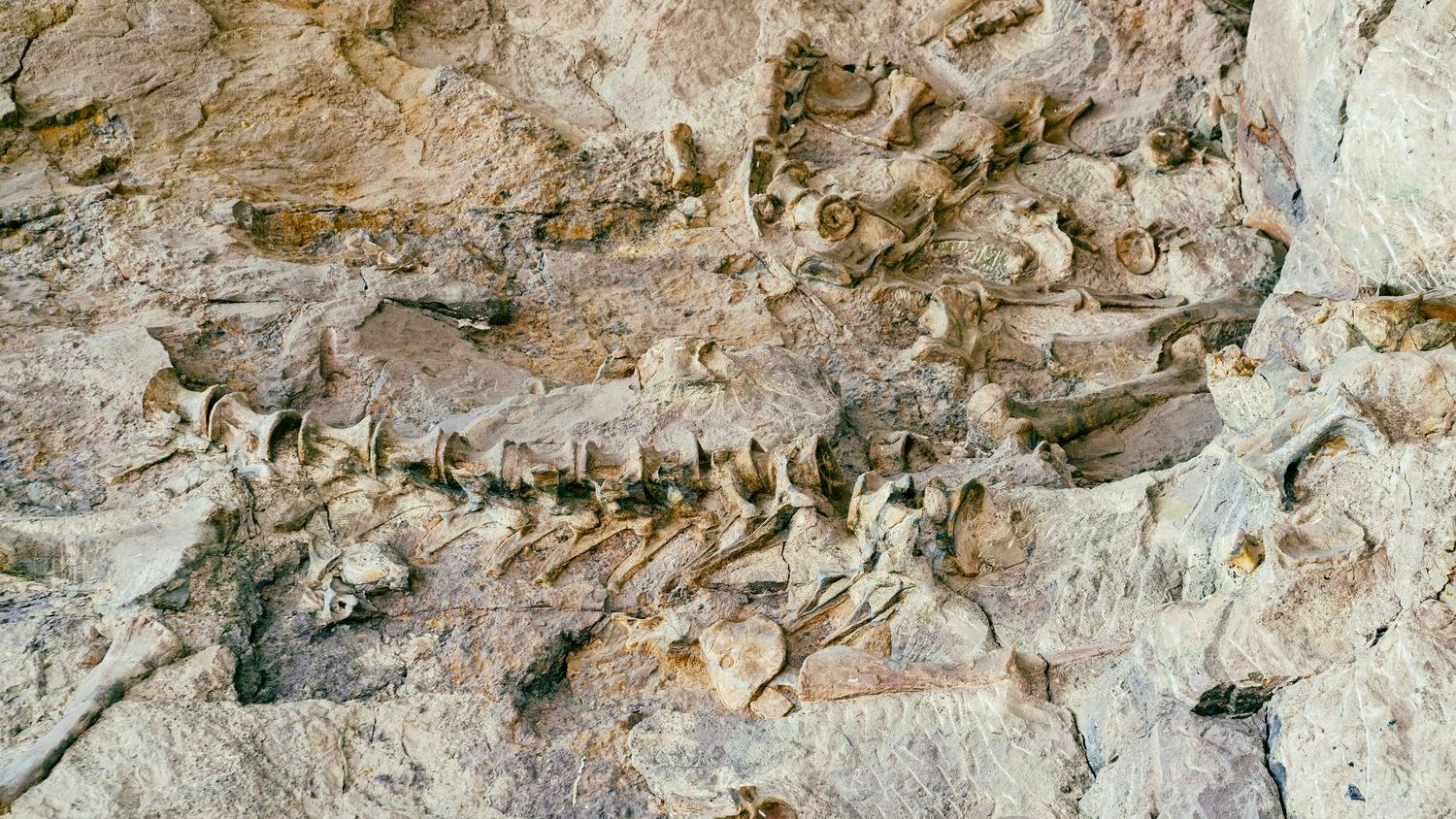
‘More than 100 million years of evolution’: How snakes evolved and lost their legs – Image for illustrative purposes only (Image credits: Unsplash)
Scientists have long puzzled over how snakes transformed from four-legged lizards into the sleek, limbless predators that dominate ecosystems today. Recent fossil discoveries and advanced imaging techniques are now filling in critical gaps in that story, showing a gradual process that unfolded across more than 100 million years. The findings highlight how environmental pressures shaped one of nature’s most successful body plans. They also remind us that the snakes we encounter in forests, deserts, and oceans carry echoes of an ancient transition still visible in their DNA and occasional vestigial bones.
Early Clues From the Fossil Record
One of the most revealing specimens comes from a nearly 100-million-year-old fossil of Najash rionegrina found in Argentina. This ancient snake retained well-developed hind legs and even a cheekbone structure that has since disappeared in modern species. Researchers used high-resolution CT scans to examine the preserved skeleton without damaging it, revealing details about its anatomy that earlier fossils could not provide.
Other specimens, such as those from the Cretaceous period, show that early snakes kept their hind limbs for tens of millions of years before the fully limbless forms emerged. These fossils indicate the loss was not sudden but occurred in stages, with forelimbs disappearing first in many lineages. The evidence points to a four-legged ancestor that gradually streamlined its body for new ways of moving.
Why Limbs Became a Liability
Many early snakes appear to have adapted to life underground, where legs would have hindered movement through narrow tunnels. Burrowing offered protection from predators and access to prey, favoring individuals whose bodies grew longer and more flexible. Over generations, natural selection reduced limb size until only tiny remnants remained in some groups.
Modern snakes still show traces of this history. Pythons and boas, for instance, possess small pelvic spurs that represent leftover leg bones. These structures serve little purpose in locomotion but demonstrate how evolution retains genetic echoes even after functional traits vanish. The shift to a limbless form allowed snakes to exploit a wider range of habitats, from oceans to treetops.
Genetic Switches Behind the Change
Developmental biology has identified specific genetic mechanisms that halted limb growth. A key regulatory sequence known as ZRS lost its ability to activate limb development in snakes, effectively turning off the process that builds legs in other reptiles. Additional gene losses further prevented the formation of forelimbs and refined the elongated vertebral column that defines serpents.
These molecular changes did not happen in isolation. They coincided with expansions in the number of vertebrae, enabling the sinuous motion that lets snakes navigate complex environments. Studies combining fossil data with genetic analysis show the timeline aligns with the rise of diverse snake groups during the Cretaceous.
Remaining Questions and Future Directions
Despite progress, scientists still seek the precise four-legged ancestor that bridges lizards and snakes. The exact timing of the transition remains approximate, with estimates ranging from 150 to 125 million years ago. New fossils from under-explored regions could refine this picture and clarify whether burrowing was the sole driver or one of several factors.
Continued advances in imaging and genetic sequencing promise to reveal more about how these changes unfolded across different snake lineages. Each discovery adds depth to our understanding of how a single group of reptiles achieved such remarkable diversity and global success. The story of snake evolution continues to unfold, offering fresh perspectives on adaptation in a changing world.