

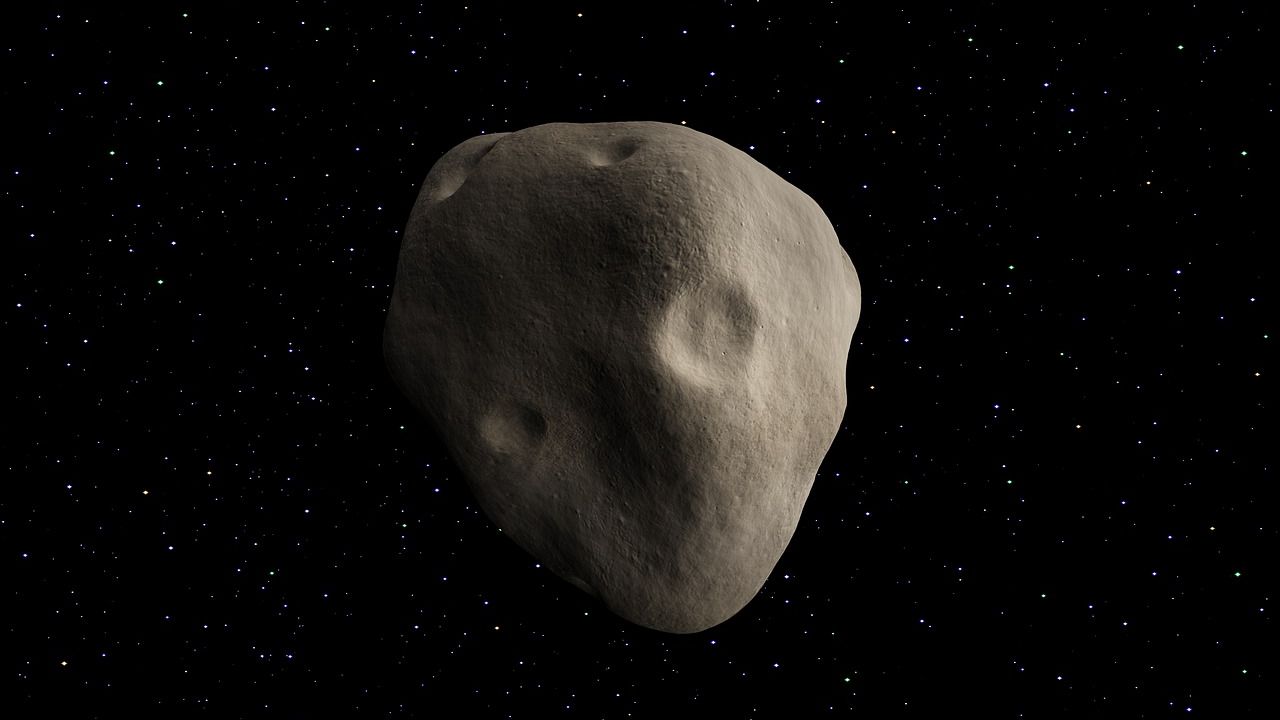
Does Dante’s Inferno from the 14th century depict an asteroid impact? – Image for illustrative purposes only (Image credits: Pixabay)
In the early 1300s, Dante Alighieri completed the Inferno, the first part of his Divine Comedy. Within its verses, the poet recounts Lucifer’s expulsion from heaven and his violent plunge to Earth. The resulting landscape he describes includes concentric rings of terrain and a raised central feature, elements that align closely with the geological signatures left by large asteroid impacts.
The Scene as Dante Presented It
Dante places the fallen angel at the center of the Earth, where his body displaces vast quantities of rock and soil. The impact creates a series of circular depressions that radiate outward, each ring separated by ridges of displaced material. At the very middle rises a mound formed by the rebound of the crust after the initial collision.
These details appear in the final cantos of the Inferno, where the poet guides readers through the lowest levels of Hell. The topography is not presented as abstract allegory alone; it is rendered with enough physical specificity to suggest an observed event rather than pure invention. Readers encounter a world reshaped in an instant by an enormous force arriving from above.
Features That Match Known Impact Craters
Modern planetary science recognizes several diagnostic traits of asteroid strikes. Multi-ring basins form when the shock wave from a high-velocity impact excavates material in successive waves. A central peak or uplift often appears as the compressed crust rebounds. Both characteristics are present in Dante’s account.
The rings described in the poem correspond to the concentric scarps seen at sites such as the Orientale basin on the Moon or the Vredefort structure in South Africa. The central mound matches the rebound peaks documented at many terrestrial craters. These parallels emerge without any reference to later scientific terminology, which makes the resemblance more striking.
Why the 14th Century Matters
Dante wrote during a period when large meteor events were occasionally recorded in European chronicles, though none matched the scale implied by his description. The poet lived in a time when natural phenomena were still interpreted through both theological and observational lenses. His willingness to detail the physical consequences of Lucifer’s fall suggests he may have drawn on reports of a significant impact or on widespread oral accounts of such an event.
Whether Dante witnessed the aftermath himself or incorporated stories passed down from earlier generations remains unknown. The poem’s precision about crater morphology, however, stands apart from purely symbolic treatments of the same biblical story in other medieval texts. This level of detail invites closer examination of possible real-world sources.
Interpreting Literature Through a Scientific Lens
Viewing the Inferno as a possible record of an impact event does not diminish its theological or literary value. Instead, it highlights how medieval writers sometimes embedded empirical observations within religious frameworks. The same verses that explore sin and redemption also preserve a vivid picture of planetary-scale violence.
Scholars continue to debate the balance between allegory and observation in Dante’s work. The crater-like geography offers one concrete point of contact between the poem and the physical world. Future studies of historical impact records or refined models of crater formation may clarify whether the resemblance is coincidental or rooted in an actual occurrence.
The possibility remains open that Dante captured, in poetic form, the signature of a cosmic collision that reshaped part of the planet long before telescopes existed. Such an intersection of literature and astronomy continues to prompt fresh questions about what the poet actually saw or heard.