

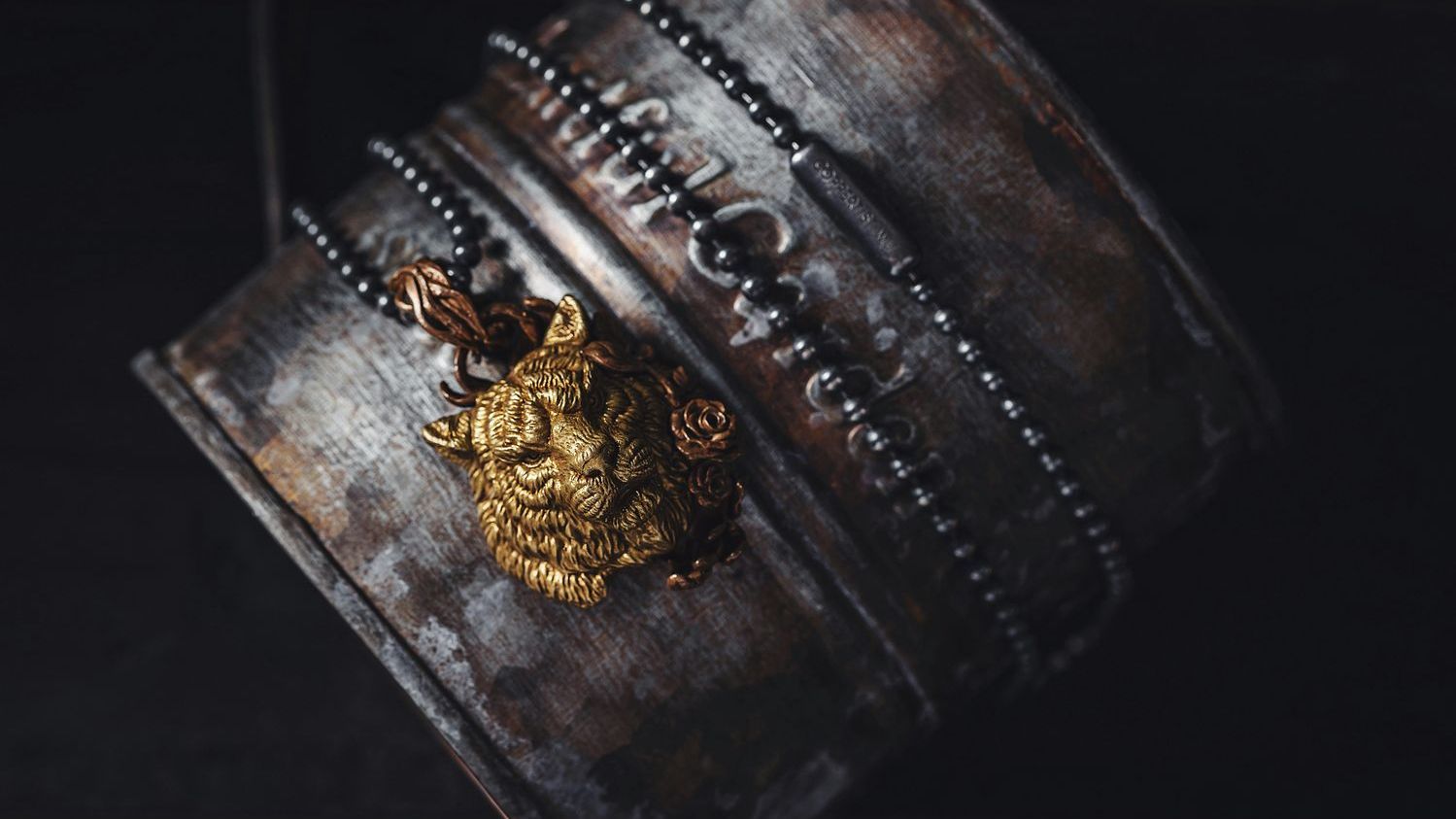
Lion’s head pendant: An ancient Egyptian board game piece that was later repurposed into a magical religious object with baboons – Image for illustrative purposes only (Image credits: Unsplash)
Archaeologists in Sudan have traced the history of a single object across more than a thousand years of cultural change. What began as a carved piece for an ancient Egyptian board game later became a gold-and-amethyst pendant worn or displayed for religious purposes. The item now carries clear signs of deliberate modification that turned a gaming token into a magical religious object featuring baboons.
From Game Token to Sacred Item
The original piece formed part of a board game set used in Egypt during the New Kingdom period. Its lion-head shape and compact size made it suitable for moving across a game board. Centuries after that use ended, someone in Sudan acquired the piece and altered it for a different role.
Workers added gold fittings and set an amethyst stone into the design. They also incorporated baboon figures, animals linked to religious and protective functions in both Egyptian and Nubian traditions. These changes show a clear intent to shift the object from everyday recreation to ritual use.
Evidence of Careful Modification
Examination of the pendant reveals drilled holes, new metal mounts, and surface polishing that do not match the original carving style. The amethyst, a material valued for its color and supposed protective qualities, was added after the piece left Egypt. Baboon motifs appear in positions that suggest they were meant to frame or guard the central lion head.
Such alterations required skill and access to precious materials. The work indicates the object held value for its new owners beyond simple decoration. No records explain the exact reason for the change, yet the physical evidence points to a purposeful act rather than casual reuse.
Context of Cultural Exchange
Sudan and Egypt shared long-standing trade routes and political ties that allowed objects to move between regions. Board games themselves traveled along these routes, so a single piece could easily reach Nubian workshops. Once there, local artisans adapted it to fit prevailing religious practices that emphasized protective symbols like baboons.
The pendant therefore stands as a record of how people in the past handled inherited items. They did not discard the game piece; they transformed it to meet new spiritual needs. This pattern of reuse appears in other artifacts from the same era, though few examples combine gaming origins with later religious function as clearly as this one.
Questions That Remain
Researchers continue to study the pendant’s exact date of modification and the workshop where the changes occurred. The absence of written accounts leaves the precise motivation open to interpretation. What is certain is that the object survived because successive owners saw worth in preserving and adapting it.
Its current form offers a tangible link between two periods and two societies. The lion head that once moved across a game board now sits within a setting meant to invoke protection or power. Further analysis may narrow the timeline, yet the core story of transformation is already visible in the artifact itself.