

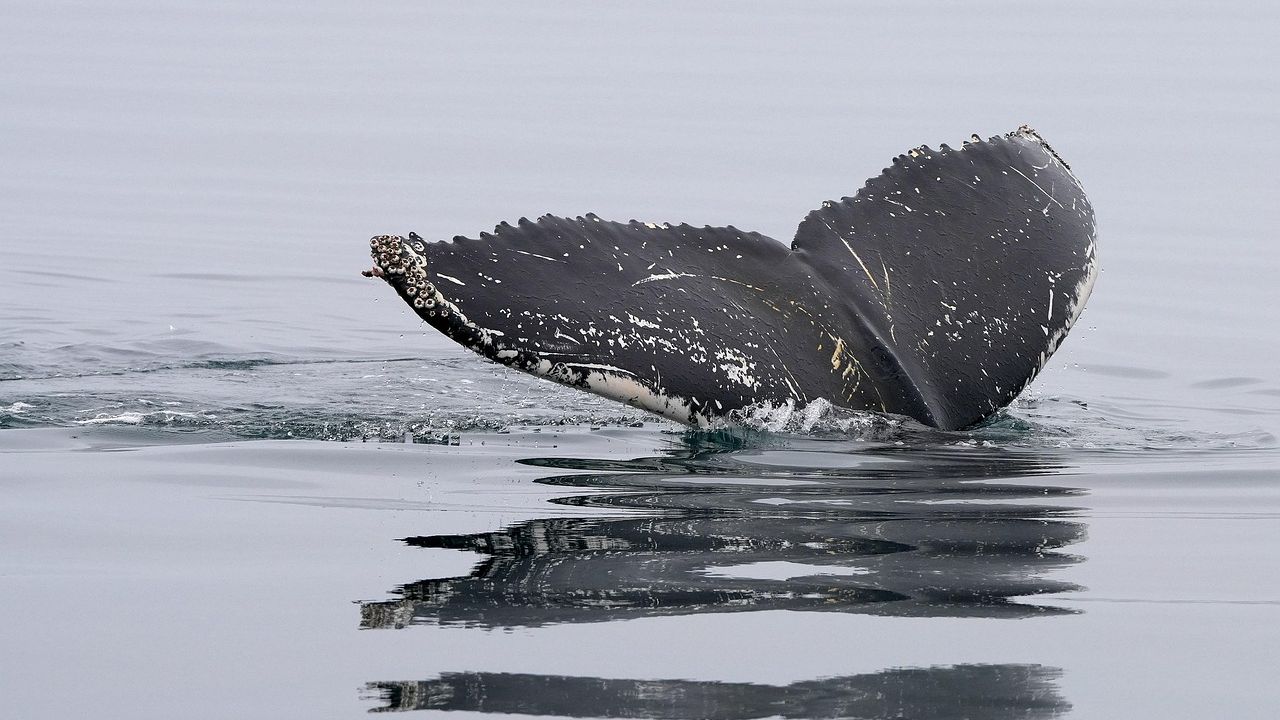
Pirouetting and gaping: mysterious whale behaviour documented as humpback migration begins – Image for illustrative purposes only (Image credits: Pixabay)
Researchers have gained fresh insight into a rarely seen humpback whale behavior thanks to footage shared by members of the public. The observations coincide with the start of the annual northward migration along the Western Australian coast. What appears at first to be feeding turns out to be something quite different: a deliberate, non-foraging display involving wide-open jaws and sweeping fin movements.
Clear Footage Reveals the Pattern
An onlooker recorded a humpback whale performing repeated turns while holding its lower jaw fully extended. The animal moved its pectoral fins through the water in a coordinated motion that resembled a slow pirouette. Several other whales remained nearby, suggesting the action formed part of a group interaction rather than an isolated event.
Similar sequences have been noted only a handful of times in published records. The new video stands out because it shows the full sequence from multiple angles and confirms that no prey was present. Researchers therefore classify the behavior as a form of social signaling rather than a hunting technique.
Citizen Contributions Strengthen the Data
Marine scientists have long relied on opportunistic sightings to study infrequent whale actions. In this case, the public video supplied high-resolution detail that professional surveys often miss. The footage allowed analysts to measure the duration of the jaw extension and note the precise fin movements that accompany it.
By comparing the new recording with earlier, lower-quality observations, the team identified consistent elements across separate encounters. This consistency strengthens the case that jaw-gaping represents a repeatable social display rather than random movement. Continued public submissions are expected to refine the description further.
Interpreting the Social Context
Current evidence points to a communicative function, possibly linked to group coordination during migration. The presence of nearby whales and the absence of feeding suggest the display may help maintain spacing or signal readiness to travel. No aggressive chasing or physical contact was observed, which rules out several alternative explanations.
Researchers remain cautious, however. The sample size is still small, and the exact message conveyed by the behavior is not yet known. Additional sightings from the current migration season will be needed before firmer conclusions can be drawn.
What Matters Now
Continued public reporting of unusual whale actions will help determine whether jaw-gaping occurs more widely along the migration route and whether it changes in frequency as the season progresses.
The combination of citizen footage and targeted analysis illustrates how everyday observations can advance understanding of complex marine behavior. As more humpbacks pass the Western Australian coast in coming weeks, similar recordings may clarify the role this display plays in their social lives.