

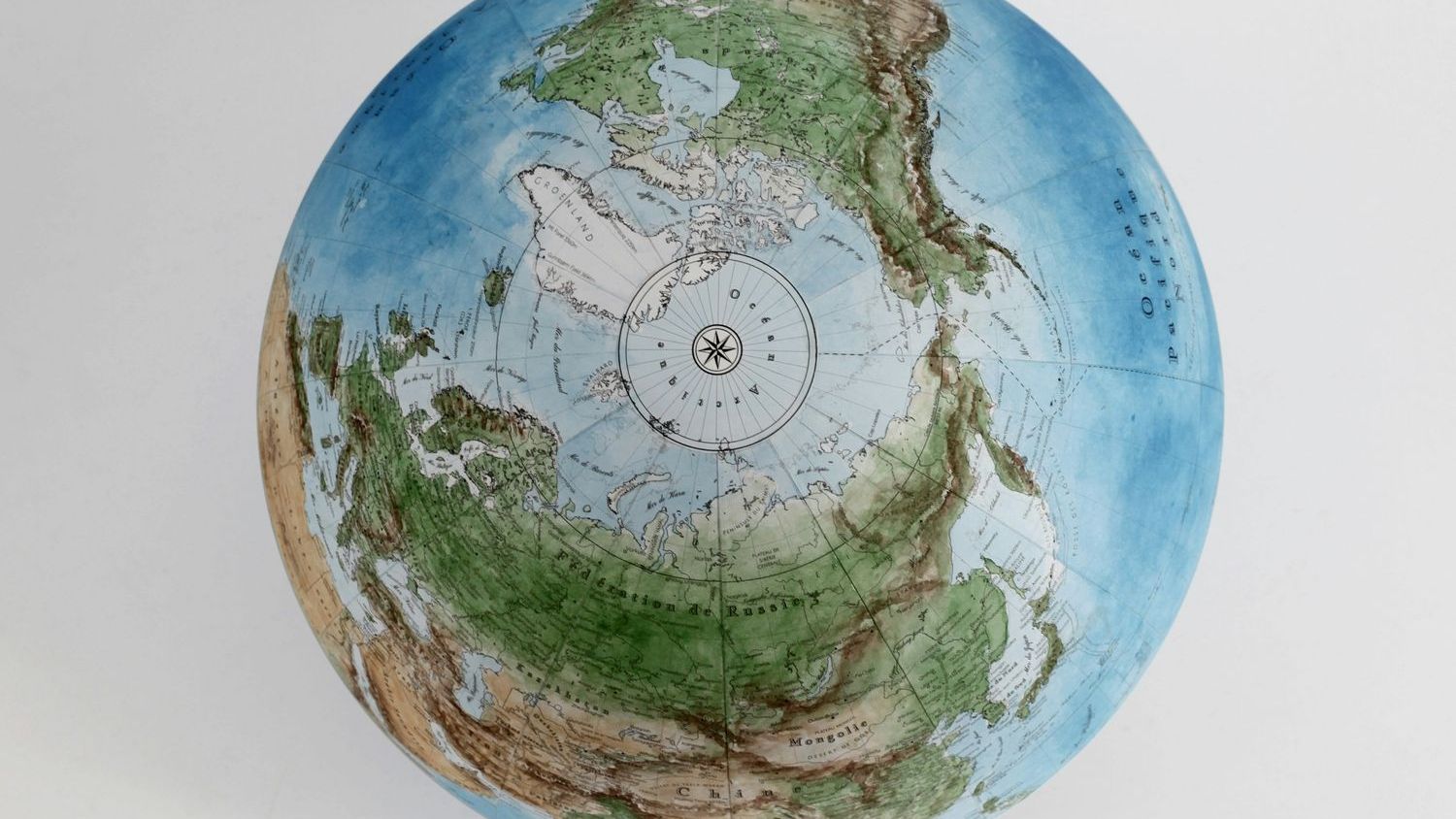
How ‘Snowball Earth’ Was A Tug-Of-War – Image for illustrative purposes only (Image credits: Unsplash)
A recent study from Harvard planetary scientists has clarified how Earth remained locked in ice for 56 million years during one of its most severe climate episodes. The work focuses on the Sturtian glaciation, a period when glaciers covered nearly the entire planet and formed part of the broader Snowball Earth events. By examining ancient rock formations, the researchers identified the geological processes that sustained such extreme conditions far longer than previously understood.
The Scale of the Sturtian Glaciation
The Sturtian glaciation stands out as one of the longest and most intense ice ages in Earth’s history. It occurred roughly 717 to 660 million years ago and left much of the planet encased in ice sheets that reached tropical latitudes. Scientists have long puzzled over what prevented the ice from melting sooner, given that solar radiation and other factors should have eventually warmed the surface. This extended freeze altered ocean chemistry, disrupted early life forms, and reshaped continents through repeated glacial advances. The new Harvard analysis places the duration at a precise 56 million years, underscoring how stable the frozen state proved under specific conditions. Such longevity challenges simpler models of climate recovery and highlights the role of slow-acting Earth systems.
Evidence from Canadian Rock Formations
Central to the findings is a large igneous province located in what is now Canada. These ancient volcanic rocks provided critical data on the timing and intensity of volcanic activity during the glaciation. The province’s chemical signatures revealed pulses of carbon dioxide release that interacted with the ice-covered world in unexpected ways. Researchers traced how these emissions created a counterbalance against the cooling effects of the ice. The Canadian site offered unusually clear records because the rocks remained relatively undisturbed over deep time. This allowed the team to link specific geological events directly to the prolonged survival of the ice sheets.
The Geological Tug-of-War at Work
The study frames the 56-million-year freeze as the result of opposing forces that held each other in check. On one side, the reflective ice surface bounced sunlight back into space and reinforced cooling. On the other, gradual volcanic outgassing from the Canadian igneous province supplied enough greenhouse gases to prevent total atmospheric collapse. This dynamic prevented either rapid thawing or further intensification of the freeze. The balance persisted because the rate of gas release matched the rate at which ice reflected heat away. Only when the volcanic activity eventually shifted did the system tip toward deglaciation. The mechanism explains why similar Snowball Earth episodes elsewhere in the geologic record also lasted for tens of millions of years. It shows that Earth’s climate can reach stable extremes when geological and atmospheric processes align in this manner.
What the Discovery Means for Climate Understanding
The Harvard findings add precision to reconstructions of Earth’s distant climate history. They demonstrate that even under near-global ice cover, internal planetary processes can maintain equilibrium for extraordinarily long intervals. This perspective helps scientists evaluate how sensitive Earth’s climate system remains to changes in volcanic output and surface reflectivity. Future work may examine whether comparable tug-of-war dynamics operated during other ancient glaciations. The Canadian evidence provides a template for identifying similar provinces on other continents and testing the model against additional rock records.
The study ultimately illustrates how Earth’s own interior can dictate the length of its most dramatic climate chapters. It leaves open questions about the exact thresholds that finally ended the freeze, yet it supplies a coherent explanation for the remarkable stability that defined those 56 million years.