

A Monument That Should Not Exist by Modern Logic
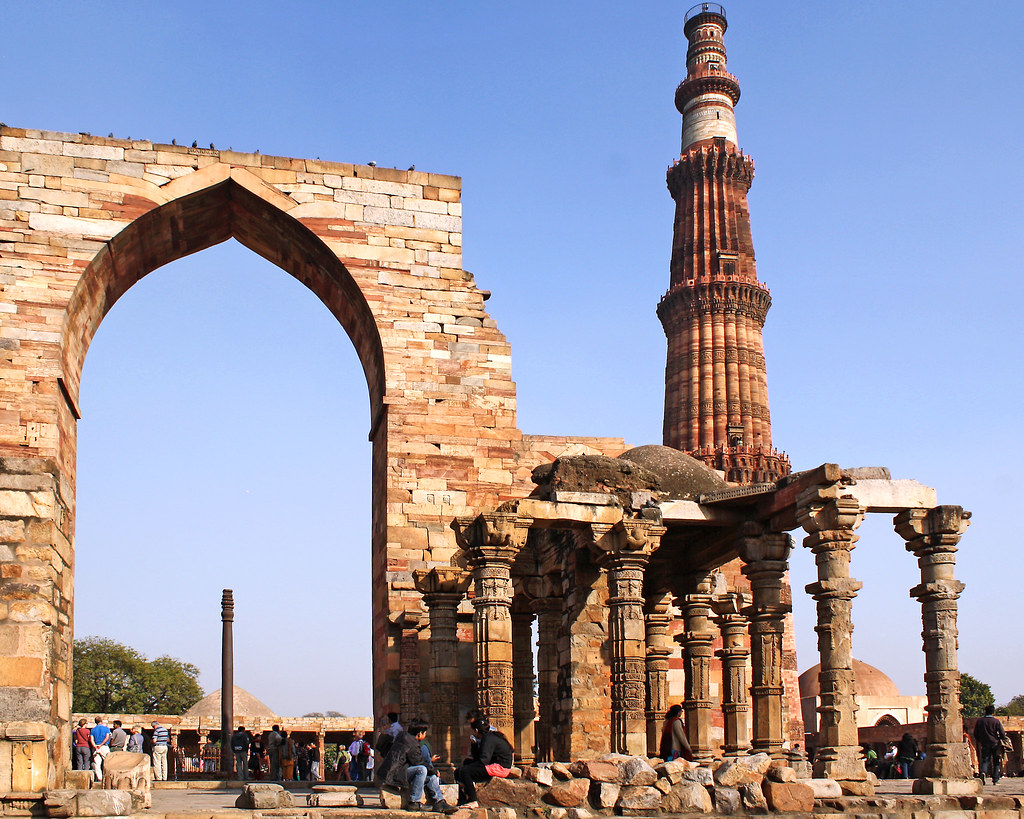
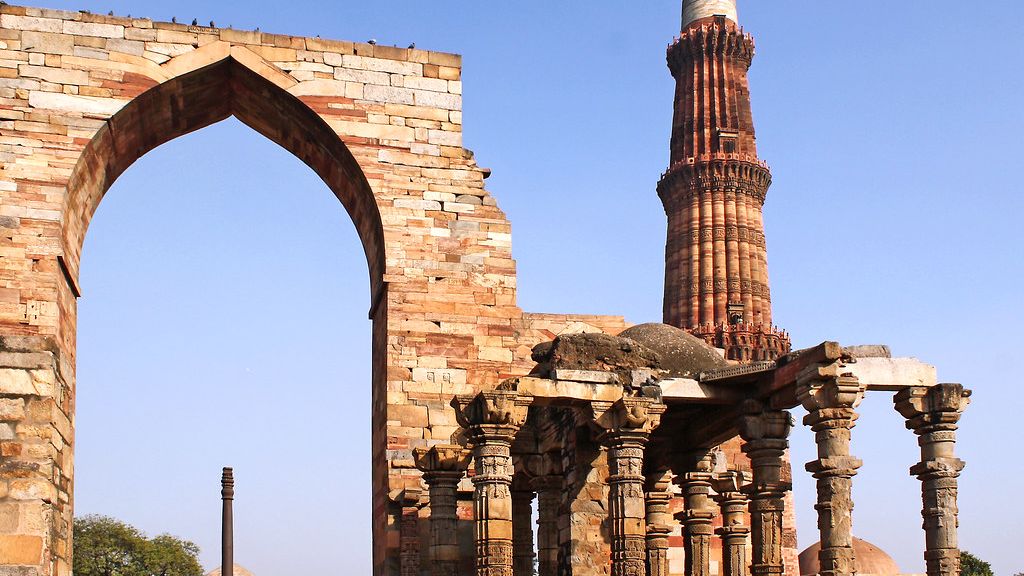
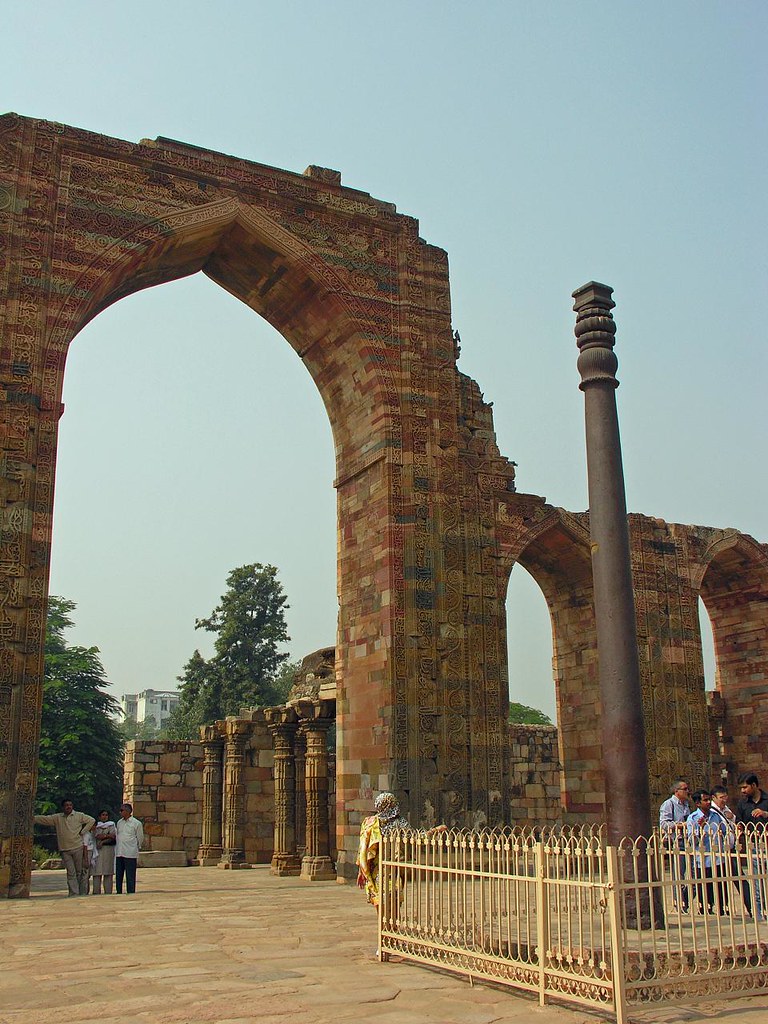
The Iron Pillar of Delhi is a metal structure 7.21 metres tall with a 41-centimetre diameter, constructed by Chandragupta II, who reigned approximately from 375 to 415 CE, and it now stands in the Qutb complex at Mehrauli in Delhi, India. It’s the kind of object that makes engineers pause. Most exposed iron structures show signs of significant corrosion within decades, sometimes within just a few years, yet this pillar has spent more than sixteen centuries outdoors, in a city that receives heavy monsoon rains and summer temperatures regularly exceeding 40 degrees Celsius.
Iron typically oxidises rapidly when exposed to moisture and oxygen, yet this pillar has endured Delhi’s monsoon seasons and temperature extremes for over sixteen centuries with minimal corrosion, showing only a slight surface pitting rather than the destructive rust that would normally consume exposed iron within years or decades. That’s not a minor curiosity. That’s a complete challenge to what we expect from the material. The pillar doesn’t just survive. It thrives, standing nearly unmarked, in the very conditions that would destroy a modern iron structure within a generation.
The Gupta Empire and the Man Behind the Pillar
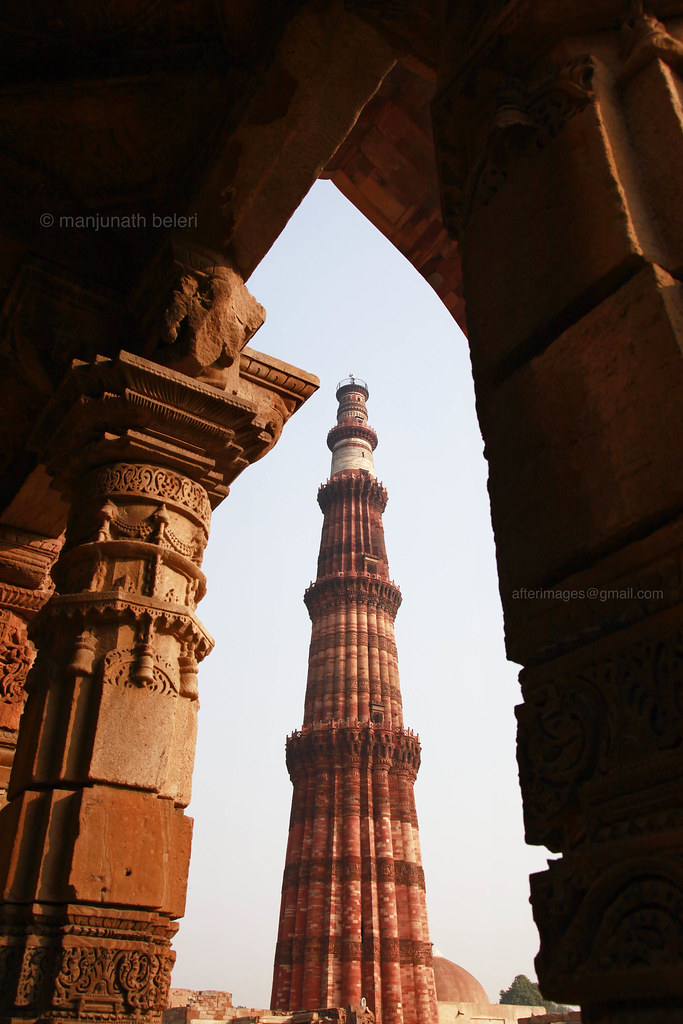
Chandragupta II ruled from 375 to 415 CE and extended the Gupta Empire until it reached the Indus in the West, Bengal in the East, the Himalayas in the North, and the Narmada River in the South. His reign is widely considered the high point of the Gupta dynasty, a period of remarkable administrative organization, artistic achievement, and scientific inquiry. Commissioning such a monument was entirely consistent with the ambitions of an emperor who ruled one of the largest and most sophisticated empires of the ancient world.
According to the inscription, the pillar was erected by King Chandra, celebrating his victories in battle, and was dedicated to the Hindu God Vishnu. The pillar bears an inscription in Sanskrit in Brahmi script dating from the 4th century AD, indicating that it was set up as a Vishnudhvaja, a standard of god, on the hill known as Vishnupada in memory of a mighty king named Chandra. A deep socket on the top of the ornate capital suggests that an image of Garuda was likely fixed into it, as was common in such flagpoles. The image of Garuda, the mythical bird and symbol of the Gupta dynasty, would have made the pillar unmistakably royal.
Physical Dimensions That Still Impress
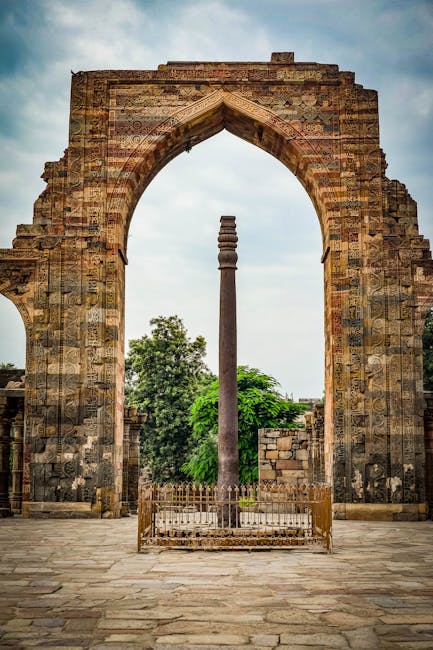
The pillar weighs more than six tonnes and is thought to have been erected elsewhere and later moved to its present location. The total height from top to bottom of its base is 7.21 metres, of which 1.12 metres is below ground. The estimated weight of the decorative bell of the pillar alone is 646 kilograms, while the main body weighs 5,865 kilograms, making the entire pillar weigh approximately 6,511 kilograms. These are not small numbers for hand-forged iron. For context, producing even a fraction of this mass using ancient forging methods would have required enormous quantities of ore, fuel, coordinated labor, and technical knowledge passed carefully between generations of smiths.
The cylindrical portion tapers from a diameter of 16.7 inches at the bottom above ground level to a diameter of 11.85 inches just under the decorative capital. The bottom two feet of the cylindrical portion has a rough surface with visible hammer marks. Those hammer marks are worth thinking about. They’re not decoration. They’re the physical trace of human hands doing extraordinary work, hammering red-hot iron into a unified structure of this scale, without any of the mechanical assistance that modern metalworkers take for granted.
How It Was Made: The Forge Welding Method
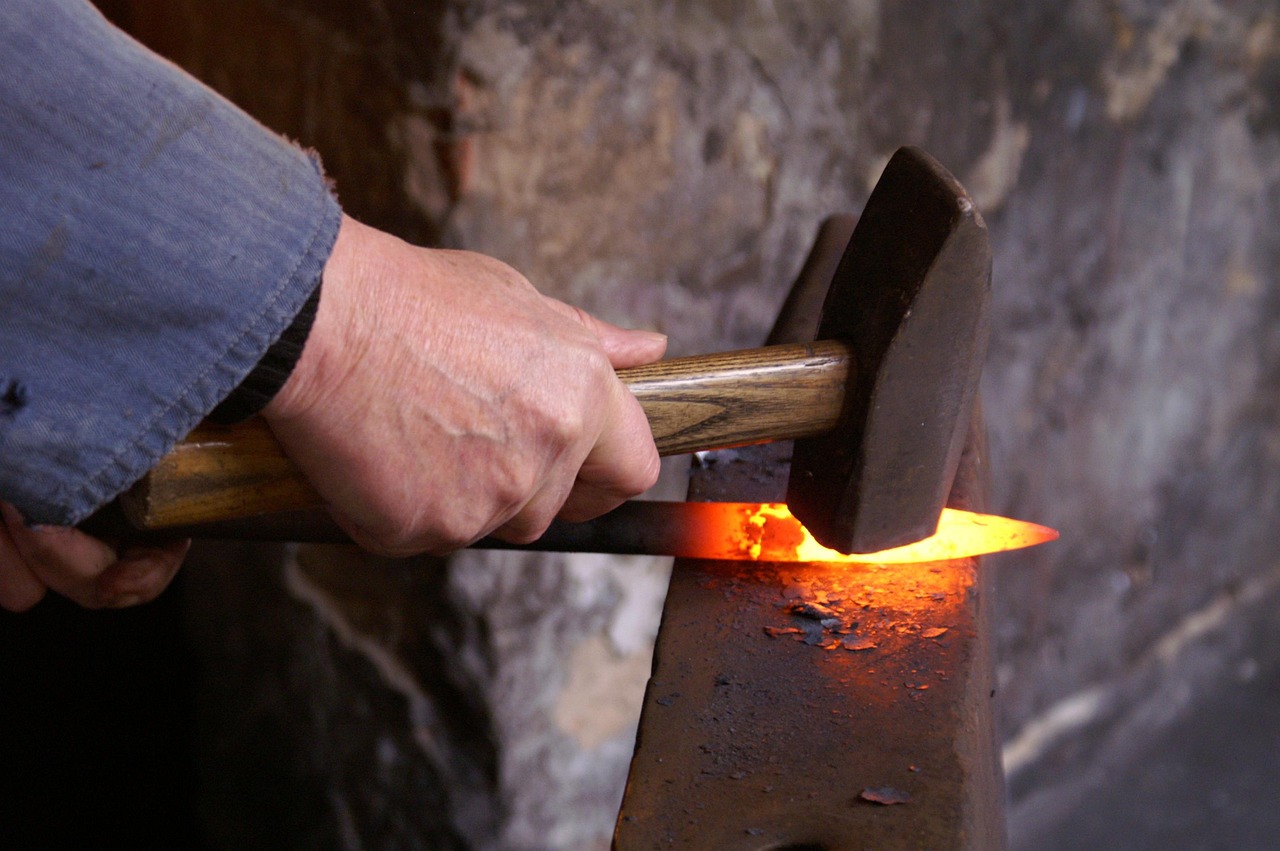
The pillar was produced by the forge welding of pieces of wrought iron. Ancient Indian ironworkers used bloomery furnaces, where iron ore was heated with charcoal to approximately 1,200 degrees Celsius, hot enough to reduce the ore to metallic iron but below iron’s melting point. This process produced a spongy mass called a bloom, containing reduced iron mixed with slag and unreacted material. Smiths then hammered the bloom to squeeze out slag, consolidating the iron into usable metal.
The smiths heated and hammered the iron, keeping the high phosphorus content intact, a method uncommon in modern practices. The pillar is made of incredibly pure wrought iron, about 98% pure, that was manually heated and hammered together using this ancient technique known as forge welding. This matters because the forging process itself was partly responsible for the final chemical composition of the iron. Modern blast furnace methods strip away much of the phosphorus that turned out to be the pillar’s greatest protection against time.
The Chemistry of Survival: Phosphorus and the Misawite Shield
Modern steel production keeps phosphorus content below 0.05% because it makes the metal brittle and prone to cracking under shock. The Iron Pillar, however, has a phosphorus content of about 0.25%, more than five times higher. The absence of lime in the slag and the use of specific quantities of wood with high phosphorus content during smelting induced this higher phosphorus content, compared to modern iron produced in blast furnaces. This was not an accident of poor technique. It was an outcome of a specific smelting process that ancient Indian smiths had refined through generations of practice.
This high phosphorus content and its particular distribution are essential catalysts in the formation of a passive protective film of misawite, an amorphous iron oxyhydroxide that forms a barrier by adhering to the interface between metal and rust. In 1,600 years, this protective film has grown to just one-twentieth of a millimetre thick. That thinness is precisely what makes the chemistry remarkable. The film is not thick, but it is continuous, adherent, and chemically stable in a way that ordinary rust simply is not.
Delhi’s Climate: An Unlikely Accomplice

While the metallurgy is brilliant, the specific climate of Delhi has also played a supporting role. The protective misawite layer requires cycles of wetting and drying to form properly. Delhi’s intense monsoons followed by extreme dry heat provide the ideal rhythm for this protective skin to strengthen over centuries. This is one of those cases where an interaction between material and environment produced something greater than either factor could achieve alone. The climate that seems inhospitable for iron turned out to be exactly what the phosphorus-rich metal needed to cure itself.
Because the pillar is so massive, it does not cool down quickly at night, which prevents dew from forming on its surface, further reducing the risk of corrosion. The presence of second-phase particles in the microstructure of the iron, the high amounts of phosphorus in the metal, and the alternate wetting and drying under atmospheric conditions are the three main factors in the three-stage formation of the protective passive film. Remove any one of those three factors and the result would likely have been a very different, much more corroded object today.
The Inscription, the Legends, and the Fence

The oldest inscription on the pillar is attributed to a king named Chandra, generally identified as the Gupta emperor Chandragupta II. The inscription covers an area measuring approximately 65 by 26 centimetres. The ancient writing is preserved well because of the corrosion-resistant iron on which it is engraved. It contains verses composed in the Sanskrit language and is written in the eastern variety of the Gupta script. It’s remarkable that the text is legible at all, centuries after being carved into metal left in the open air.
Legends grew around the pillar’s rust-resistant nature. Some said anyone who could wrap their arms around it while standing with their back to it would have their wish granted, a testament to its perceived magical properties. The continuous touching and rubbing by millions of hands were actually starting to polish away the misawite layer, causing minor rusting at the base. To protect the monument from being damaged by sheer visitor numbers, the government stepped in. In 1997, a decorative iron fence was erected entirely around the base of the pillar to keep human hands away. A pillar that survived monsoons and centuries of neglect turned out to be vulnerable to affection.
What Modern Science and Engineering Are Still Learning From It
Recent research using advanced analytical techniques including X-ray diffraction, scanning electron microscopy, and electrochemical impedance spectroscopy has provided increasingly detailed understanding of the protective mechanisms. Studies conducted by the Indian Institute of Technology and other institutions have confirmed that the protective layer is indeed misawite forming through the interaction of phosphorus-rich iron with atmospheric elements. The artifact was extensively studied by metallurgist Ramamurthy Balasubramaniam, a professor of materials and metallurgical engineering at the Indian Institute of Technology Kanpur. In 2005, he published the book Story of the Delhi Iron Pillar, which examines the history, fabrication, and composition of the pillar.
The Iron Pillar of Delhi is not just a historical curiosity. It is a case study in corrosion resistance, and modern engineers study its passive film to develop better ways to store nuclear waste and protect long-term infrastructure. Some researchers are exploring whether similar phosphorus-enriched iron could provide cost-effective corrosion protection for contemporary infrastructure. Sixteen centuries after it was hammered into shape, the pillar is still teaching. There’s something quietly extraordinary about that: ancient empirical knowledge, earned through generations of careful observation, turns out to have answers that modern chemistry is only now learning to fully articulate.