

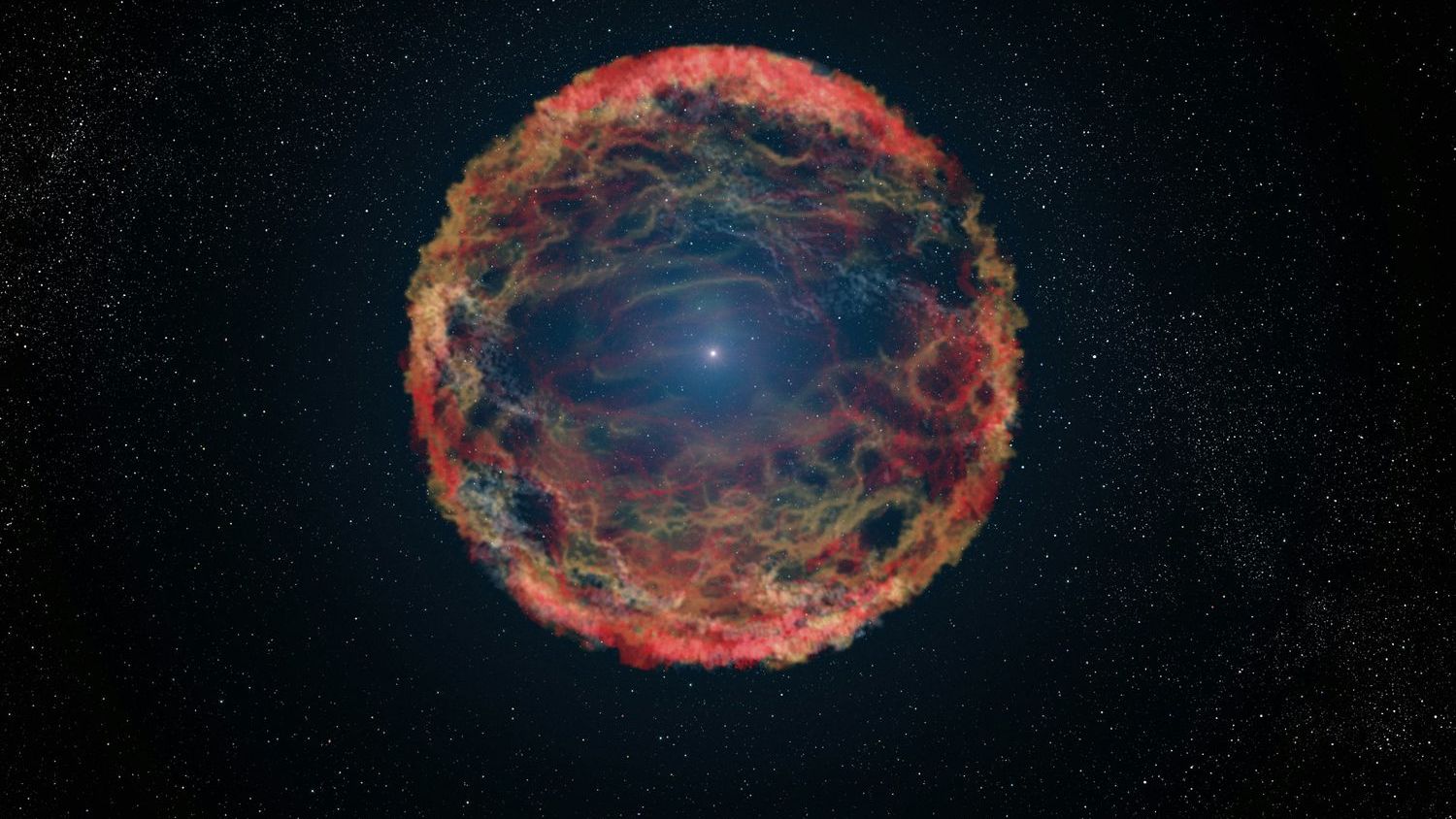
Earth is flying through ancient supernova debris and scientists found the evidence in Antarctic ice – Image for illustrative purposes only (Image credits: Unsplash)
Our Solar System is moving through a vast interstellar cloud that carries the faint signature of a star that exploded long before humans existed. Researchers examining layers of Antarctic ice formed as far back as 80,000 years ago have identified radioactive material that could only have come from such an event. The finding shows that Earth continues to sweep up microscopic remnants of that explosion even today.
Traces Locked in Polar Ice
Scientists collected ice cores from Antarctica and measured extremely low levels of a particular radioactive isotope. This material appears consistently across samples spanning tens of thousands of years, indicating a steady supply rather than a single brief encounter. The isotope in question forms almost exclusively inside the intense conditions of a supernova, making its presence a direct marker of past stellar death.
Because the ice has remained frozen and undisturbed for so long, it acts as a reliable archive of what the Solar System has encountered while traveling through space. The steady detection across multiple layers rules out local contamination or recent events on Earth itself. Instead, the pattern points to an external source that has been present for at least the length of the ice record examined.
How Iron-60 Reaches Our Planet
The isotope, known as iron-60, is produced when a massive star ends its life in a supernova. Once ejected, the material mixes with surrounding gas and dust and can travel across interstellar distances. As the Solar System moves through this enriched region, tiny particles settle into Earth’s atmosphere and eventually become trapped in polar ice.
Measurements show the concentration remains low but detectable, consistent with the dilute nature of the surrounding cloud. The fact that the signal persists across 80,000 years of ice suggests the debris has been distributed throughout the cloud rather than concentrated in one small pocket. This distribution helps explain why the same signature appears in samples taken from different depths and locations on the continent.
Shaping the Cloud Around Us
The presence of supernova debris supports the idea that the Local Interstellar Cloud itself was influenced by one or more ancient explosions. Such events can compress and enrich nearby gas, creating the conditions that now surround the Solar System. The ice data provide a new way to trace how those long-ago blasts continue to affect the material we move through.
Researchers note that the cloud’s current structure and composition align with models of supernova remnants expanding and cooling over time. The radioactive signature offers an independent check on those models, confirming that the material has lingered long enough to be encountered by our moving Solar System. This connection turns the ice record into a tool for mapping the recent history of our galactic neighborhood.
What the Finding Changes
The discovery adds a concrete physical link between events inside our galaxy and conditions right here on Earth. It shows that the space between stars is not empty but carries the chemical fingerprints of past stellar activity that still reach us. Future studies of deeper or older ice layers could extend this record further back, revealing whether additional supernova events have left their mark.
Understanding the cloud’s origin also improves models of how the Solar System interacts with its surroundings over long timescales. The same techniques used on Antarctic ice may eventually be applied to other planetary records, such as lunar samples or meteorites, to build a broader picture of interstellar material in our region of the galaxy.