

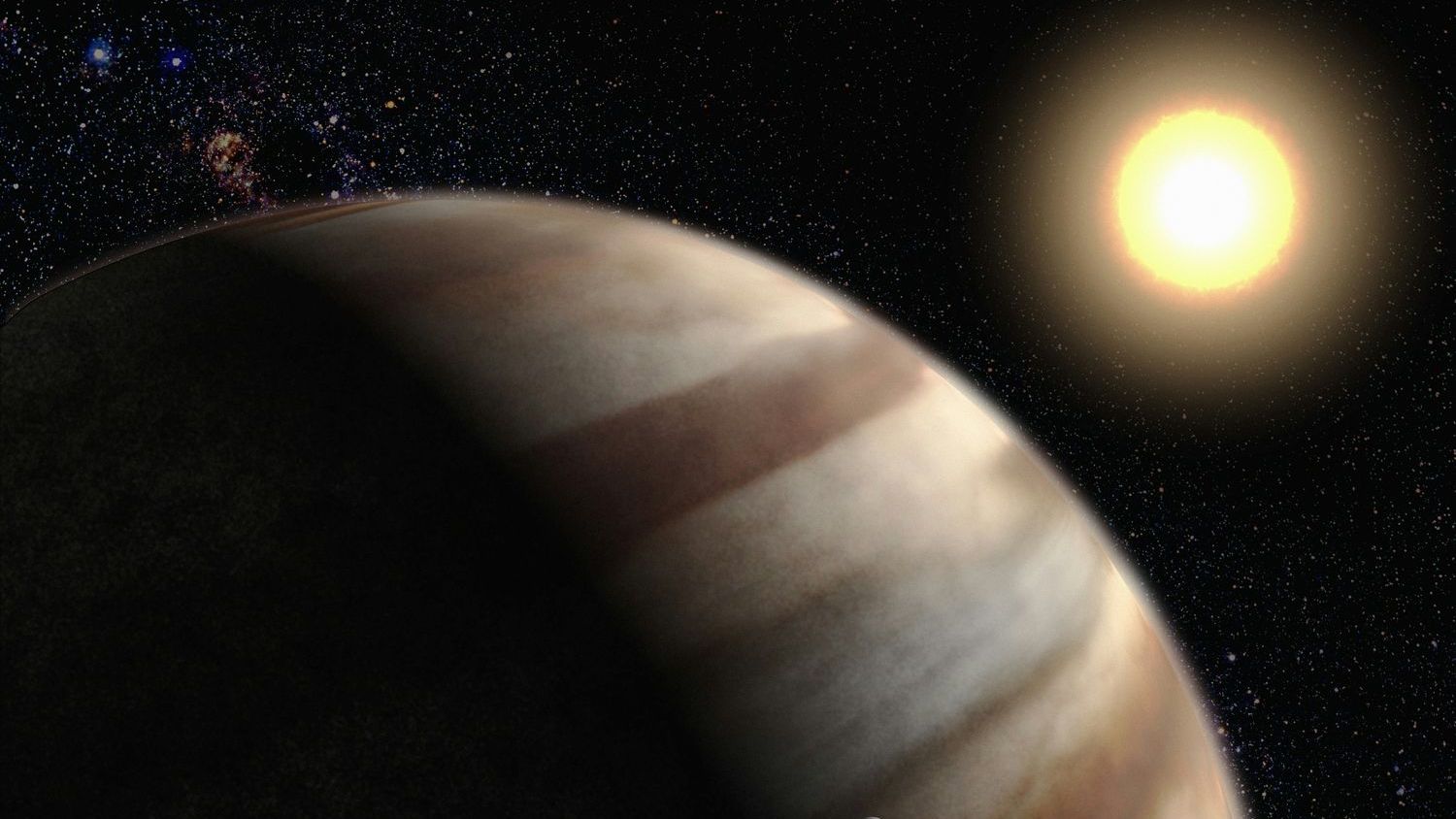
The Planet That Shouldn’t Exist… But Does – Image for illustrative purposes only (Image credits: Unsplash)
Astronomers have identified a compact world that continues to circle its star even though it lies well inside the orbit of a much larger gas giant. The arrangement directly contradicts standard models of how planets form and settle into stable paths. At roughly 190 light years from Earth, the system offers a clear example of survival against forces that normally clear inner regions of debris and smaller bodies.
Why Hot Jupiters Usually Leave No Room
Hot Jupiters are massive gas planets that orbit their stars in just a few days. Their strong gravity tends to scatter, capture, or eject any material that ventures too close. Over time this process leaves the inner zone largely empty, which is why astronomers long considered the presence of a smaller planet in that space highly unlikely.
Observations of many such systems have reinforced the pattern. The giant planet acts like a gravitational bulldozer, reshaping the disk of dust and gas from which planets grow. Any smaller body forming or migrating inward would face repeated close encounters that almost always end in ejection or collision.
The Unexpected Discovery
Despite these expectations, data from precise stellar monitoring revealed a smaller planet completing its own orbit inside the hot Jupiter’s path. The inner world moves on a tighter, faster track yet remains intact. Its continued presence shows that at least one system has preserved a configuration once thought impossible.
Researchers confirmed the finding through repeated measurements of the star’s slight wobbles and changes in brightness. These signals indicate two distinct planetary signals rather than a single body or an artifact of the data. The inner planet’s survival therefore rests on direct observational evidence rather than theoretical prediction.
What the Finding Changes
Current formation theories must now account for rare cases in which a smaller planet avoids destruction. Possible explanations include an unusually stable orbital resonance or a late-stage migration that left the inner world untouched. Either scenario requires adjustments to how scientists model the final stages of planet assembly.
The discovery also highlights gaps in understanding migration timelines. If the hot Jupiter moved inward after the smaller planet had already formed, the timing and dynamics would need to allow safe passage. Continued study of similar systems may reveal whether this arrangement is an outlier or part of a broader, previously unrecognized population.
Next Steps for Observers
Future telescopes will target the same star for additional transits and radial-velocity data. Higher precision measurements could determine the inner planet’s mass, density, and atmospheric properties. Such details would help test whether the world formed in place or arrived through a gentler migration route.
Broader surveys of other hot-Jupiter systems are already underway. If more inner companions appear, astronomers will gain a clearer picture of how often these surprising pairings occur and what conditions allow them to persist. Each new example refines the boundary between what planetary dynamics permit and what they forbid.