

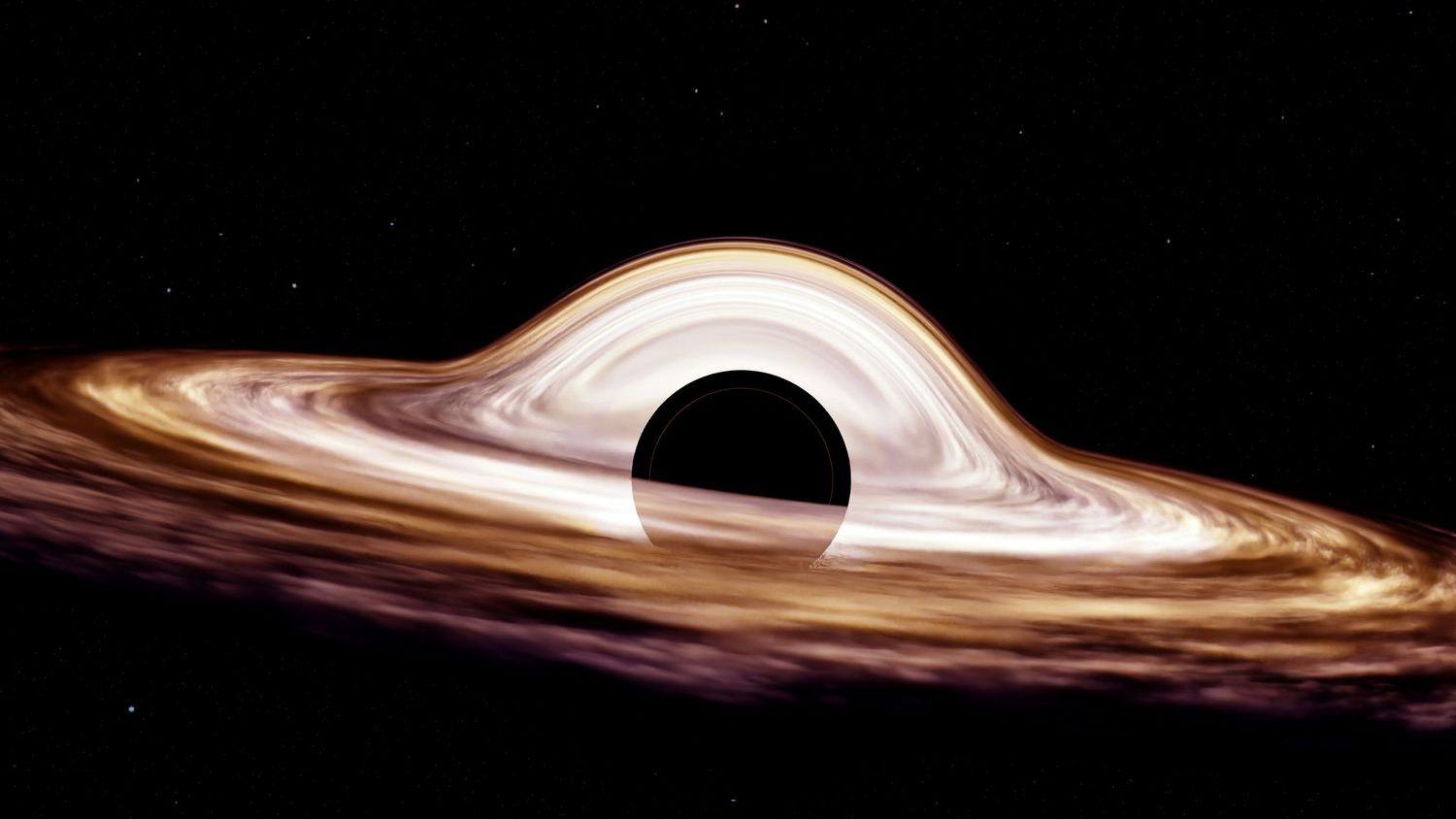
The Universe’s Biggest Black Holes Aren’t Born, They’re Built – Image for illustrative purposes only (Image credits: Unsplash)
Long-standing models held that black holes of every size formed when massive stars exhausted their fuel and collapsed. New findings from Cardiff University show this picture applies only to smaller examples. The truly enormous black holes detected across the cosmos instead reach their scale through repeated mergers inside the densest star clusters.
Standard Formation Leaves a Gap
Astronomers have known for decades that a star more than about twenty times the mass of the Sun can end its life as a black hole. The remnant left behind typically weighs between five and one hundred solar masses. Yet observations of gravitational-wave signals reveal objects far heavier than this range.
These heavier black holes cannot be explained by the collapse of a single star. Their masses exceed what any known stellar process can produce in one step. The mismatch points to a different growth channel that operates over longer timescales.
Cardiff Study Identifies the Missing Pathway
Researchers at Cardiff University examined how black holes interact inside compact star clusters. In these crowded regions, black holes sink toward the center through dynamical friction. Once there, they pair up and merge, releasing energy in the form of gravitational waves.
Each merger creates a larger black hole that can then capture another partner. The process repeats, steadily building objects that reach hundreds or even thousands of solar masses. The study demonstrates that this hierarchical assembly matches the masses seen in recent gravitational-wave detections.
Why Dense Clusters Matter
Only the most tightly packed clusters provide the right conditions for repeated encounters. Lower-density regions allow black holes to drift apart before they can merge again. The highest merger rates therefore occur in the cores of globular clusters and young massive star clusters.
Simulations show that a single cluster can produce multiple generations of mergers within a few hundred million years. The resulting black holes carry distinctive spin signatures that future detectors may use to trace their history.
Gravitational Waves Confirm the Picture
Signals recorded by LIGO and Virgo already include events whose component masses exceed the limit expected from single-star collapse. These detections align with the merger-built scenario outlined in the Cardiff work. Continued observations will test whether the heaviest black holes follow the same pattern.
The findings shift attention from isolated stellar deaths to the collective dynamics of entire star systems. Understanding how these giants assemble will refine models of galaxy evolution and the early universe.