

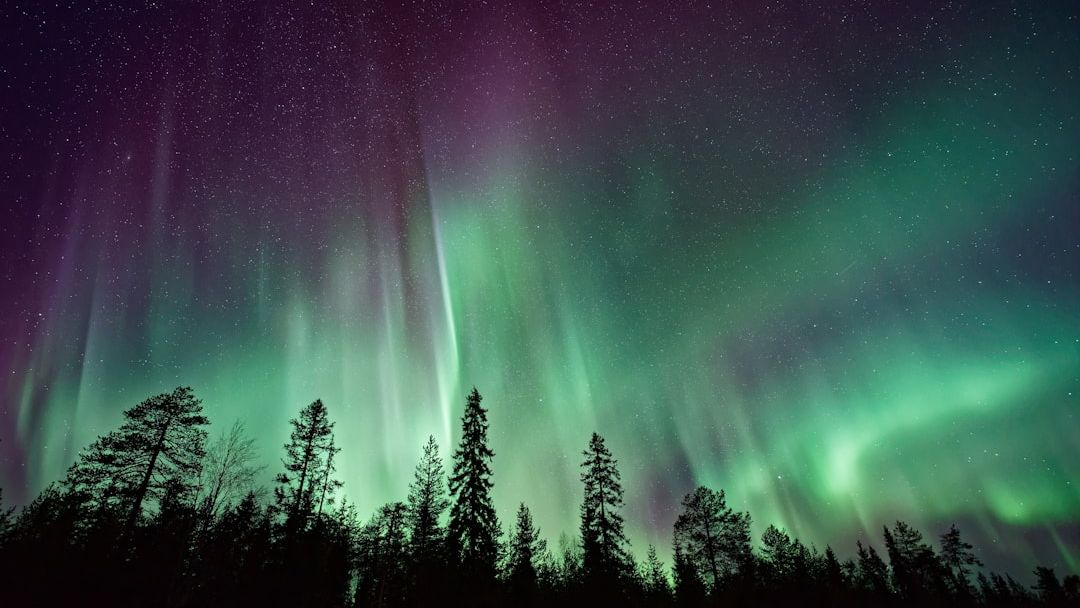
Geomagnetic storm could spark northern lights as far south as New York and Idaho tonight – Image for illustrative purposes only (Image credits: Unsplash)
Residents in the northern United States may catch an unexpected display of the northern lights tonight. A fast stream of solar wind is expected to reach Earth and push geomagnetic activity to G2 levels overnight. The conditions could extend aurora visibility well beyond typical northern latitudes, reaching parts of New York and Idaho.
Why the Skies Could Light Up
The incoming solar wind carries charged particles that interact with Earth’s magnetic field. When those particles collide with the atmosphere, they create the colorful glow known as the aurora borealis. Forecasters have determined that the stream is strong enough to produce G2 storm conditions, the second level on the five-tier geomagnetic storm scale.
Even modest G2 activity can produce visible auroras at latitudes as far south as 50 degrees north. That range includes major population centers across the northern tier of the country. Clear skies and minimal light pollution will be the main factors that determine whether people actually see the display.
Where Viewers Should Look
The best chances remain in states that normally see occasional auroras, such as Minnesota, Montana, and Washington. Tonight the window widens to include New York, Idaho, and neighboring areas if the storm reaches peak strength. Observers should face north between 10 p.m. and 2 a.m. local time, when the sky is darkest.
Urban viewers may need to drive a short distance away from city lights. Rural roads or parks with open northern horizons offer the clearest sightlines. No special equipment is required; the naked eye is usually sufficient during G2 events.
What Comes Next
Geomagnetic storms of this strength are common during the current solar cycle and rarely cause problems for power grids or satellites. The main impact for most people will be the chance to see a natural light show that does not require travel to the Arctic Circle. Conditions are expected to ease by tomorrow morning as the solar wind stream passes.
Anyone planning to watch should check local cloud forecasts in the hours before midnight. A single clear patch in the northern sky can be enough to reveal the faint green or red glow that signals the aurora has arrived farther south than usual.